

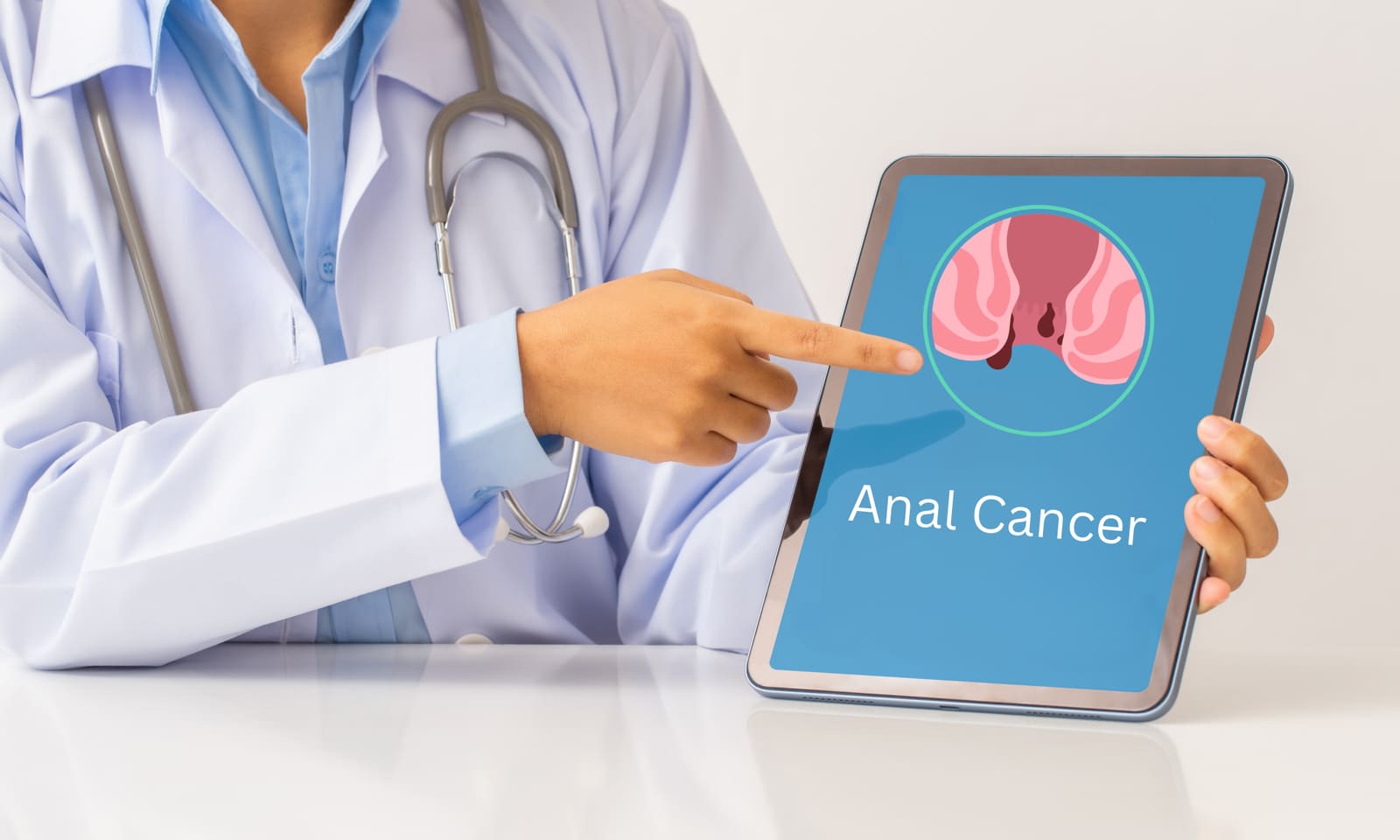
Anal cancer or carcinoma of the anal canal is an uncommon malignancy that develops in the anus tissues of the lining of the anal canal.
Types of Anal Cancer
The types of anal cancers include:
- Squamous cell carcinoma: The tumor begins in the squamous cells lining the anal margin and the anal canal.
- Adenocarcinoma: Some cancers start in the cells lining the upper part of the anus near the rectum, while others begin in the glands under the anal mucosa.
Symptoms of Anal Cancer
Some common symptoms of anal cancer include:
- Bleeding from the rectum or anus
- Blood in stool
- Itching or discharge from the anus
- Pain in the anus
- A lump or mass that resembles hemorrhoids
- A change in the frequency and consistency of the bowel movements
Causes of Anal Cancer
Anal cancer is caused when the cancer cells in the anus grow uncontrollably, forming masses or tumors. The cancer cells can sometimes spread to other body parts, causing metastatic cancer.
The risk factors include:
- An HPV (human papillomavirus) infection passed through sexual contact
- An age of 55 years and older
- Multiple sex partners
- Sexually transmitted disease
- Having anal sex
- Smoking cigarettes
- A history of HPV-related cancers like cervical cancer
- A weakened immune system due to chemotherapy or an organ transplant
- Chronic inflammatory areas in the anus, anal fistulas, or having opened a wound in the anus
- Having previous pelvic radiation therapy for bladder, rectal, prostrate, or cervical cancer
Diagnosis of Anal Cancer
Your medical provider will consider your medical and family history and perform a physical examination. They may order tests that include:
- A digital rectal exam (DRE): The rectum is examined to look for abnormalities like a lump or growth.
- Anoscopy: The anal canal is examined with a small lighted scope called anoscope.
- Proctoscopy: The inside of the anus and rectum is examined by a thin tubular instrument with light and lens called a proctoscopy.
- Endo-anal or endorectal ultrasound, MRI, PET scan, or other imaging tests: They help determine the location of the cancer.
- Biopsy: A tissue sample is collected and checked under the microscope to make an accurate diagnosis.
Stages of Anal Cancer
There are five stages of anal cancer.
Stage 0 ( Carcinoma-in-situ)
The abnormal cell found in the mucosa of the anus that can progress to anal cancer.
Stage I
Anal cancer is present with a tumor of 2 cm or less.
Stage II
It includes:
- Stage IIA: The cancerous tumor is between 2 and 5 cm, and,
- Stage IIB: The tumor is of 5cms or larger size.
Stage III
It includes:
- Stage IIIA: The tumor is 5 cm or smaller. It has spread to the lymph nodes near the groins or anus.
- Stage IIIB: The tumor is of any size and has spread to nearby organs like the bladder, urethra, and vagina but not the lymph nodes.
- Stage IIIC: The cancer has affected nearby organs and the lymph nodes in the anus or groin.
Stage IV
The cancer has spread far from the anus to other organs like the lungs or liver.
Treatment of Anal Cancer
The treatment of anal cancer is based on the tumor type and size, and may include:
Radiation therapy
Anal cancer is treated with external beam radiation therapy (EBRT) that includes:
- Intensity-modulated radiation therapy (IMRT): It emits multiple energy beams to a tumor.
- Stereotactic body radiation therapy (SBRT): It targets small tumors without damaging the healthy tissues.
- Three-dimensional conformal radiation therapy (3D-CRT): It generates a 3-D picture of the cancer.
Chemotherapy
They are strong medicines used to kill the cancer cells.
Surgery
While small, early-stage tumors can be removed surgically without further treatment, advanced anal cancers may require laparoscopic abdominal perineal resection to remove the rectum, anus, and colon. A permanent colostomy is also done to collect bowel movements in a bag attached outside of the body.
Immunotherapy
Immunotherapy is done in advanced cases to manage symptoms and fight cancer.
Source links
- 1mayoclinic.org/diseases-conditions/anal-cancer/symptoms-causes/syc-20354140
- 2my.clevelandclinic.org/health/diseases/6151-anal-cancer
- 3cancer.gov/types/anal/patient/anal-treatment-pdq
- 4fascrs.org/patients/diseases-and-conditions/a-z/anal-cancer
- 5webmd.com/cancer/what-is-anal-cancer
- 6cancer.org/cancer/types/anal-cancer/about/what-is-anal-cancer.html
- 7medicalnewstoday.com/articles/156549
Información general, no consejo médico
Este artículo no puede tener en cuenta tu historial de salud ni tu tratamiento actual. Habla con un profesional sanitario cualificado antes de cambiar nada de tu cuidado.
Lee nuestro aviso médico →
En esta página
Types of Anal Cancer
Symptoms of Anal Cancer
Causes of Anal Cancer
Diagnosis of Anal Cancer
Stages of Anal Cancer
Stage 0 ( Carcinoma-in-situ)
Stage I
Stage II
Stage III
Stage IV
Treatment of Anal Cancer
Radiation therapy
Chemotherapy
Surgery
Immunotherapy
Source links
Pon en práctica lo que lees
Controla tus medicamentos, consulta un síntoma y habla con personas que viven con la misma enfermedad, todo en Healthread.
Descargar la app
Sigue leyendo

Cancer-Updates
Gynecologic Cancer
Gynecologic cancer is a term used to describe a group of cancers that affect the female reproductive system. There are five types of gynecologic cancers named after the body part where they start.
5 de noviembre de 2024 · 3 min de lectura

Cancer-Updates
Bile Duct Cancer (Cholangiocarcinoma)
Bile duct cancer, or cholangiocarcinoma, is a cancer that occurs in the bile ducts, the slender tubes that collect bile, a fluid made by the liver for breaking down fats in the digestion process.
17 de abril de 2024 · 2 min de lectura

Cancer-Updates
Cachexia (Wasting Syndrome)
Cachexia is a complex metabolic syndrome that causes you to lose a significant amount of skeletal muscle and body fat. The condition happens when the basal metabolic rate in an individual increases without an increase…
2 de abril de 2024 · 3 min de lectura


© 2026 Healthread
English · Español
Healthread no ofrece asesoramiento médico, diagnóstico ni tratamiento. Consulta siempre a un profesional sanitario cualificado sobre tu atención.