

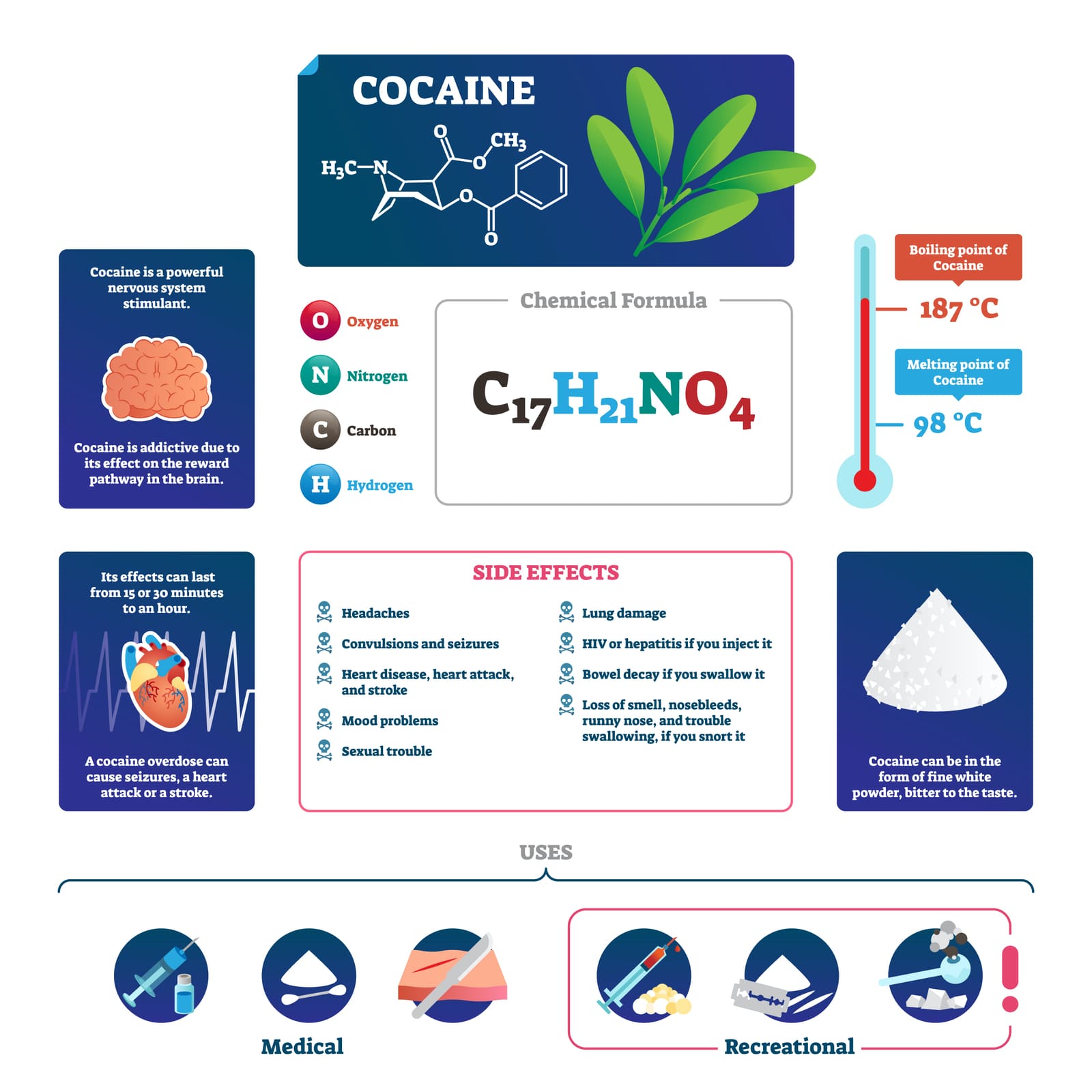
Cocaine is an alkaloid found in leaves of the Erythroxylum coca plant, a bush that grows in the Andes Mountain region of South America
Cocaine is one of the most addictive drugs, and cocaine addiction can quickly ruin a life. Cocaine can briefly make the user feel more alert and confident, but once the high wears off, anxiety sets in.
In time, the body builds up a tolerance, and the user must consume more of the drug to achieve the same effects. If they try to stop using cocaine, they will experience debilitating withdrawal symptoms.
The DSM-IV-TR psychiatric diagnoses cocaine abuse and cocaine dependence were replaced by one diagnosis, cocaine use disorder
Incidence and pattern of use
Cocaine is used by an estimated 18.2 million people worldwide, about 0.4 percent of the global population age 15 to 64 years. Use is most prevalent in North America (5.1 million people, 1.6 percent of population older than 14 years) and Central and South America (4.4 million people, 1.5 percent) and in Western and Central Europe (3.5 million people, 1.1 percent).
Cocaine is used in a variety of patterns. The typical "binge" involves short periods of heavy use (eg, payday or weekends) separated by longer periods of little or no use. Others may use for an extended period until their finances are exhausted or access to cocaine is interrupted. A small number of users may be self-medicating an underlying neuropsychiatric disorder, such as attention deficit hyperactivity disorder (ADHD excessive daytime Parkinsonism, or cluster headaches
Illegal cocaine comes in two forms: base (alkaloid, as in coca leaves) and salt. Cocaine base (Crack or freebase) is inhaled and cocaine salt is snorted through the nose or injected.
Cocaine Addiction Signs
Suspect someone is battling cocaine addiction if they display any of the following signs or symptoms:
- Constant runny nose or nosebleeds
- Dilated or enlarged pupils
- Nervousness and excitability
- Insomnia
- Irritability
- Sudden weight loss
- Tic development
Individuals smoking crack may develop a cough. Many will wheeze or have bouts of shortness of breath. Look for burn marks on the fingers and lips in suspected crack users.
Certain behaviors may also point to cocaine addiction. If a person starts taking more risks than usual, appears paranoid, or starts borrowing or even stealing money, they likely have an addiction.
Deterioration in physical appearance is another frequent sign. The person may not only look unwell but is taking less care of their appearance.
Addicts injecting the drug will have track marks, or other evidence of shooting up, such as swelling and bruises.
Cocaine Addiction Side Effects
Heavy cocaine use damages many parts of the body. Cocaine users are at higher risk of experiencing serious or fatal cardiovascular events, including heart attack and stroke. Seizures are also common, as are intense headaches. Other conditions associated with cocaine addiction include:
- Chronic nasal discharge
- Frequent colds
- Loss of smell
- Mood swings
- Nosebleeds
- Respiratory issues
- Sexual dysfunction
Those who inject the drug are at great risk of contracting HIV/AIDS or hepatitis.
Cocaine addicts often develop cocaine psychosis, involving hallucinations and delusions. Some may feel bugs are crawling on them. Violent behavior is common. While cocaine psychosis appears more frequently in those using crack, any heavy cocaine user is vulnerable.
Cocaine addiction may cause infertility and can damage the reproductive organs.
Over the long-term, cocaine addicts may develop Parkinson’s disease-like symptoms, as in movement disorders. Chronic cocaine use affects blood vessels, including those in the intestines. One potential side effect is the cutting off the blood vessels in the bowel, causing tissue death and an often fatal rupture. Bowel injuries happen most often in people who take cocaine via the mouth.
Addicts who snort cocaine heavily may find that holes occur in the roof of the mouth and their noses collapse.
Cocaine Overdose
A cocaine overdose can happen at any time, to any user. If the person drinks alcohol while using cocaine or also uses other drugs, they raise the odds of overdosing. Signs of a cocaine overdose include:
- Agitation
- Chest pain
- Convulsions
- Elevated temperature
- Faster respiration
- High blood pressure
- Rapid heartbeat
- Sweating
Heart attack or stroke may occur. In a worst-case scenario, the person succumbs due to the overdose.
Call 911 immediately if someone looks like they are going through a cocaine overdose.
Cocaine Withdrawal
Addicts dealing with cocaine withdrawal usually exhibit craving for the drug. Many suffer more severe withdrawal symptoms, such as:
- Depression
- Fatigue
- Difficulty concentrating
- Insomnia
- Nightmares
- Significant appetite increase
Heavy users withdrawing from cocaine will usually start to improve within four or five days, and the symptoms should go away in roughly a week. However, the cravings may last a very long time, which makes the danger of relapse a constant.
Cocaine Addiction Treatment
Most cocaine addiction treatment consists of behavioral therapy. This may take place in an outpatient or residential setting. For those in their initial rehabilitation treatment, contingency management has proven fruitful. This approach uses a prize-based system to motivate patients if they do not abuse cocaine or other substances. After their urine tests return drug-free, the patient receives some form of a reward designed to promote health and wellness. That might involve a restaurant meal, gym membership, yoga class, or similar incentive.
Cognitive-behavioral therapy has proven effective in preventing cocaine addiction relapse. The patient delves into why they use the drug and learns how to avoid situations that might trigger cocaine use. This form of therapy does not always require a human counselor. There are computer programs available that can help the recovering addict in a clinical setting to learn these strategies through a combination of video, games, quizzes, and assignments.
Longtime users may benefit from residing in therapeutic communities for stays of between six months to one year as they learn vocational and other skills to help them navigate the world without substance abuse.
Currently, there is no medication approved for treating cocaine addiction. Drugs approved to treat other conditions such as methadone, Dextroamphetamine, Disulfiram etc show mix possibilities in clinical trials.
Researches are also conducting tests on a potential vaccine for cocaine addiction, eliminating the risk of relapse. Via the immune system, the vaccine helps create antibodies binding to cocaine. The antibodies keep the drug from reaching the brain. Work continues on the vaccine and it is not yet available.
Sources
Información general, no consejo médico
Este artículo no puede tener en cuenta tu historial de salud ni tu tratamiento actual. Habla con un profesional sanitario cualificado antes de cambiar nada de tu cuidado.
Lee nuestro aviso médico →
En esta página
Incidence and pattern of use
Cocaine Addiction Signs
Cocaine Addiction Side Effects
Cocaine Overdose
Cocaine Withdrawal
Cocaine Addiction Treatment
Sources
Pon en práctica lo que lees
Controla tus medicamentos, consulta un síntoma y habla con personas que viven con la misma enfermedad, todo en Healthread.
Descargar la app
Sigue leyendo

Mental Health
Bipolar I vs. Bipolar II
Bipolar I and II are the most common types of mental health disorders. While they both share certain similarities, they have two key differences.
8 de agosto de 2024 · 3 min de lectura

Mental Health
Narcissistic Personality Disorder (NPD)
NPD is a mental health condition that is characterized by an inflated opinion of oneself. Someone who is narcissistic may feel more important than other people.
4 de mayo de 2024 · 3 min de lectura

Mental Health
What is Treatment-Resistant Depression?
Treatment-resistant depression is a form of major depressive disorder that fails to respond to the standard depression treatments involving taking an anti-depressant or going to psychotherapy.
3 de febrero de 2024 · 3 min de lectura


© 2026 Healthread
English · Español
Healthread no ofrece asesoramiento médico, diagnóstico ni tratamiento. Consulta siempre a un profesional sanitario cualificado sobre tu atención.