

Recognizing the Physical Symptoms of Anxiety
31 de mayo de 2021
3 min de lectura
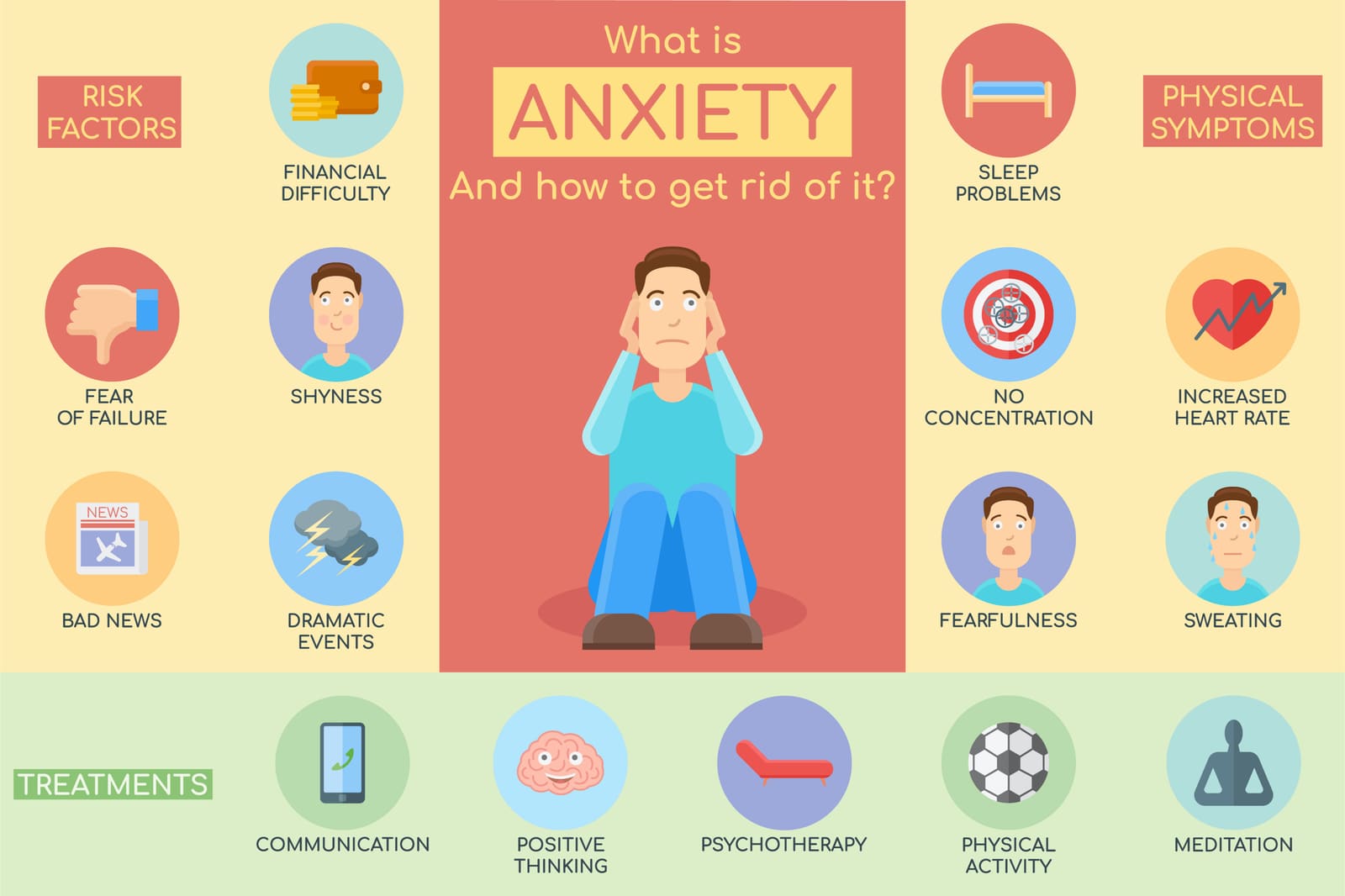
Nearly 40 million American adults struggle with anxiety, according to the Anxiety & Depression Association of America (ADAA), while less than 40 percent of those have actually sought treatment for this highly treatable mental illness. Even more alarming is the fact that people with anxiety disorders, such as,
- Panic disorders
- Generalized anxiety disorder (GAD),
- Obsessive-compulsive disorder (OCD)
- Post-traumatic stress disorders (PTSD)
- Social anxiety disorders
and others, are more than five times likely to see a doctor and six times more likely to be hospitalized for psychiatric disorders than those who do not live with anxiety.
Because there are so many risks, such as depression, substance abuse, and poor functioning at work or school, associated with anxiety disorders, it is important to recognize the physical symptoms of anxiety and seek treatment when they arise.
Physical Symptoms of Anxiety
Most people understand the emotional aspects of anxiety disorders, with fear, worry, and panic being most common. The dread of going out in public, the fear of losing control in a crowd of people, and the suddenness and overwhelming nature of panic that takes over in the midst of a panic attack.
However, there are other physical symptoms of anxiety you may be less familiar with that can signal that you may need help for your condition, they include the following.
- Rapid breathing
- Trembling and shaking
- Sweating
- Increased heart rate (i.e. pounding heart)
- Heart palpitations
- Gastrointestinal problems, including nausea, diarrhea, loss of appetite and/or constipation
- Difficulty sleeping
- Dizziness
- Rapid, shallow breathing
- Fatigue
- Headaches or migraines
- Decreased libido
- Muscle tension
- Pain
- Potentially weakening of the immune system as a result of long-term anxiety
- Weakness
Panic attacks and chronic anxiety can contribute to the release of stress hormones, like cortisol and adrenaline, which can have negative health effects. For example, excess cortisol can lead to weight gain.
Many people living with anxiety often seek to avoid activities that trigger panic episodes or make them feel more anxious. In some cases, anxiety can interfere with your ability to leave your home, go to work, or participate in family and community functions. It is extremely isolating and can cause feelings of depression on top of the anxiety. This is in addition to the diminished quality of life you experience when avoiding the things and people who make it worth living.
Recognizing these symptoms for what they are and not dismissing them as nothing, is important so that you can get the help you need to reclaim your place in the world and restore your quality of life.
Recent Insights Concerning Anxiety
The pandemic has only exacerbated the anxiety problem in the United States, with Life Science Leader reporting a 457 percent increase in screenings for anxiety and depression since January of 2020. The hope is that in the future, medications used to treat anxiety will be available that do not rely on benzodiazepines, one medication in the works is SPRAVATO, a ketamine formulation administered via nasal spray.
Other recent insights include the following.
- New research reveals that group cognitive behavior therapy may be an effective alternative to individual therapy for generalized anxiety disorder. Other suggestions to evolve the anxiety treatment process include new drug research and applied relaxation therapy.
- Primate research is providing invaluable insights into connections between anxiety disorders and exaggerated reactivity to emotional stimuli in various parts of the brain.
- Novel treatments are being explored for anxiety disorders, including a variety of medications that are in some form of ongoing or anticipated clinical trials.
For those currently struggling to control their anxiety, these recent insights offer hope for the future — one that may have them experiencing fewer of the physical symptoms of anxiety without the sometimes dangerous side effects of current anti-anxiety medications or the risk of addiction.
Foundations and Societies
These organizations provide valuable information about anxiety, recognizing anxiety, and how (and when) to get help for your anxiety symptoms.
Reach Out to Others on Healthread Dealing With Anxiety
One of the most important things for people living with anxiety to understand is that they are not alone. With nearly 40 million other Americans suffering in silence, it’s good to know that there are resources, like Healthread, where you can connect with others and share experiences, coping mechanisms, and more. Subscribe today to share your experiences and learn from others.
Sources
- 1adaa.org/understanding-anxiety/facts-statistics
- 2lifescienceleader.com/doc/the-future-of-anxiety-treatment-will-be-drastically-different-0001
- 3researchgate.net/publication/232216220_Recent_developments_in_the_research_on_generalized_anxiety_disorder
- 4ajp.psychiatryonline.org/doi/10.1176/appi.ajp.2020.20121733
- 5ncbi.nlm.nih.gov/pmc/articles/PMC7786299
Información general, no consejo médico
Este artículo no puede tener en cuenta tu historial de salud ni tu tratamiento actual. Habla con un profesional sanitario cualificado antes de cambiar nada de tu cuidado.
Lee nuestro aviso médico →
En esta página
Physical Symptoms of Anxiety
Recent Insights Concerning Anxiety
Foundations and Societies
Reach Out to Others on Healthread Dealing With Anxiety
Sources
Pon en práctica lo que lees
Controla tus medicamentos, consulta un síntoma y habla con personas que viven con la misma enfermedad, todo en Healthread.
Descargar la app
Sigue leyendo

Mental Health
Bipolar I vs. Bipolar II
Bipolar I and II are the most common types of mental health disorders. While they both share certain similarities, they have two key differences.
8 de agosto de 2024 · 3 min de lectura

Mental Health
Narcissistic Personality Disorder (NPD)
NPD is a mental health condition that is characterized by an inflated opinion of oneself. Someone who is narcissistic may feel more important than other people.
4 de mayo de 2024 · 3 min de lectura

Mental Health
What is Treatment-Resistant Depression?
Treatment-resistant depression is a form of major depressive disorder that fails to respond to the standard depression treatments involving taking an anti-depressant or going to psychotherapy.
3 de febrero de 2024 · 3 min de lectura


© 2026 Healthread
English · Español
Healthread no ofrece asesoramiento médico, diagnóstico ni tratamiento. Consulta siempre a un profesional sanitario cualificado sobre tu atención.