

What to Expect as an Alzheimer's Disease Caregiver
25 de marzo de 2020
3 min de lectura
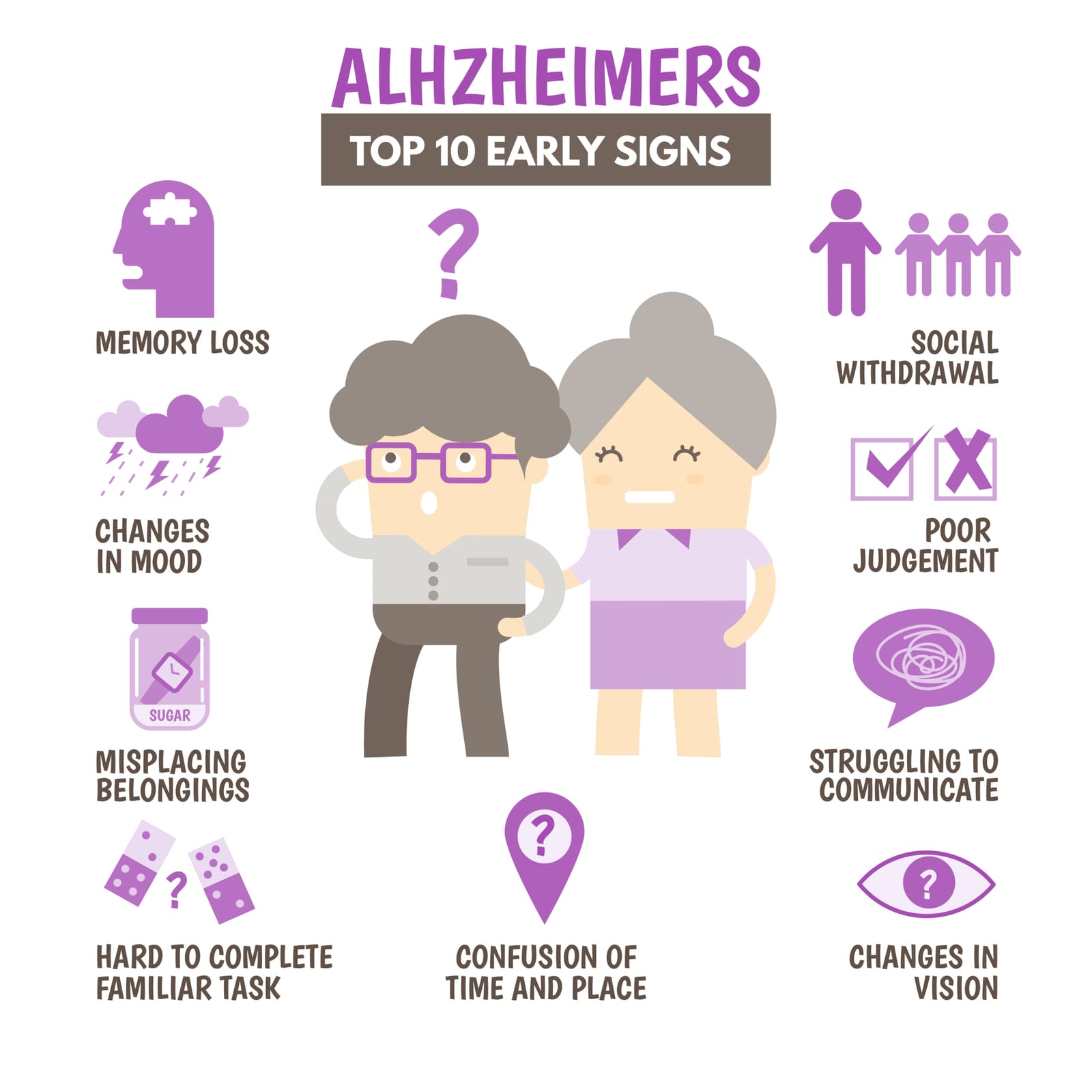
Alzheimer’s disease is a devastating illness both for patients and for the loved ones who care for them. Alzheimer’s disease caregivers have high rates of depression, anxiety, and stress due to the challenges of caring for someone with this disease. Learning what to expect as Alzheimer’s disease progresses can help you navigate your role as a caregiver.
Progression of Alzheimer’s Disease and What to Expect
Alzheimer’s disease is a neurodegenerative condition, meaning that there is a steady progression of brain changes over the course of the disease. Unfortunately, there currently is no cure for Alzheimer’s disease. The average time from diagnosis to a person’s death is 8 years, though this varies a lot by individual. Some people may continue to have mild memory difficulties for years, while others decline more rapidly. Your loved one’s medical team can help you better understand what to expect for your unique situation.
Many people think of memory problems as the hallmark symptom of Alzheimer’s disease. While this is often true, there are many changes that occur in addition to memory loss. You may notice that your loved one experiences mood changes, uncharacteristic behaviors, and difficulty performing everyday activities. As an Alzheimer’s disease caregiver, it can help to know what to expect from each stage of the disease.
Early Stage Alzheimer’s Disease
In the earliest stages of Alzheimer’s disease, difficulties are generally mild. In fact, your loved one may have received a diagnosis of “mild cognitive impairment,” meaning that thinking changes are not severe enough to affect his or her ability to perform everyday activities. Common symptoms at this stage of the disease include:
· Difficulty remembering conversations or the locations of everyday objects
· Remembering words or names
· Getting lost or confused when navigating
· Difficulty performing complex activities such as managing medications or paying bills
· Trouble staying organized or solving problems
· Changes in driving safety
· Depression or irritability
In the early stages of Alzheimer’s disease, it can be tough to strike a balance between providing assistance for your loved one without making them feel frustrated or smothered. Try to give the person a feeling of autonomy whenever possible. For example, rather than automatically taking over a task you think your loved one will struggle with, ask, “Would you like some help with that?” in a non-judgmental tone.
Middle Stage Alzheimer’s Disease
As Alzheimer’s disease progresses, caregivers notice greater changes in their loved one’s thinking, mood, and behavior. Common symptoms include:
· Difficulty performing everyday tasks such as cleaning, dressing, and grooming.
· Loss of language abilities, including trouble understanding conversations and expressing themselves
· Repeating questions or stories
· Depression, irritability, anxiety, and repetitive behaviors
· Agitation, which often occurs in the evening
· Confusion about whether it is daytime or nighttime
· Wandering
Changes in personality and behavior are common in this stage, and it is tough not to take them personally. If your loved one becomes agitated or lashes out toward you, remember that it is the disease causing this behavior. Focus on ways to connect through pleasant, low-stress activities such as gardening, listening to music, or going for walks.
Late Stage Alzheimer’s Disease
By the time a person reaches the latest stages of Alzheimer’s disease, they no longer recognize loved ones and need a considerable degree of help. Your loved one may struggle with:
· Eating and swallowing
· Using the toilet
· Walking
· All aspects of personal care
At this stage, caregiving requires full-time effort. Some families seek nursing home care or in-home nursing services to help care for their loved one. Even though your loved one is much different, some aspects of the core self remain. Listening to music together, looking at old photos, telling stories, and sharing a favorite meal are great ways to stay connected.
Seeking Help As An Alzheimer’s Disease Caregiver
Caring for someone with Alzheimer’s disease can be incredibly burdensome. It is common to feel angry, resentful, frustrated, or guilty. All of these emotional reactions are normal and part of the caregiving journey.
If you find yourself becoming overwhelmed, it is critical that you seek help. Connecting with other Alzheimer’s disease caregivers can help you share experiences, combat feelings of isolation, and learn new coping strategies.
Resources
Alzheimer's Foundation of America ( AFA)
Alzheimer's Association
Información general, no consejo médico
Este artículo no puede tener en cuenta tu historial de salud ni tu tratamiento actual. Habla con un profesional sanitario cualificado antes de cambiar nada de tu cuidado.
Lee nuestro aviso médico →
En esta página
Progression of Alzheimer’s Disease and What to Expect
Early Stage Alzheimer’s Disease
Middle Stage Alzheimer’s Disease
Late Stage Alzheimer’s Disease
Seeking Help As An Alzheimer’s Disease Caregiver
Resources
Pon en práctica lo que lees
Controla tus medicamentos, consulta un síntoma y habla con personas que viven con la misma enfermedad, todo en Healthread.
Descargar la app
Sigue leyendo

Mental Health
Bipolar I vs. Bipolar II
Bipolar I and II are the most common types of mental health disorders. While they both share certain similarities, they have two key differences.
8 de agosto de 2024 · 3 min de lectura

Mental Health
Narcissistic Personality Disorder (NPD)
NPD is a mental health condition that is characterized by an inflated opinion of oneself. Someone who is narcissistic may feel more important than other people.
4 de mayo de 2024 · 3 min de lectura

Mental Health
What is Treatment-Resistant Depression?
Treatment-resistant depression is a form of major depressive disorder that fails to respond to the standard depression treatments involving taking an anti-depressant or going to psychotherapy.
3 de febrero de 2024 · 3 min de lectura


© 2026 Healthread
English · Español
Healthread no ofrece asesoramiento médico, diagnóstico ni tratamiento. Consulta siempre a un profesional sanitario cualificado sobre tu atención.