

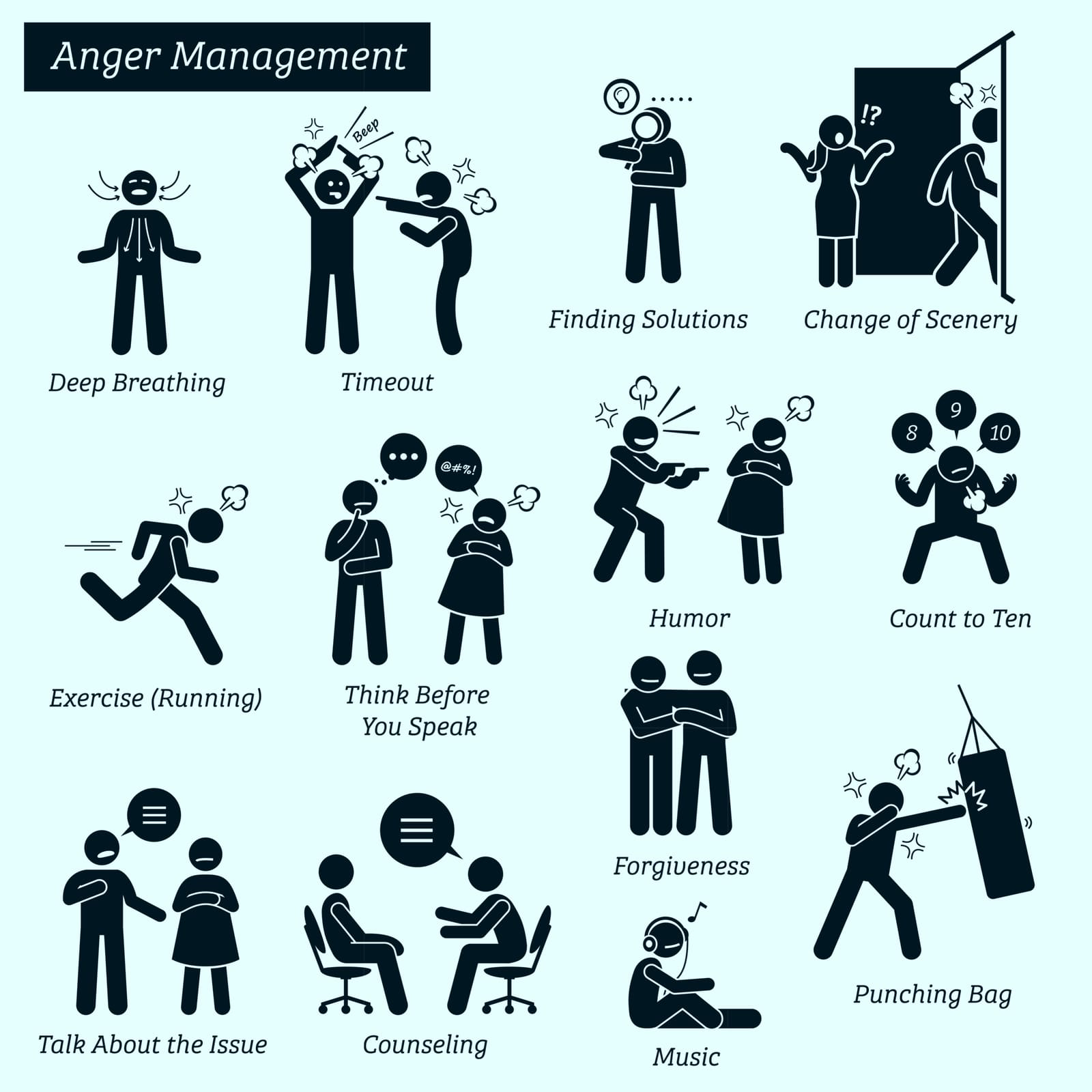
If you know someone who's quick to anger, you may also know someone with an anxiety or related mood disorder. Because anxiety comes with extensive worry and fear, the sense of threat that people with anxiety disorders feel can quickly turn to anger. Sometimes the person who is suffering from these strong emotions may not even recognize why they're angry or understand where their anger is coming from.
Physical signs of anxiety
People with anxiety disorders are usually familiar with the physical signs and symptoms of anxiety. A racing heart, fast breathing, and clammy or sweaty palms signal anxiety. When we're experiencing anxiety, our bodies naturally go on "alert."
Chronic anxiety can lead to or worsen chronic health problems, including heart disease, gastrointestinal disease, sleep disturbances, and even respiratory problems like asthma. Anxiety doesn't usually have any specific cause. It is a general state of anxiousness and emotional and physical distress.
Physical effects of anger
The physical results of anger include fast breathing, increased heart rate, and increased blood pressure. Anger, like anxiety, causes the body to be on alert. The main difference between anger and anxiety is that anger usually has a specific cause or is a response to a specific threat, whereas anxiety often has no specific cause that can be identified.
Relationship between anger and anxiety
The relationship between anxiety and anger continues to be studied. One study of 40 young women diagnosed with an anxiety disorder showed that the higher they ranked their anger, the more pronounced their symptoms of anxiety were.
In addition, anxiety often causes people to be emotionally avoidant. They can suppress their emotions and avoid feelings of anger, shame, or self-esteem issues. When problems arise, sudden anger can result. The combination leaves people unable to cope with strong emotions and sudden outbursts.
Anxiety can also lead to inappropriate or difficult to understand overreactions. "Road rage" is one of the most common ways that anxiety can lead to anger -- at times, very extreme and inappropriate anger.
Most of us understand with common sense that when a person reacts with strong, inappropriate anger, they are probably undergoing stress in another, unrelated part of their lives. People with anxiety disorders need to learn skills in coping with strong emotions, especially anger.
Small Triggers, Big Responses
Anxiety's physical effects, including a lack of restful sleep, can lead to irritability and strong anger responses. Sleep deprivation alone can affect judgment and emotional control. Many times, anger isn't planned or intentional, and such simple causes as a lack of restful sleep can cause outbursts.
Interruptions in daily routines or unexpected events can also lead to angry outbursts on the part of people with anxiety disorders. Often people with anxiety disorders will follow strict daily routines which help them to cope with their anxiety about the unexpected or potential negative events. Disruptions are rare, and when they occur, can lead to angry outbursts due to the strong, underlying emotions of fear and distress.
Depression Plays a Role
In addition to anxiety disorders and their relationship with anger, depression can also lead to uncontrolled anger and outbursts. Some anger is justified, in response to unjust circumstances. However, people with depression as well as anxiety can be prone to anger in response to less important circumstances, such as long lines at stores or minor road mishaps.
Accepting Feelings and Healing
People who have uncontrolled anger, or who are angry about minor events such as a barking dog or a supermarket checkout line, can often feel guilty about their outbursts. Dr. Bernard Golden, writing in Psychology Today, counsels that people should work on accepting their full range of emotions, and not feel excessive guilt about angry outbursts. Instead, they should seek to understand where the anger is coming from, and work to improve their underlying emotional state, whether it is an anxiety disorder, a depressive disorder, or a combination of both.
Understanding one's full range of feelings and understanding how underlying anxiety about social situations or life circumstances, can help to reduce angry outbursts and lead to an overall happier and less traumatic daily life.
Sources
General information, not medical advice
This article can't account for your health history or current treatment. Talk to a qualified clinician before you change anything about your care.
Read our medical disclaimer →
On this page
Physical signs of anxiety
Physical effects of anger
Relationship between anger and anxiety
Small Triggers, Big Responses
Depression Plays a Role
Accepting Feelings and Healing
Sources
Put what you read to work
Track your medicines, check a symptom and talk with people managing the same condition, all in Healthread.
Get the app
Keep reading

Mental Health
Bipolar I vs. Bipolar II
Bipolar I and II are the most common types of mental health disorders. While they both share certain similarities, they have two key differences.
August 8, 2024 · 3 min read

Mental Health
Narcissistic Personality Disorder (NPD)
NPD is a mental health condition that is characterized by an inflated opinion of oneself. Someone who is narcissistic may feel more important than other people.
May 4, 2024 · 3 min read

Mental Health
What is Treatment-Resistant Depression?
Treatment-resistant depression is a form of major depressive disorder that fails to respond to the standard depression treatments involving taking an anti-depressant or going to psychotherapy.
February 3, 2024 · 3 min read


© 2026 Healthread
English · Español
Healthread does not provide medical advice, diagnosis or treatment. Always speak to a qualified clinician about your care.