

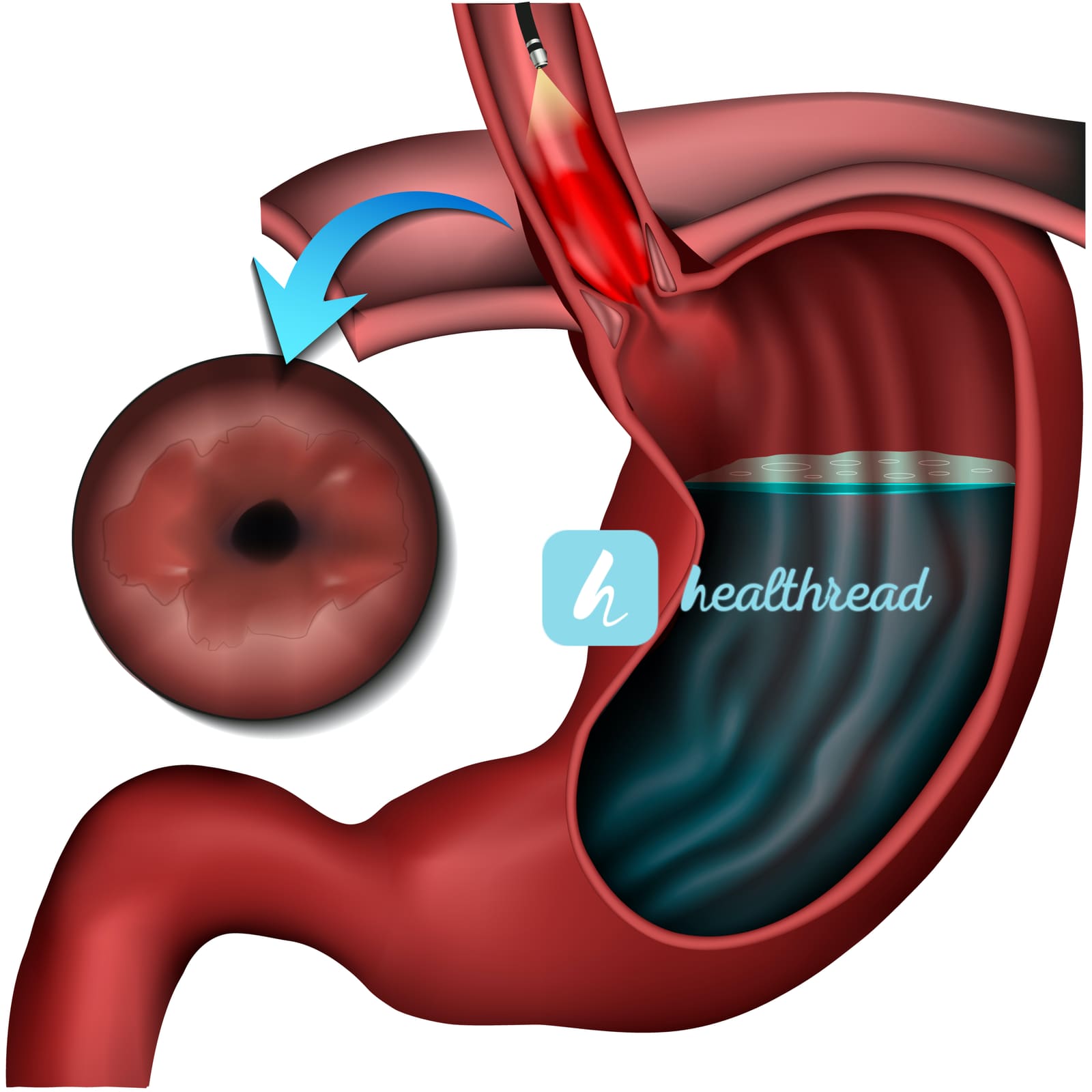
The esophagus is a tube that connects the mouth and stomach. A valve called the lower esophageal sphincter is responsible for preventing stomach contents from moving upwards into the esophagus. Sometimes, this valve fails and allows the stomach acid to continuously flow upwards, resulting in gastroesophageal reflux disease (GERD). As the normal tissue becomes damaged by the acid reflux, it can become thick and irritated. This condition is called Barrett's esophagus. An estimated 1.6% to 6.8% of people in the US are living with Barrett’s esophagus; but the actual number may be higher because the condition does not always cause symptoms.
The tissue changes that occur with Barrett’s esophagus result in a change of appearance to look similar to the lining inside the intestines, which are designed for continuous exposure to stomach acid. These changes increase a person’s risk of developing a rare type of cancer called esophageal adenocarcinoma. People may live with Barrett’s esophagus for many years before developing cancer, or they may not develop cancer at all. Each year, the chance of developing this type of cancer is low (0.5%).
Diagnosis
Barrett’s esophagus doesn’t cause symptoms on its own; however, many people have symptoms of GERD, such as heartburn. Doctor’s may find the condition while conducting other tests to find the cause of GERD. These tests can include:
- Endoscopy: A doctor passes a special camera attached to a long tube (an endoscope) through the mouth, esophagus, stomach, and start of the upper intestine. The patient is usually sedated to improve comfort. The physical changes associated with Barrett's esophagus are visible with the endoscope.
- Biopsy: During an endoscopy, the doctor may take several small tissue samples from the esophagus for examination under a microscope.
If the biopsy finds evidence of Barret’s esophagus, the tissue samples will be studied to understand if precancerous changes have occurred (dysplasia). Doctors use grades to categorize the level of changes that are present. Low grade dysplasia means that precancerous changes are observed, but they are not very advanced. High grade dysplasia means the tissue shows many precancerous changes; this is thought to be the final step before cancer occurs.
Treatment
There are several treatment options, depending on the patient’s overall health and if dysplasia is present.
- Medicines to treat GERD (e.g., proton pump inhibitors) can decrease the risk of developing dysplasia or cancer.
- Endoscopic surveillance: Periodic endoscopy may be is used to monitor for new or increased dysplasia, which can guide choosing the best treatment option.
- Endoscopic ablative therapies: A doctor uses endoscopy to visualize the esophagus and kill the areas of precancerous cells using a laser (photodynamic therapy) or heat (radiofrequency ablation).
- Endoscopic mucosal resection: A doctor uses endoscopy to visualize the esophagus and cut out the damaged tissue.
- Surgery: The affected areas of the esophagus are surgically removed and rebuilt using pieces of the stomach or large intestine.
- Dietary changes: The symptoms of GERD can be reduced by eating smaller meals and decreasing the amount of fatty food, coffee, chocolate, peppermint, greasy food, spicy food, tomatoes, and alcoholic beverages in their diet.
Risk Factors
There are many factors that can increase or decrease a person’s risk of developing Barrett’s esophagus. Factors that increase risk include:
- Male gender
- Caucasian race
- Increased age (average age of diagnosis is 55 years)
- GERD (10% to 15% of people with GERD develop Barrett’s esophagus)
- Smoking
- Obesity
Factors that may decrease risk include:
- A healthy diet high in vegetables, fruits, and vitamins
- Frequently using nonsteroidal anti-inflammatory medications, such as aspirin
- Having a certain infection called Helicobacter pylori (it is not understood how)
Because Barrett’s esophagus does not cause symptoms, doctors may screen patients who are at risk or have symptoms of GERD. Although people do not have any control over some risk factors, making healthy lifestyle choices can reduce risk of developing GERD and Barrett's esophagus.
Sources
General information, not medical advice
This article can't account for your health history or current treatment. Talk to a qualified clinician before you change anything about your care.
Read our medical disclaimer →
Put what you read to work
Track your medicines, check a symptom and talk with people managing the same condition, all in Healthread.
Get the app
Keep reading

Cancer-Updates
Gynecologic Cancer
Gynecologic cancer is a term used to describe a group of cancers that affect the female reproductive system. There are five types of gynecologic cancers named after the body part where they start.
November 5, 2024 · 3 min read

Cancer-Updates
Anal Cancer
Anal cancer is caused when the cancer cells in the anus grow uncontrollably, forming masses or tumors. The cancer cells can sometimes spread to other body parts, causing metastatic cancer.
August 18, 2024 · 3 min read

Cancer-Updates
Bile Duct Cancer (Cholangiocarcinoma)
Bile duct cancer, or cholangiocarcinoma, is a cancer that occurs in the bile ducts, the slender tubes that collect bile, a fluid made by the liver for breaking down fats in the digestion process.
April 17, 2024 · 2 min read


© 2026 Healthread
English · Español
Healthread does not provide medical advice, diagnosis or treatment. Always speak to a qualified clinician about your care.