

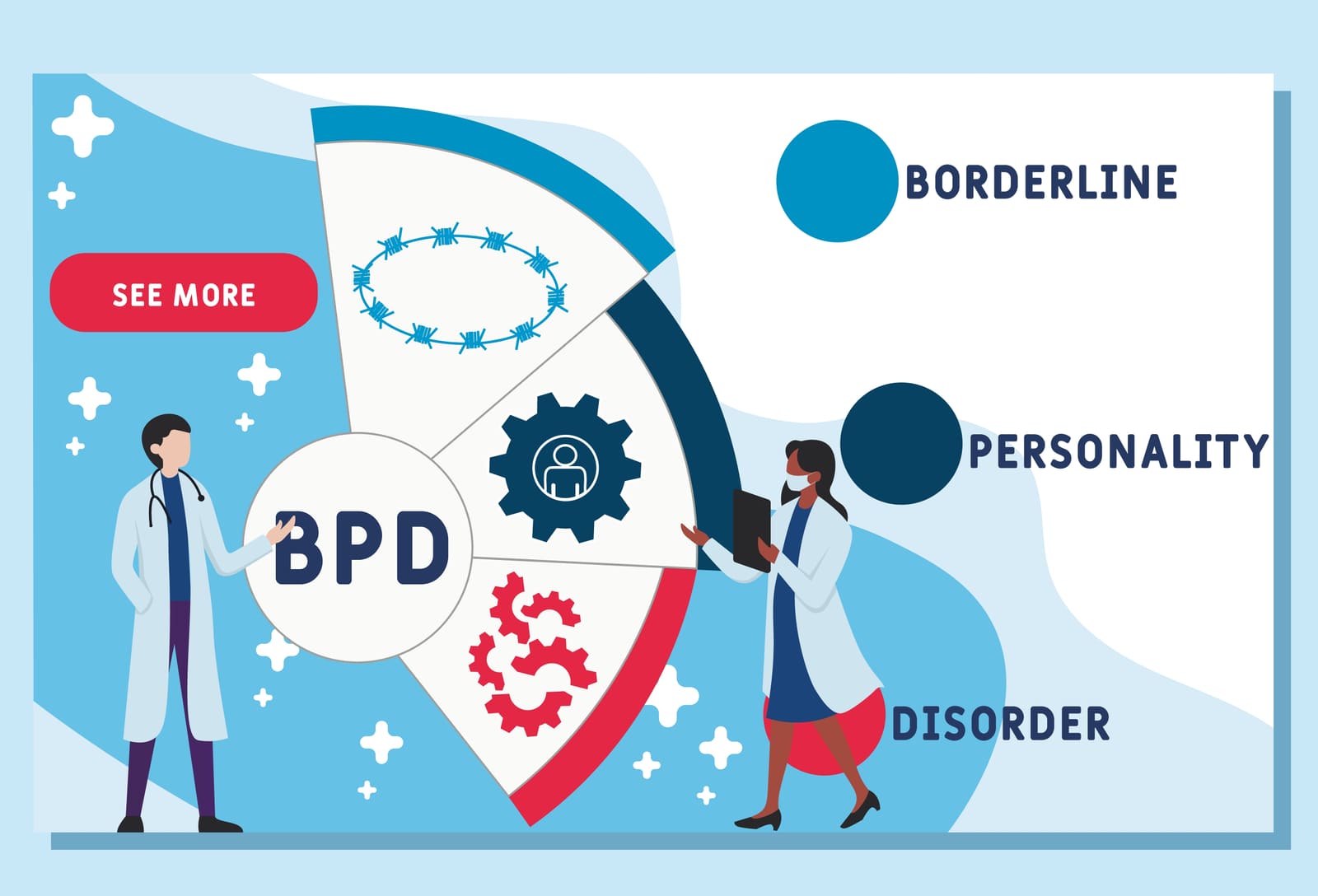
Borderline personality disorder (BPD) is a mental health illness characterized by a person's inability to control emotions. A person experiencing BPD tends to be extremely sensitive. They can have extreme mood fluctuations and intense fear of abandonment, leading to severe emotional volatility. It affects about 14 million people in the United States or nearly 6% of adults at some point in their lifetimes.
Symptoms of BPD
People with borderline personality disorder can display long-term dysfunctional behavioral patterns that lead to poor self-image and disruptive interpersonal relationships, causing social issues and distress.
Many people with BPD are unaware that they have it and that there can be a healthier way to deal with their emotions.
The symptoms of BPD may include:
- Impulsive and risky behaviors like reckless driving, binge eating, or self-sabotaging behaviors like quitting jobs and relationships without reason;
- Dissociative feelings that cause a disconnection from thoughts or stress-related paranoid thoughts. Extreme stress can lead to psychotic episodes.;
- Chronic mood swings involving intense irritability, anger, or depressed mood that last for a few hours to days;
- Distorted and poor self-image affecting life goals, relationships, values, and moods;
- Self-harming behaviors that involve cutting oneself, suicidal thoughts and attempts;
- Intense fear of abandonment that leads to extreme measures of avoiding real or imagined separation or rejection;
- Persistent feelings of emptiness where people with BPD can feel sad, bored, and unfulfilled or empty. Such episodes may involve intense feelings of worthlessness and self-loathing;
A pattern of unstable relationships where there are frequent feelings of extreme admiration clashing with the belief that the person is cruel or doesn't care enough;
- Feelings of intense and uncontrollable anger followed by grief or shame.
Not everyone with a borderline personality disorder will have all of the symptoms. The intensity and severity of the symptoms will also differ from one person to another.
Types of BPD
There are 4 broadly accepted borderline personality disorder (BPD) types:
- Impulsive
- Discouraged
- Self-destructive
- Petulant BPD
You can have more than one type of BPD at the same time or even at different times. Some people have a BPD type that doesn’t fit into any one of these borderline personality categories.
Risk Factors for BPD
Although the causes of BPD are unknown, according to researchers, a combination of the following factors can cause symptoms of BPD in a person.
- Heredity: Although no specific gene has been connected with BPD, people with a family history of BPD are most likely to get it.
- Brain structure and function: Research claims that people having severe BPD symptoms may have some structural changes in the part of the brain that regulates emotions and behaviors. However, no direct connection has been proved between such changes and mental disorders.
- Childhood abuse and trauma: People who have experienced highly traumatic events involving physical, emotional, or sexual abuse as a child are more likely to exhibit BPD symptoms.
Diagnosis of BPD
Mental health professionals like psychiatrists and psychologists can diagnose borderline personality disorders through comprehensive interviews and discussions about the symptoms with their patients.
To diagnose BPD, a licensed mental health professional can-
- Conduct thorough medical examinations to rule out other possible causes;
- Ask questions about previous mental health issues, work history, and other topics that throw light on the behavioral and emotional patterns of the person.
While a BPD diagnosis can only be made by a mental health professional, a self-help BPD quiz can help people with unstable emotions detect the symptoms of BPD.
Treatment
Treatment of BPD must be based on the following:
- The nature and severity of the problem
- The age, health, and medical history of the patient
- The preferences and opinions of the patient
- The patient's tolerance for the therapies, procedures, and medicines
- The patient's expectation of the treatment
Treatments used in BPD are:
Psychotherapy
Psychotherapy or talking treatments can be effective for people with BPD symptoms. It includes:
- Cognitive behavioral therapy(CBT): It provides tools to change a person's core beliefs and behaviors while reducing mood swings and anxiety symptoms.
- Dialectical behavioral therapy(DBT): It uses mindfulness to help people control extreme emotions and destructive behavior patterns.
- Schema-focused therapy: It helps people change how they see themselves.
- STEPPS or Systems Training for Emotional Predictability and Problem-Solving: It provides tools to manage stressful situations.
Medications
Certain neuroleptic and anti-psychotic medicines can help with BPD. Sometimes antidepressants are recommended to treat anxiety or depression in people with BPD.
Treatment is more challenging to treat when other disorders such as substance abuse, eating disorders, depression, and other personality disorders coexist.
Getting Support for BPD
It can help to work with a mental health professional to learn about and manage your BPD. You may also find participating in a BPD support group beneficial.
The National Alliance for Borderline Personality Disorders has a comprehensive list of BPD resources.
Sources
- 1nimh.nih.gov/health/topics/borderline-personality-disorder#:~:text=Borderline%20personality%20disorder%20is%20a,impact%20their%20relationships%20with%20others
- 2helpguide.org/articles/personality-disorders/borderline-personality-disorder-test.htm
- 3mayoclinic.org/diseases-conditions/borderline-personality-disorder/symptoms-causes/syc-20370237
- 4my.clevelandclinic.org/health/diseases/9762-borderline-personality-disorder-bpd
- 5borderlinepersonalitydisorder.org/what-is-bpd/bpd-overview/
General information, not medical advice
This article can't account for your health history or current treatment. Talk to a qualified clinician before you change anything about your care.
Read our medical disclaimer →
On this page
Symptoms of BPD
Types of BPD
Risk Factors for BPD
Diagnosis of BPD
Treatment
Psychotherapy
Medications
Getting Support for BPD
Sources
Put what you read to work
Track your medicines, check a symptom and talk with people managing the same condition, all in Healthread.
Get the app
Keep reading

Mental Health
Bipolar I vs. Bipolar II
Bipolar I and II are the most common types of mental health disorders. While they both share certain similarities, they have two key differences.
August 8, 2024 · 3 min read

Mental Health
Narcissistic Personality Disorder (NPD)
NPD is a mental health condition that is characterized by an inflated opinion of oneself. Someone who is narcissistic may feel more important than other people.
May 4, 2024 · 3 min read

Mental Health
What is Treatment-Resistant Depression?
Treatment-resistant depression is a form of major depressive disorder that fails to respond to the standard depression treatments involving taking an anti-depressant or going to psychotherapy.
February 3, 2024 · 3 min read


© 2026 Healthread
English · Español
Healthread does not provide medical advice, diagnosis or treatment. Always speak to a qualified clinician about your care.