

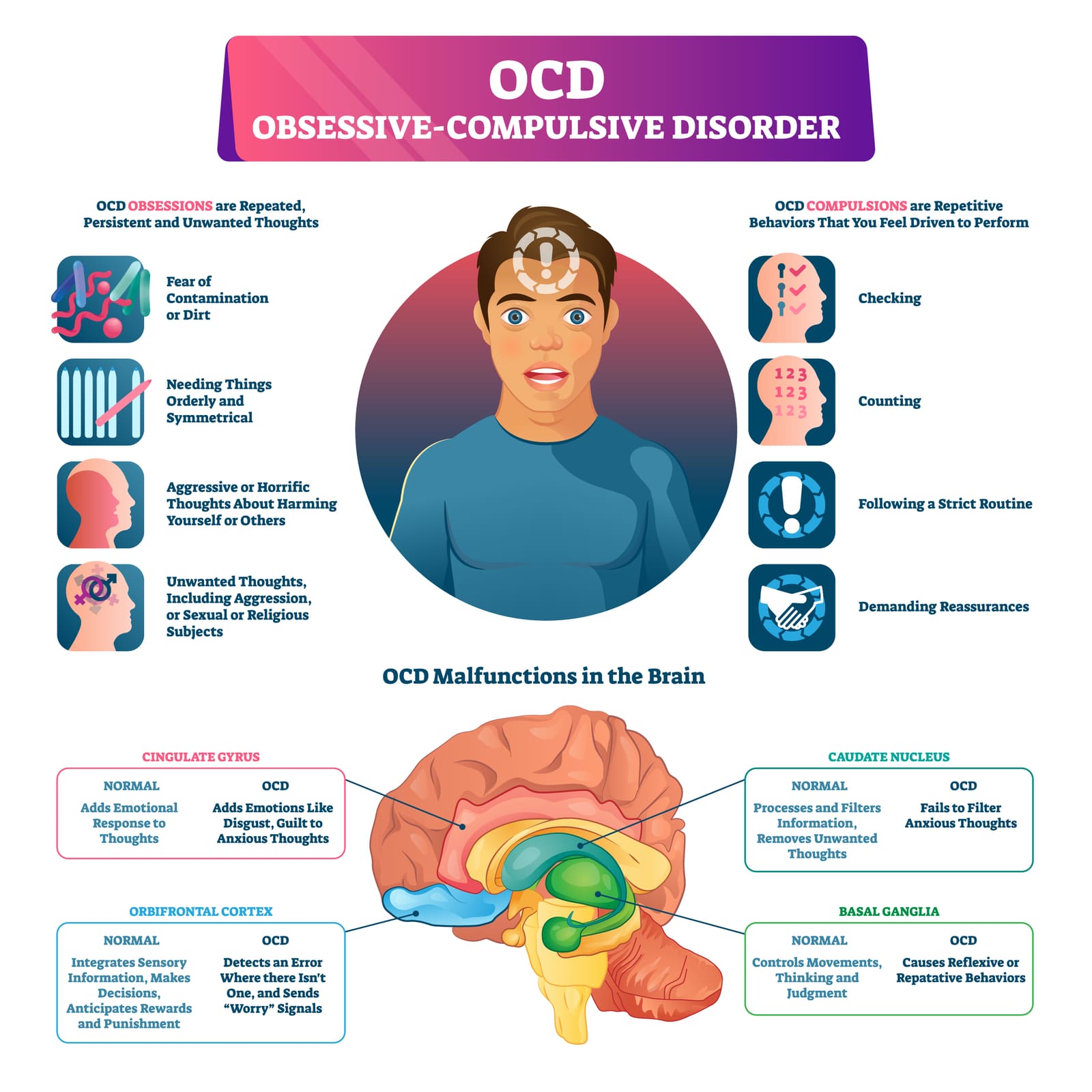
Although you've probably heard those who are particular about housekeeping claim to have OCD, real obsessive-compulsive disorder is serious and often requires professional treatment and support. Here's what you need to know to recognize the symptoms, get the help you need, and lead a normal and gratifying life.
Who is at highest risk?
OCD is common, affecting approximately 1.2% of American adults. Women are at higher risk of developing OCD than men, and those who have a first-degree relative with OCD face increased risk, as well. Childhood trauma can also contribute. Finally, certain abnormalities in the subcortical structures and frontal cortex of the brain may increase risk of developing the disorder, but research is still ongoing to better understand the relationship. Knowing your risk factors can help you communicate with your primary care provider and support early diagnosis and treatment.
I'm particular...is it OCD?
Being particular about certain aspects of life does not constitute obsessive compulsive disorder. Rather, OCD is characterized by a myriad of serious obsessions and compulsions that interfere with daily life.
Obsessions are repetitive thoughts while compulsions are repetitive behaviors. Somebody with OCD may have an unproportionate fear of germs and therefore excessively wash their hands, clean, or disinfect, for example.
Your primary care provider will help you determine whether your rituals are normal or signs of OCD, but to help you differentiate, people with OCD:
- typically spend an hour or more every day on their obsessions and compulsions
- may believe that something terrible or ominous will happen if they fail to perform the ritual
- experiences relief but not pleasure while performing the rituals
- can't control the way they think or feel, even when they know their thoughts and behaviors are harming them
- experience serious problems in their daily lives - at work and at home - as a result of their obsessions and compulsions
If you or someone you know is exhibiting these signs and symptoms, life can be significantly improved with help from the right team. Seeking treatment is important.
Who treats OCD?
Start with your primary care provider. He or she can help diagnose OCD as well as rule out other common conditions that might co-exist with OCD or produce similar signs and symptoms. He or she can also refer to you other specialists who will become part of the care team while your primary care provider coordinates care and manages your overall well-being.
OCD is diagnosed through physical examination, psychological evaluation, and comparison of your signs and symptoms to the diagnostic criteria listed in the Diagnostic and Statistical Manual of Mental Disorders (DSM-5). Lab and imaging tests typically aren't necessary.
How is OCD treated?
OCD is typically treated with cognitive-behavioral therapy, or CBT. CBT typically requires frequent visits to a cognitive-behavioral therapist as well as home exercises designed to change your thoughts and behaviors over time. People who stick to the treatment plan can reduce their obsessions and compulsions until they no longer interfere with work, relationships, and personal life. In many cases, symptoms can be completely resolved.
Sources
General information, not medical advice
This article can't account for your health history or current treatment. Talk to a qualified clinician before you change anything about your care.
Read our medical disclaimer →
On this page
Who is at highest risk?
I'm particular...is it OCD?
Who treats OCD?
How is OCD treated?
Sources
Put what you read to work
Track your medicines, check a symptom and talk with people managing the same condition, all in Healthread.
Get the app
Keep reading

Mental Health
Bipolar I vs. Bipolar II
Bipolar I and II are the most common types of mental health disorders. While they both share certain similarities, they have two key differences.
August 8, 2024 · 3 min read

Mental Health
Narcissistic Personality Disorder (NPD)
NPD is a mental health condition that is characterized by an inflated opinion of oneself. Someone who is narcissistic may feel more important than other people.
May 4, 2024 · 3 min read

Mental Health
What is Treatment-Resistant Depression?
Treatment-resistant depression is a form of major depressive disorder that fails to respond to the standard depression treatments involving taking an anti-depressant or going to psychotherapy.
February 3, 2024 · 3 min read


© 2026 Healthread
English · Español
Healthread does not provide medical advice, diagnosis or treatment. Always speak to a qualified clinician about your care.