

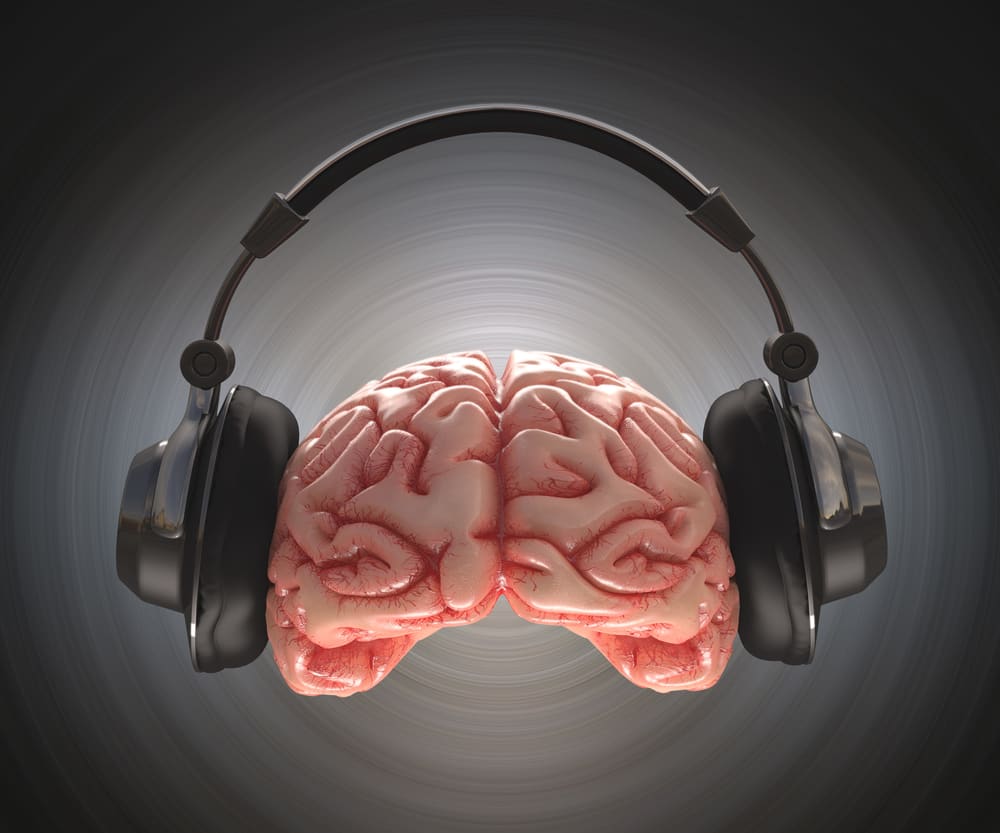
Have you ever wondered why human beings love listening to music?
Scientists have wondered this, too. And while we're still learning about the connection between mood and music, we do have some evidence to support the idea that listening to music can actually benefit your mental health.
3 Mental Health Benefits of Music
According to Johns Hopkins Medicine, scientific studies of music suggest that listening to tunes can:
- 1.Reduce anxiety
- 2.Improve mood
- 3.Enhance alertness, attention, and memory
One study from the University of California Irvine even found that listening to Mozart improved IQ test scores among college students, at least temporarily. Additional studies cited by Harvard University suggest that listening to music can increase joy, improve energy, reduce stress, and ease depression symptoms.
By the way, it's not just mental health benefits: listening to music has also been shown to improve sleep, lower blood pressure, decrease pain, improve balance, prevent falls, and even enhance recovery in people who have had strokes. And learning how to play an instrument could offer even more benefits in terms of boosting mood, memory, attention, self-esteem, problem-solving, and language skills.
Why Music is Good for Mental Health (Plus Tips on How to Get the Most out of Your Playlist)
Why does music appear to offer such beneficial effects on the mind? We're still learning about this.
One theory is that music acts as a like a form of "exercise" for nerve cells in our brain, helping them get more organized and efficient. Certain types of music, including upbeat and joyful tunes, may also increase blood flow, which could enhance cognition and brain health. It's also possible that music activates our brain's reward system in a way that promotes a sense of well-being.
No matter what the scientific explanation is behind the health benefits of music health benefits, most people inherently understand the value of listening to some favorite tunes—whether they're working, working out, or simply trying to unwind after a stressful day.
Wondering how to get the most out of your playlist? Here are some suggestions according to a recent 2020 report from the Global Council on Brain Health and AARP:
- Listen to upbeat tunes to combat feelings of stress, depression, and anxiety
- Choose familiar music that comforts you and reminds you of positive memories
- Choose unfamiliar and new music if you want to stimulate and challenge your brain
- Move and dance to music—physical activity can enhance the stress-busting effects of great tunes
By the Way, This is One of the Most Relaxing Songs Ever (According to Neuroscientists)
Music is a hugely personal topic. But according to a team of researchers in 2019, the song "Weightless" by Marconi Union is one of the most relaxing songs in the world!
The neuroscience researchers conducted a study in which participants had to solve puzzles as quickly as possible while connected to sensors that measured their level of stress (as noted by things like heart rate and blood pressure). While solving puzzles and listening to "Weightless" at the same time, the participants' anxiety level dropped by more than 65%.
The researchers proposed that the song's slow rhythm—50 to 60 beats per minute—naturally helps slow a listener's heart rate, due to a neurological phenomenon known as "entrainment," and it's the lowered heart rate that helps decrease the listener's overall stress response.
Do You Listen to Music?
If you're facing mental health challenges, consider making music a part of your daily life if you don't already—and tell us about the other mental health topics you'd love to read on Healthread.
Sources
- 1ncbi.nlm.nih.gov/pmc/articles/PMC6353111/
- 2hopkinsmedicine.org/health/wellness-and-prevention/keep-your-brain-young-with-music
- 3latimes.com/archives/la-xpm-1993-10-14-mn-45497-story.html
- 4nammfoundation.org/articles/2014-06-01/benefIts-learning-and-playing-music-adults
- 5discovery.com/science/neuroscientists-found-the-most-relaxing-song
- 6aarp.org/health/brain-health/info-2020/music-mental-health.html
General information, not medical advice
This article can't account for your health history or current treatment. Talk to a qualified clinician before you change anything about your care.
Read our medical disclaimer →
On this page
3 Mental Health Benefits of Music
Why Music is Good for Mental Health (Plus Tips on How to Get the Most out of Your Playlist)
By the Way, This is One of the Most Relaxing Songs Ever (According to Neuroscientists)
Do You Listen to Music?
Sources
Put what you read to work
Track your medicines, check a symptom and talk with people managing the same condition, all in Healthread.
Get the app
Keep reading

Mental Health
Bipolar I vs. Bipolar II
Bipolar I and II are the most common types of mental health disorders. While they both share certain similarities, they have two key differences.
August 8, 2024 · 3 min read

Mental Health
Narcissistic Personality Disorder (NPD)
NPD is a mental health condition that is characterized by an inflated opinion of oneself. Someone who is narcissistic may feel more important than other people.
May 4, 2024 · 3 min read

Mental Health
What is Treatment-Resistant Depression?
Treatment-resistant depression is a form of major depressive disorder that fails to respond to the standard depression treatments involving taking an anti-depressant or going to psychotherapy.
February 3, 2024 · 3 min read


© 2026 Healthread
English · Español
Healthread does not provide medical advice, diagnosis or treatment. Always speak to a qualified clinician about your care.