

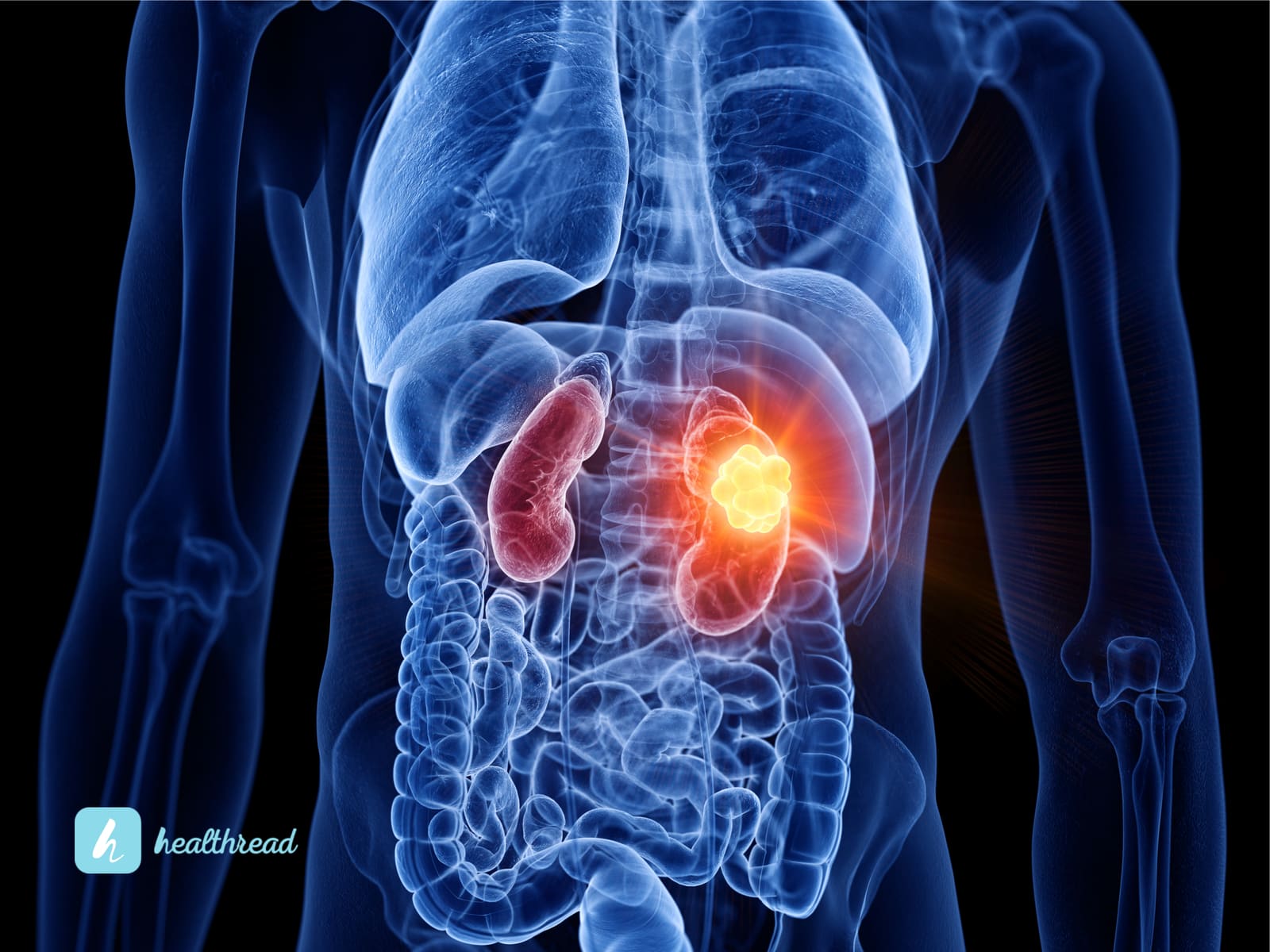
According to the Kidney Cancer Association, more than 76,000 people in the U.S. will receive a kidney cancer diagnosis annually. An estimated 13,780 will succumb to the disease. There are over 500,000 people living with kidney cancer in the U.S.
The kidneys are located on each side of the spine above the waist. It is their job to clean toxins out of the blood, converting that waste into urine. Urine passes from the kidney to the bladder via a tube called the ureter.
These organs also play a role in maintaining electrolyte levels and creating hormones that stabilize blood pressure. The kidneys make red blood cells and are vital to bone health.
Also known as renal cancer, most kidney cancers occur when malignant cells develop in the lining of the kidney tubules.
Risk Factors
Older people are at primary risk for kidney cancer, with men are more likely to develop kidney cancer than women. However, there are certain kidney cancers affecting children.
Other risk factors include:
- Family history
- High blood pressure
- Long-term hepatitis C infection
- Misuse of some pain medications
- Obesity
- Smoking
A person receiving treatment for kidney failure, such as long-term dialysis, is also at increased risk of developing kidney cancer. There is some additional risk for those diagnosed with kidney stones. Exposure to trichloroethylene, a chemical used to remove grease from metal, is a possible kidney cancer trigger.
Types of Kidney Cancers
Renal cell carcinoma is the most common type of kidney cancer, making up as much as 95 percent of kidney tumors. There are many RCC subtypes, including:
- Clear cell — the most common, characterized by pale cells
- Papillary — tumors exhibit tiny fingerlike growths
- Chromophobe — rare, with larger cells
- Collecting duct — also rare, with cells resembling tubes
Some tumors are unclassified. The cells are a combination of subtypes or the cells do not fit these categories.
Kidney cancers other than RCC include:
- Renal sarcoma –A rare cancer starting in the connective tissues and blood vessels around the kidneys.
- Urothelial carcinoma –This cancer originates where the kidney meets the ureter. It is similar to bladder cancer in many aspects.
- Wilms tumor –Develops almost exclusively in children.
Not all kidney tumors are cancerous. About 20 percent of all kidney tumors are benign. Removal is necessary because many benign tumors grow to a considerable size, but they do not spread to other organs.
Symptoms
Kidney cancer usually shows few or no symptoms in the early stages. Signs that may appear eventually include:
- Appetite loss
- Blood in the urine
- Chronic pain in the side or back
- Fatigue
- Fever
- Unexplained weight loss
Diagnosis
Kidney cancers are frequently found by chance. The patient does not display symptoms and visits the doctor for a regular screening or another medical issue.
If a mass is found, the doctor will likely recommend consulting a urologist. The urologist conducts a physical exam and takes a medical history. Blood and urine tests are conducted. The doctor will order imaging tests for diagnostic purposes, including:
- X-rays
- CT scans
- MRIs
- Ultrasounds
The doctor may recommend a biopsy to determine whether cancer is present. The procedure involves taking a small tissue sample from an area of the kidney in which cancer is suspected. A pathologist views the sample under a microscope to see whether it contains cancer cells.
If diagnosed as cancer, identifying its stage is the next step. Kidney cancer stages run from I to IV. Lower stages indicate the cancer is probably still confined to the kidney. Higher stages indicate the cancer may have metastasized, or spread.
The tumor is also graded for aggressiveness. The grades are 1 to 4, from the least to the most aggressive.
Treatment
Treatment depends on the type of kidney cancer, stage, grade, and the patient’s age and medical history.
If the mass is very small, the doctor may put the patient on active surveillance. This involves visiting the doctor on a regular basis and undergoing diagnostic testing. The idea is to avoid the progression of the tumor while avoiding certain treatment risks.
Many patients will undergo a nephrectomy or surgical removal of the kidney. A partial nephrectomy removes only the part of the kidney containing the tumor. In a simple nephrectomy, just one kidney is removed. A radical nephrectomy involves removing not only the entire kidney but the adrenal gland and tissue surrounding the kidney. One functioning kidney can take over the work of both post-surgery.
Surgery is often the only treatment necessary if the cancer has not spread beyond the kidney. If the cancer has spread, there are a variety of treatment options.
Unlike many cancers, chemotherapy is not widely used to treat kidney malignancies. Instead, targeted therapies are preferred. These medications target specific components of the cancer cells. Side effects of these drugs are generally less severe than chemotherapy.
Other frequently used therapies include radiation, which kills cancer cells and can provide pain relief for those whose cancers have metastasized to the bone. Immunotherapy helps the immune system fight cancer.
Sources
General information, not medical advice
This article can't account for your health history or current treatment. Talk to a qualified clinician before you change anything about your care.
Read our medical disclaimer →
Put what you read to work
Track your medicines, check a symptom and talk with people managing the same condition, all in Healthread.
Get the app
Keep reading

Cancer-Updates
Gynecologic Cancer
Gynecologic cancer is a term used to describe a group of cancers that affect the female reproductive system. There are five types of gynecologic cancers named after the body part where they start.
November 5, 2024 · 3 min read

Cancer-Updates
Anal Cancer
Anal cancer is caused when the cancer cells in the anus grow uncontrollably, forming masses or tumors. The cancer cells can sometimes spread to other body parts, causing metastatic cancer.
August 18, 2024 · 3 min read

Cancer-Updates
Bile Duct Cancer (Cholangiocarcinoma)
Bile duct cancer, or cholangiocarcinoma, is a cancer that occurs in the bile ducts, the slender tubes that collect bile, a fluid made by the liver for breaking down fats in the digestion process.
April 17, 2024 · 2 min read


© 2026 Healthread
English · Español
Healthread does not provide medical advice, diagnosis or treatment. Always speak to a qualified clinician about your care.