

Liver cancer is a type of cancer that starts in your liver's cells. Your liver sits in your abdomen in the upper right portion, above your stomach and underneath your diaphragm. It's about the size of a football.
Every year in the U.S., around 10,000 women and 24,000 men get liver cancer and around 9,000 women and 18,000 men die from this cancer. The percentage of individuals in the U.S. who get liver cancer has been increasing for the past three decades, but might be starting to level off.
Symptoms of Liver Cancer
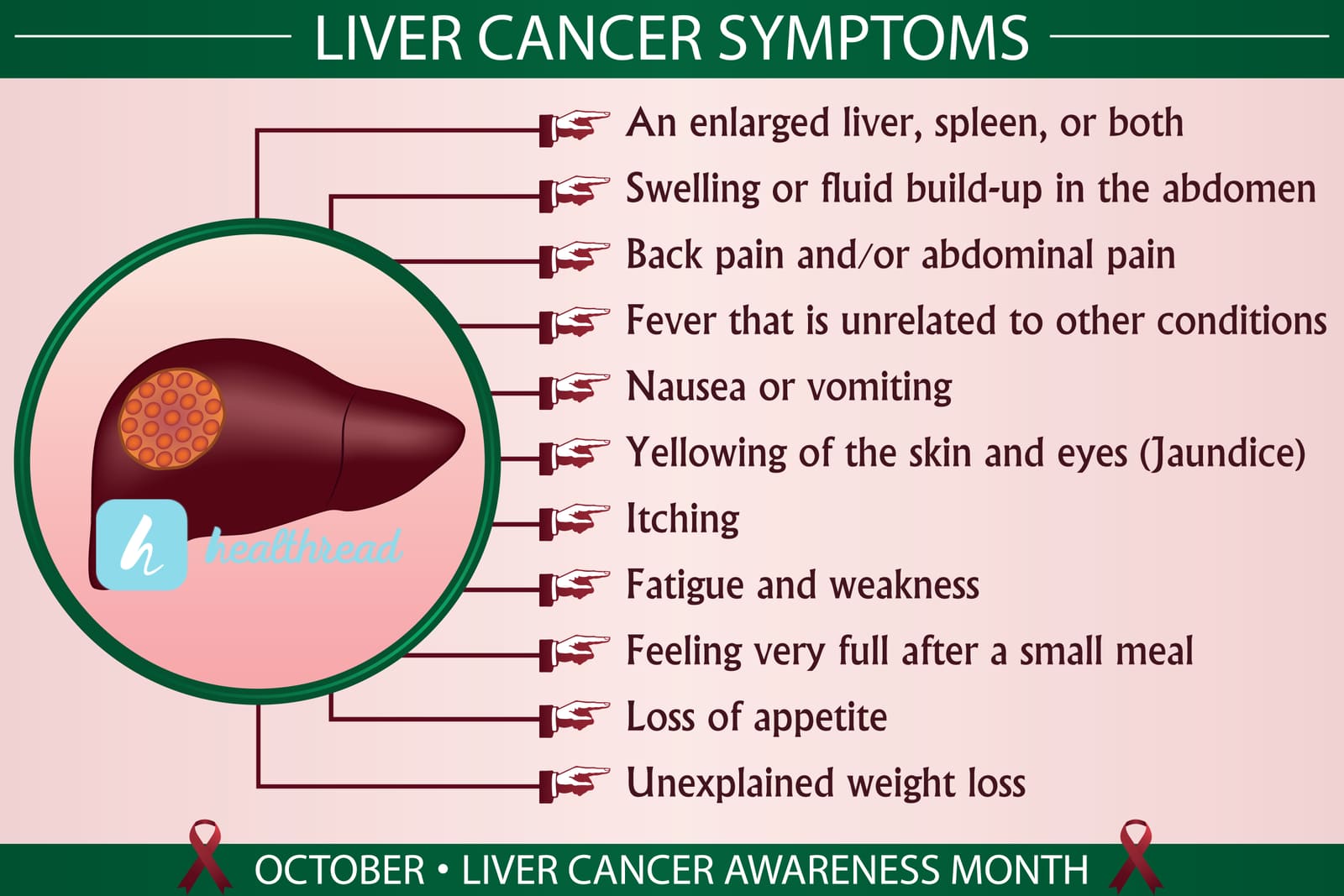
Many individuals don't have symptoms and signs with primary liver cancer in its early stages. When symptoms and signs do show up, they might include:
- Loss of appetite
- Weight loss without trying
- Chalky, white stools
- Nausea and vomiting
- Upper abdominal pain
- Abdominal swelling
- Fatigue and general weakness
- Yellow skin discoloration and jaundice in the white of your eyes
Causes of Liver Cancer
Liver cancer occurs when your liver cells develop mutations or changes in their DNA. The DNA of cells is the material that offers instructions for each body chemical process. DNA mutations cause these instruction changes. One result is the cells might start growing out of control, gradually forming a tumor (cancerous cell mass).
In some cases, it's known what the cause of liver cancer is, like chronic hepatitis infections, for instance. However, in some cases, liver cancer occurs in individuals with no underlying conditions and the cause isn't clear.
Risk Factors for Liver Cancer
1. Race/ethnicity
In the U.S., Pacific Islanders and Asian Americans have the greatest risk of liver cancer, followed by:
- African Americans
- Hispanics/Latinos
- Whites
- American Indians/Alaska Natives
2. Gender
Liver cancer is more common in men than it is in women.
3. Chronic Viral Hepatitis
Globally, the most common liver cancer risk factor is chronic hepatitis B infection or hepatitis C infection. Infections like these can cause liver cirrhosis and are responsible for turning liver cancer into the most common type of cancer in many areas around the globe.
Treatment for Liver Cancer
Some types of treatment for liver cancer include:
1. Surgery
One of the best options for curing liver cancer is with either a liver transplant or surgical resection. If all the liver cancer is totally removed, you'll have the best outcome.
Partial Hepatectomy
In this surgery, the surgeon removes part of your liver. Only individuals with decent function of their liver who are also healthy enough for a surgical procedure and who have one tumor that hasn't grown into their blood vessels can have this surgery.
Liver Transplant
A liver transplant, when it's available, might be a good option for some individuals with liver cancer. Liver transplants could be a choice for individuals with tumors that surgery can't remove, either due to the tumor's location or because the liver has too much disease for the individuals to tolerate partial removal.
Generally, a transplant is used for treating individuals with small tumors that haven't grown into neighboring blood vessels. It could also rarely be a choice for individuals with resectable cancers (cancers that can be removed totally). With a transplant, the risk of developing a second new cancer of the liver is not only reduced, but the new liver will normally function again.
2. Ablation
This is a treatment that is used for destroying liver tumors without the surgeon having to remove them. These methods could be used in individuals with several small tumors and when having surgery isn't an ideal option (frequently due to reduced liver function or poor health). They aren't as likely to cure the cancer like surgery can, but they could still be extremely helpful for some individuals. Ablation treatments are additionally used in people sometimes who are on the waiting list for a liver transplant.
3. Radiation
High-energy rays are used in radiation therapy to kill cancer cells. It might not be ideal for some individuals whose liver has been damaged greatly by diseases like cirrhosis or hepatitis.
4. Chemotherapy
Chemotherapy is treatment with medication that destroys cancer cells. It might be a choice for individuals whose liver cancer:
- Hasn't responded to local therapies like embolization or ablation
- Can't be treated with surgery
- Can't be helped any longer with targeted therapy
5. Immunotherapy
Immunotherapy uses medications that help an individual's own immune system locate and destroy cancer cells. It could be used for treating some individuals with liver cancer.
Have You Been Diagnosed With Liver Cancer?
If you're struggling with liver cancer, you're not alone. Many others are going through the same thing. Connect with them on Healthread and share stories and tips. Work together to find ways to feel better in your body and improve your health.
Sources
General information, not medical advice
This article can't account for your health history or current treatment. Talk to a qualified clinician before you change anything about your care.
Read our medical disclaimer →
On this page
Symptoms of Liver Cancer
Causes of Liver Cancer
Risk Factors for Liver Cancer
1. Race/ethnicity
2. Gender
3. Chronic Viral Hepatitis
Treatment for Liver Cancer
1. Surgery
Partial Hepatectomy
Liver Transplant
2. Ablation
3. Radiation
4. Chemotherapy
5. Immunotherapy
Have You Been Diagnosed With Liver Cancer?
Sources
Put what you read to work
Track your medicines, check a symptom and talk with people managing the same condition, all in Healthread.
Get the app
Keep reading

Cancer-Updates
Gynecologic Cancer
Gynecologic cancer is a term used to describe a group of cancers that affect the female reproductive system. There are five types of gynecologic cancers named after the body part where they start.
November 5, 2024 · 3 min read

Cancer-Updates
Anal Cancer
Anal cancer is caused when the cancer cells in the anus grow uncontrollably, forming masses or tumors. The cancer cells can sometimes spread to other body parts, causing metastatic cancer.
August 18, 2024 · 3 min read

Cancer-Updates
Bile Duct Cancer (Cholangiocarcinoma)
Bile duct cancer, or cholangiocarcinoma, is a cancer that occurs in the bile ducts, the slender tubes that collect bile, a fluid made by the liver for breaking down fats in the digestion process.
April 17, 2024 · 2 min read


© 2026 Healthread
English · Español
Healthread does not provide medical advice, diagnosis or treatment. Always speak to a qualified clinician about your care.