

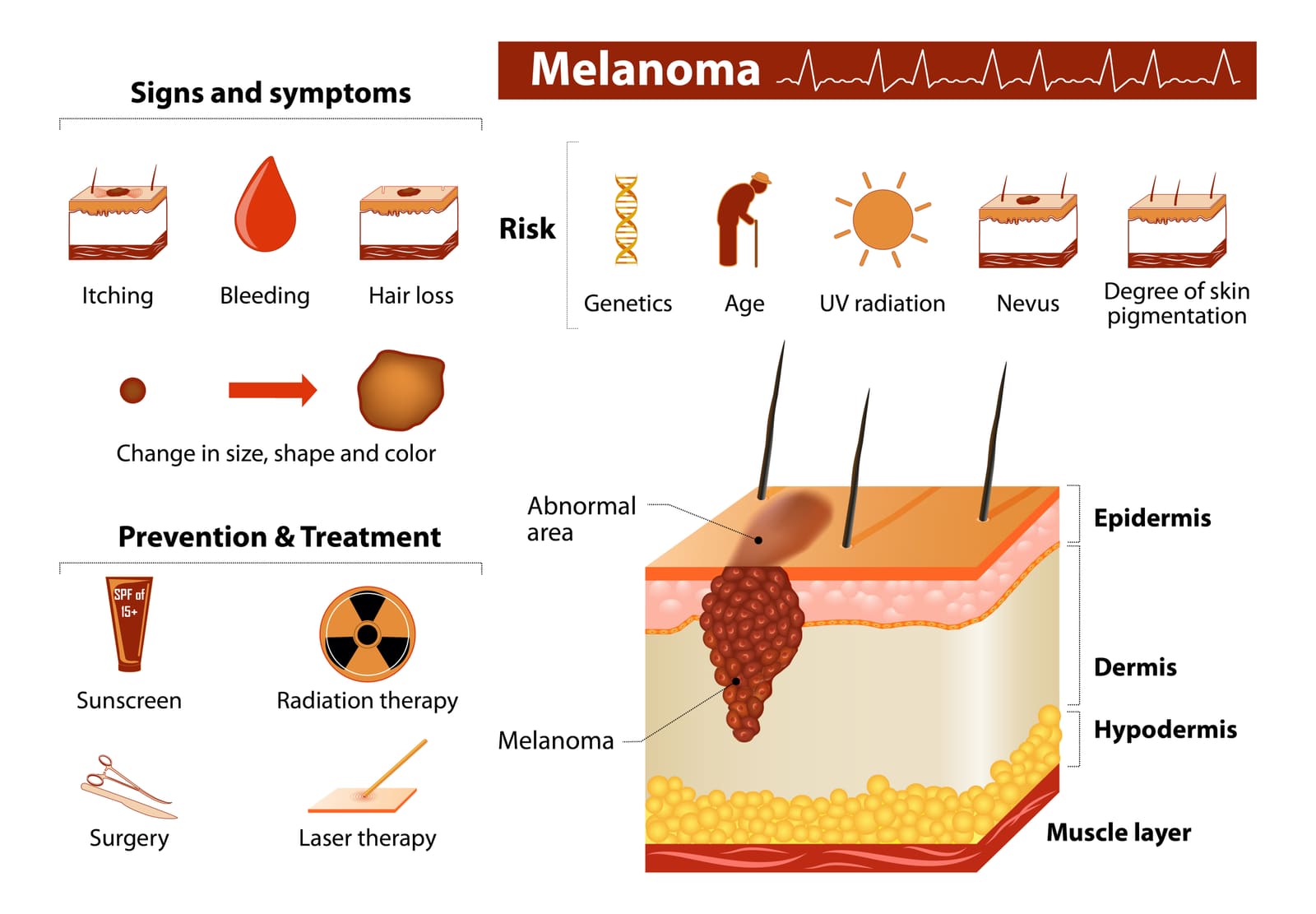
Melanoma is a skin cancer developing when cells known as melanocytes begin growing out of control. These are the cells providing skin with brown color. Because melanomas can spread to various organs in the body, it can prove fatal. When detected early, melanomas are curable.
Many people can avoid melanoma by staying out of the sun in the heat of the day, always wearing sunscreen when outdoors, and not using tanning beds or lights. Wear hats, long-sleeved shirts, and other protective clothing when in the sun. Stay in the shade as much as possible.
Do a monthly inspection of your moles or have your partner do them, and note any changes. Go to a dermatologist annually and have the doctor view all moles.
Signs of Melanoma
Suspect a possible melanoma if you notice changes in a mole or new mole development. While melanomas may appear anywhere on the body, they most frequently show up on the legs of women and the backs and chests of men.
Doctors use the ABCDE format to identify potential melanomas. This involves:
- A – asymmetrical moles
- B –borders that are irregular
- C- changes in mole color
- Diameter –the mole is growing
- Evolving –changes in the mole, including bleeding or itching.
If you notice any change in a mole, contact your doctor as soon as possible. Keep in mind that not every melanoma starts out as a mole. Some may appear as oddly pigmented skin or another type of growth.
Hidden Melanomas
Some melanomas develop in areas with little sun exposure. These so-called hidden melanomas are often found between the toes and fingers or underneath the nails. The soles of the feet and palms of the hand are other frequent locations. Dark-skinned people are more likely to experience hidden melanomas.
Sometimes, melanomas develop in the mucous membranes. These growths are especially hard to find. Areas in the mucous membranes vulnerable to melanomas include the:
- Anus
- Esophagus
- Mouth
- Nose
- Vagina
- Urinary tract
Risk Factors
Anyone can develop melanoma, but some people are at higher risk than others. Risk factors for the disease include:
- Light skin
- Compromised immune system
- Excessive tanning or use of tanning beds
- History of sunburns
- Excessive amount of moles
- Melanoma family history
Men tend to develop melanomas more often than women. Melanomas can strike at any age, and it is among the most commonly found cancers in those aged 30 and under.
Melanoma Diagnosis
The doctor takes a health history and performs a physical examination, including examination of suspect moles. The doctor will likely excise the mole surgically and send the sample to a laboratory for a biopsy. The biopsy will determine whether the tissue is malignant.
If melanoma is diagnosed, the patient must undergo additional testing. Based on test results, the melanoma is staged. This indicates the severity of the disease based on tumor size, lymph node involvement, and whether cancer has metastasized, or spread:
- Stage 1 –No more than 1 millimeter thick, and no indication of spreading.
- Stage 2 –Thicker than a stage 1 tumor. There is no indication of spread, but metastasis is more likely than in stage 1.
- Stage 3 –The cancer has spread into the skin, lymph nodes, or lymph vessels.
- Stage 4 –The cancer has spread to other parts of the body. Melanoma most often affects the brain, gastrointestinal tract, liver, and lungs.
There are subtypes among all of these stages, generally based on tumor size and thickness.
Melanoma Treatment
For those with early-stage cancer, removal of the mole and some underlying and adjacent tissue may prove curative. However, if the cancer has spread beyond the skin, additional treatment is necessary. The type of treatment depends on the cancer stage. Such treatments may include:
- Surgical removal of affected lymph nodes
- Chemotherapy –Drugs are given either intravenously or orally to kill cancer cells.
- Radiation –Radiation therapy targets cancer cells. In melanoma treatment, it is often used on the lymph nodes if the disease was discovered there. It is also used to relieve the symptoms of metastasized cancer.
- Targeted therapy drugs –Roughly 50 percent of melanoma patients have BRAF gene mutations. Those with this mutation may benefit from targeted therapy drugs such as a BRAF inhibitor. These medications include Vemurafenib, marketed under the trade name Zelboraf, dabrafenib (Tafinlar), and encorafenib (Braftovi). MEK inhibitors are another class of targeted therapy drugs for melanoma.
- Immunotherapy –This treatment focuses on boosting the immune system so the body can fight the cancer. Cancer cells create proteins that help them elude immune system cells. Immunotherapy disrupts that process.
Treatment will also depend on the patient’s preferences once they discuss their options with their doctor. Considerations include the patient’s age, cancer stage, potential side effects, and the treatment’s benefits.
The patient may want to discuss the possibility of enrolling in a clinical trial for new drug therapies with the doctors.
Sources
General information, not medical advice
This article can't account for your health history or current treatment. Talk to a qualified clinician before you change anything about your care.
Read our medical disclaimer →
On this page
Signs of Melanoma
Hidden Melanomas
Risk Factors
Melanoma Diagnosis
Melanoma Treatment
Sources
Put what you read to work
Track your medicines, check a symptom and talk with people managing the same condition, all in Healthread.
Get the app
Keep reading

Cancer-Updates
Gynecologic Cancer
Gynecologic cancer is a term used to describe a group of cancers that affect the female reproductive system. There are five types of gynecologic cancers named after the body part where they start.
November 5, 2024 · 3 min read

Cancer-Updates
Anal Cancer
Anal cancer is caused when the cancer cells in the anus grow uncontrollably, forming masses or tumors. The cancer cells can sometimes spread to other body parts, causing metastatic cancer.
August 18, 2024 · 3 min read

Cancer-Updates
Bile Duct Cancer (Cholangiocarcinoma)
Bile duct cancer, or cholangiocarcinoma, is a cancer that occurs in the bile ducts, the slender tubes that collect bile, a fluid made by the liver for breaking down fats in the digestion process.
April 17, 2024 · 2 min read


© 2026 Healthread
English · Español
Healthread does not provide medical advice, diagnosis or treatment. Always speak to a qualified clinician about your care.