

Melanoma prognosis and Treatment at different stages
November 27, 2020
4 min read
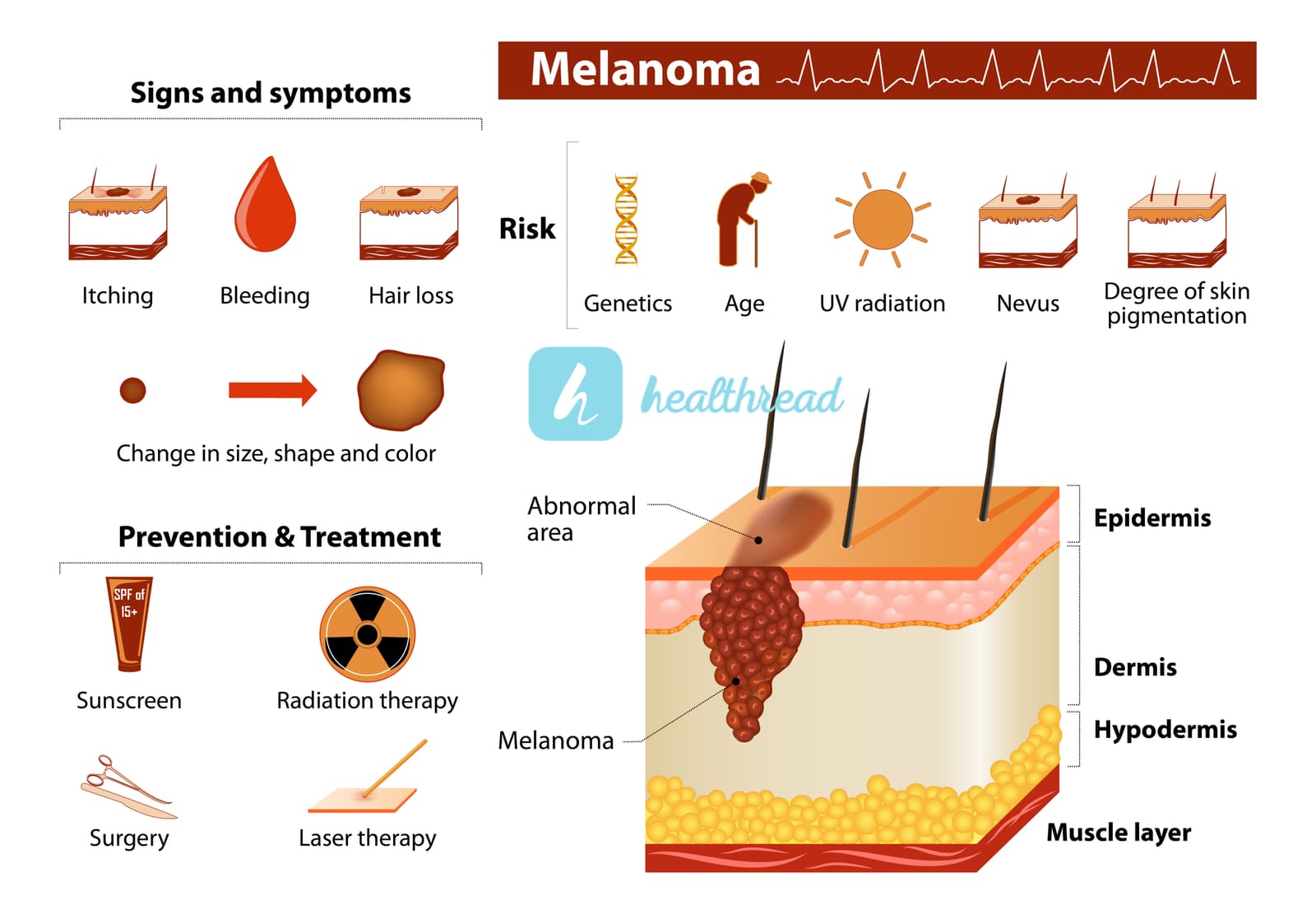
Even though skin cancers are some of the most common types of cancer throughout the world—affecting about 1 out of every 5 Americans by age 70—doctors and researchers have worked tirelessly over the years to develop new treatments and better diagnostic tests. The result is that many cases of skin cancer are now considered curable, especially if they are caught and detected early.
Even melanoma, which is a rarer and usually more dangerous type of skin cancer because of the way it can spread to other parts of the body, is curable when caught early.
It's important to know, however, that the type of treatment doctors recommend for melanoma depends on its stage. The stage of melanoma (that is, how far along it has progressed or grown) also affects a person's prognosis and survival—which is exactly why early screening matters so much.
Keep reading to learn more.
What Are the Stages of Melanoma?
- Stage 0 (melanoma in situ): in the earliest stage, cancerous melanoma cells have grown no deeper than the topmost layer of the skin, called the epidermis
- Stage I: in this stage, the cancerous tumor is 2 millimeters or less in thickness and might or might not have caused a breakdown of the surrounding skin (ulceration). Cancer has not spread to other parts of the body nor any lymph nodes (lymph nodes are part of the immune system that help filter out harmful substances in the body).
- Stage II: this stage is similar to stage I, except that the cancerous tumor may be thicker than 4 millimeters.
- Stage III: by this stage, the cancer has spread to nearby lymph nodes or nearby areas of the skin, but not to distant parts of the body. This stage is often broken down into Stage IIIA, IIIB, IIIC, and IIID.
- Stage IV: in this final stage, a melanoma cancerous tumor can be of any thickness and may or may not be ulcerated. The key characteristic of this stage is that it is has spread to distant lymph nodes or other organs in the body, such as the brain, liver, or lungs. This is called metastasis. The cancer may also still be found in nearby lymph nodes.
Here's What To Expect of Melanoma Treatment and Prognosis, Depending on Its Stage
If you receive a diagnosis of cancer, including melanoma, always communicate with your doctor about your specific needs, goals, and treatment options. Many factors can influence what's best for you.
That said, the American Cancer Society outlines a few things you can expect for melanoma treatment and prognosis, based on the cancer's stage.
In stage 0, a type of surgery called wide excision is done to remove the melanoma and a small amount of normal skin around it; some doctors may choose to use imiquimod cream (Zyclara) or a type of surgery called Mohs surgery (a precise type of surgery that progressively removes all cancerous tissue)
In stages I and II, doctors may recommend (in addition to wide excisions) sentinel lymph node biopsies to look for cancer in nearby lymph nodes, lymph node ultrasounds (to monitor for cancer), lymph node dissection (if cancer is found in lymph tissue), and certain medications including targeted therapy drugs.
In stage III, wide excisions and lymph node dissections are usually necessary. Targeted therapy drugs, specialized injections, radiation therapy, or chemotherapy may be introduced.
In stage IV, melanoma in the skin and lymph nodes may be removed surgically. Doctors may remove any melanoma that has spread to other organs as well, assuming they can be removed surgically. Whether or not doctors decide to do surgery, it's often recommended for patients in this stage to undergo additional treatments including radiation, immunotherapy, targeted therapy, or chemotherapy. Patients in this stage may also need palliative care treatment to manage their symptoms as best as possible.
As you can imagine, being diagnosed with melanoma in its earlier stages improves your chances of survival. The 5-year survival rate for melanoma when detected early is as high as 99 percent! Meanwhile, the 5-year survival rate for stage IV cancer is around 25%. This means that compared to people who don't have skin cancer, people with stage IV melanoma are only about 25% as likely to still be alive 5 years after their diagnosis.
Even with a more serious outlook for people with stage IV melanoma, there are options to participate in clinical trialsthat investigate novel treatments. Plus, keep in mind that 5-year survival rates are best estimates and don't guarantee the course of a person's experience with cancer.
Curious About Skin Cancer?
Has this article inspired you to ask your doctor about skin cancer screening? We want to hear about it! And if you have experience with melanoma or another type of skin cancer, feel free to share your story with our community at Healthread.
Sources
- 1cancer.org/cancer/melanoma-skin-cancer/detection-diagnosis-staging/survival-rates-for-melanoma-skin-cancer-by-stage.html
- 2cancer.org/cancer/melanoma-skin-cancer/treating/by-stage.html
- 3google.com/search?client=safari&rls=en&q=what+is+mohs+surgery&ie=UTF-8&oe=UTF-8
- 4skincancer.org/skin-cancer-information/melanoma/
- 5skincancer.org/skin-cancer-information/skin-cancer-facts/
General information, not medical advice
This article can't account for your health history or current treatment. Talk to a qualified clinician before you change anything about your care.
Read our medical disclaimer →
On this page
What Are the Stages of Melanoma?
Here's What To Expect of Melanoma Treatment and Prognosis, Depending on Its Stage
Curious About Skin Cancer?
Sources
Put what you read to work
Track your medicines, check a symptom and talk with people managing the same condition, all in Healthread.
Get the app
Keep reading

Cancer-Updates
Gynecologic Cancer
Gynecologic cancer is a term used to describe a group of cancers that affect the female reproductive system. There are five types of gynecologic cancers named after the body part where they start.
November 5, 2024 · 3 min read

Cancer-Updates
Anal Cancer
Anal cancer is caused when the cancer cells in the anus grow uncontrollably, forming masses or tumors. The cancer cells can sometimes spread to other body parts, causing metastatic cancer.
August 18, 2024 · 3 min read

Cancer-Updates
Bile Duct Cancer (Cholangiocarcinoma)
Bile duct cancer, or cholangiocarcinoma, is a cancer that occurs in the bile ducts, the slender tubes that collect bile, a fluid made by the liver for breaking down fats in the digestion process.
April 17, 2024 · 2 min read


© 2026 Healthread
English · Español
Healthread does not provide medical advice, diagnosis or treatment. Always speak to a qualified clinician about your care.