

Schizophrenia is a type of chronic mental condition that makes it hard for you to distinguish between false and real beliefs and perceptions. You can experience symptoms so limiting and severe, that it can be hard to complete daily activities. This mental disorder impacts less than 1% of individuals in the U.S. Usually, individuals receive their diagnosis when they're in the late teenage years to early 30s.
Types of Schizophrenia
Schizophrenia looks different from one person to the next. However, there are six primary categories individuals can fall under:
1. Paranoid Schizophrenia
With this type, your paranoia might be extreme, and you might act on it. You might show up at the private detector’s doorstep and ask them why they're following you. You might:
- Have inappropriate emotional responses
- Behave oddly
- Show little pleasure in life
2. Catatonic Schizophrenia
This type is now thought to be a rare subtype since it's believed to be greatly due to untreated schizophrenia. Today, it doesn't occur as frequently among people with schizophrenia as early treatment and intervention has advanced. Catatonic schizophrenia is marked by a significant increase or decrease in movement, with a minimum of at least two of the following symptoms present.
- Maintain a rigid posture
- Be largely immobile
- Resist all movement attempts
Or, people with this type might display seemingly purposeless, excessive movement. This could include echopraxia (mimic other people's movements) or echolalia (where you repeat what other people say). You might experience peculiarities in voluntary motions like:
- Grimacing
- Bizarre posturing
- Stereotypic motions (i.e. hand waving, rocking, nail biting)
3. Disorganized Schizophrenia
This type of schizophrenia is also referred to as hebephrenic schizophrenia. It's marked by predominantly disorganized symptoms. For you to fit this subtype criteria, you must present all of the following:
- Disorganized behavior (i.e. difficulty, difficulty acting properly in social situations, finishing or starting a task)
- Disorganized speech (i.e. incoherence, word salad, perseverance)
- Inappropriate or flat affect (i.e. lack of facial expressions, poor eye contact)
4. Undifferentiated Schizophrenia
You have a variety of vague symptoms with this type. You might not express yourself or talk that much. You might be paranoid and confused. You might not bother to take a shower or change your clothing when you have undifferentiated schizophrenia.
5. Schizoaffective Disorder
You have delusional thinking or are experiencing other schizophrenia symptoms. But you also present one or more of the following mood disorder symptoms:
- Hypomania and/or mania
- Depression
6. Residual Schizophrenia
This is a term that describes an individual who isn't currently experiencing prominent hallucinations, delusions, catatonic or disorganized behaviors, or disorganized speech. But, they're experiencing a minimum of those symptoms to a lesser degree (i.e. odd beliefs or thought distortions) or they continue experiencing schizophrenia's negative symptoms like:
- Social withdrawal
- Difficulty paying attention
- Reduction in speech
- Apathy
What About Childhood Schizophrenia?
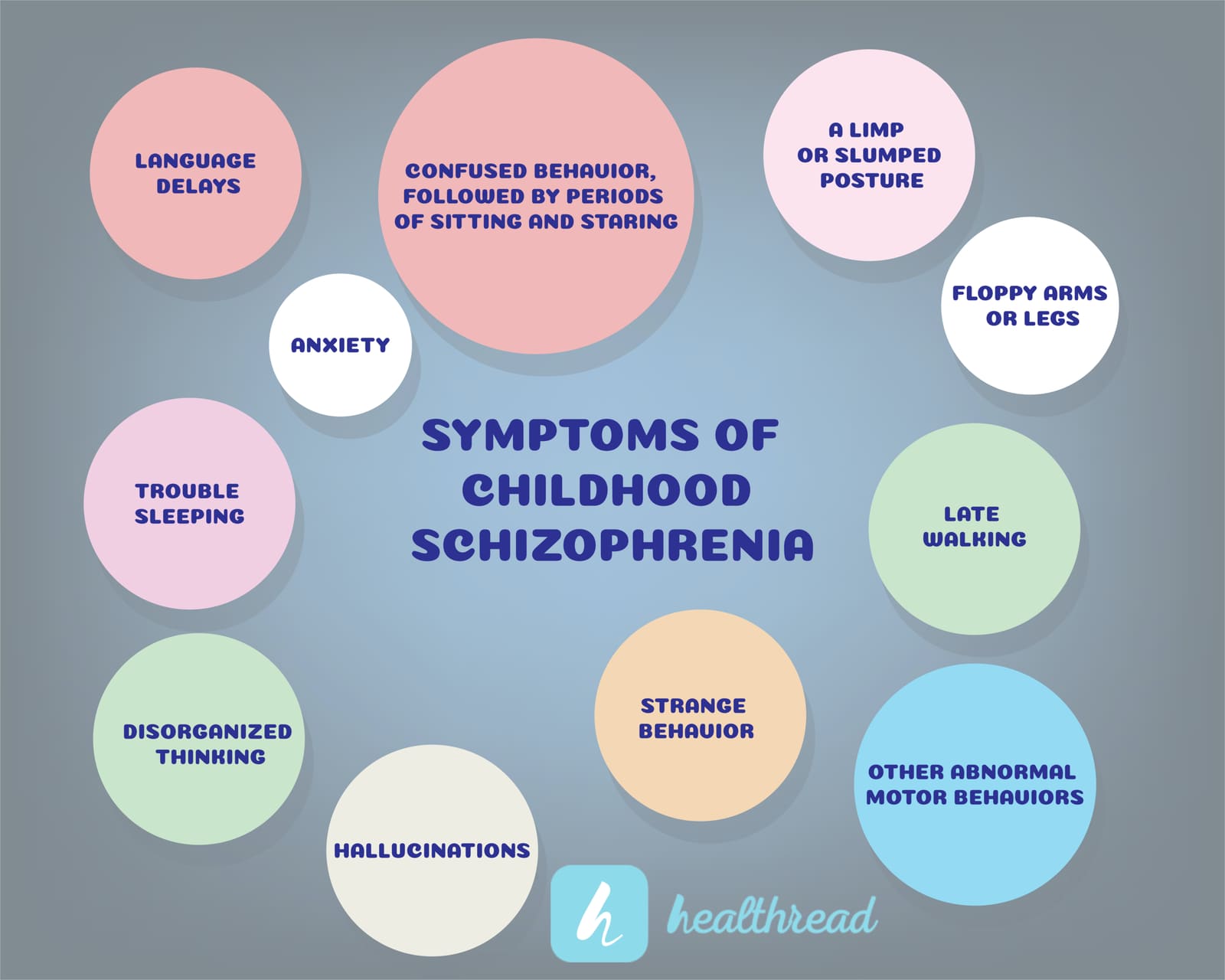
There's also childhood schizophrenia. However, this type isn't necessarily a "subtype", but rather is used for referring to the diagnosis time. It's fairly uncommon for children to receive a diagnosis. But, when it does occur, it can be extremely severe.
Typically, early-onset schizophrenia occurs between the ages of 13 years old and 18. It's thought to be very early-onset if a diagnosis is given under 13 years old. It's also very rare.
Very young children experience symptoms similar to those of other developmental conditions like attention-deficit hyperactivity disorder (ADHD) and autism. The symptoms might include:
- Abnormal motor movements
- Language delays
- Unusual or late walking or crawling
It's essential to rule developmental problems out when considering a diagnosis of extremely early-onset schizophrenia.
Older children and teenagers may experience symptoms such as:
- Sleep disruptions
- Social withdrawal
- Substance use
- Odd behavior
- Irritability
- Impaired school performance
Treatment for Schizophrenia
Around 99% of individuals with schizophrenia require lifelong treatment with counseling, antipsychotic drugs, and social rehabilitation. This reduces your symptoms and will help you get a little stability back into your life.
Schizophrenia is an extremely complex disorder. Not all people diagnosed with it will experience the exact same presentation or symptoms. While subtypes no longer are diagnosed, they're still used as specifiers to help in treatment planning. Having an understanding of schizophrenia and the subtypes in general could help you manage your condition.
With the right diagnosis, your doctor can create a specialized treatment plan to help you manage your condition better and get back to feeling more like your normal self.
Are You or a Loved One Struggling with Signs of Schizophrenia?
If so, you’re not alone. Subscribe to Healthread and start connecting with other individuals similar to you who are struggling with symptoms of schizophrenia or have loved ones who are. Help one another find ways of improving your symptoms and getting back to living your life that you want.
General information, not medical advice
This article can't account for your health history or current treatment. Talk to a qualified clinician before you change anything about your care.
Read our medical disclaimer →
On this page
Types of Schizophrenia
1. Paranoid Schizophrenia
2. Catatonic Schizophrenia
3. Disorganized Schizophrenia
4. Undifferentiated Schizophrenia
5. Schizoaffective Disorder
6. Residual Schizophrenia
What About Childhood Schizophrenia?
Treatment for Schizophrenia
Are You or a Loved One Struggling with Signs of Schizophrenia?
Put what you read to work
Track your medicines, check a symptom and talk with people managing the same condition, all in Healthread.
Get the app
Keep reading

Mental Health
Bipolar I vs. Bipolar II
Bipolar I and II are the most common types of mental health disorders. While they both share certain similarities, they have two key differences.
August 8, 2024 · 3 min read

Mental Health
Narcissistic Personality Disorder (NPD)
NPD is a mental health condition that is characterized by an inflated opinion of oneself. Someone who is narcissistic may feel more important than other people.
May 4, 2024 · 3 min read

Mental Health
What is Treatment-Resistant Depression?
Treatment-resistant depression is a form of major depressive disorder that fails to respond to the standard depression treatments involving taking an anti-depressant or going to psychotherapy.
February 3, 2024 · 3 min read


© 2026 Healthread
English · Español
Healthread does not provide medical advice, diagnosis or treatment. Always speak to a qualified clinician about your care.