

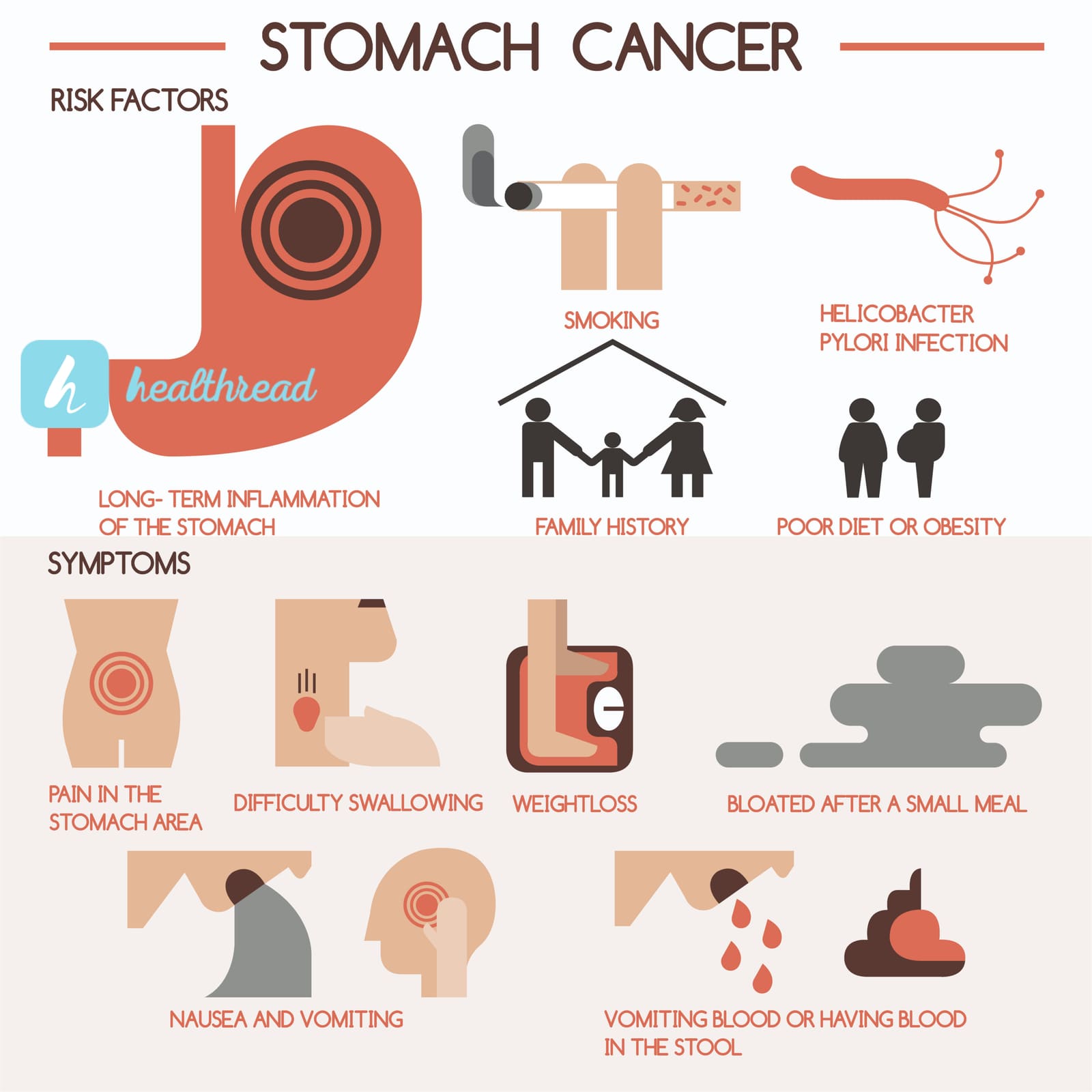
Stomach cancer is also called gastric cancer. The American Cancer Society (ACS) reports that there are about 27,600 new cases of stomach cancer diagnosed every year, and each year, about 11,000 people lose their lives due to this form of cancer. Stomach cancer affects primarily people older than age 65. Men are more likely than women to develop stomach cancer: the ACS says that a man's risk of developing stomach cancer in his life are approximately 1 in 95, while women's risk is approximately 1 in 154. Almost 100 years ago, stomach cancer was the number one cause of U.S. cancer death, but its incidence has been decreasing over time.
What are the symptoms of stomach cancer?
According to the Mayo Clinic, stomach cancer symptoms can include:
- Feeling bloated after eating
- Feeling full after only eating a small amount of food
- Heartburn
- Indigestion
- Stomach pain
- Difficulty swallowing
- Unintended weight loss
- Vomiting
Risk factors for stomach cancer
Stomach cancer has been decreasing in incidence, and researchers suspect the reasons it is declining are linked to the cancer's risk factors, particularly fewer infections with Helicobacter pylori (H. pylori), a type of bacteria that can infect the lower part of the stomach. Although most of the people who have H. pylori in their stomach don't develop cancer, it is still a potential cause and risk factor.
Other risk factors for stomach cancer include eating diets with a lot of smoked foods, salted fish and cured meats. Additional risk factors include:
- Tobacco smoking
- Overweight or obesity
- Previous stomach surgery
- Hypertrophic gastropathy (abnormal changes in stomach lining)
- Having Type A blood
- Ethnicity - Asian/Pacific Islanders, Native Americans, Hispanic Americans and Black Americans have higher risks of stomach cancer
- Advanced age - most stomach cancers occur in people who are over age 60
- Stomach polyps
- A diet low in fruits and vegetables
Subtypes of stomach cancer
Cancer of the stomach can occur in different locations. In North America, the most common location for stomach cancer is at the gastroesophageal junction, where the esophagus meets the stomach. In other parts of the world, stomach cancers form more frequently in the main body of the stomach.
In 2014, researchers identified four sub-types of stomach cancer:
- Cancers associated with the Epstein Barr virus (EBV)
- Cancers associated with high microsatellite instability (MSI) producing frequent DNA mutations
- Cancers with low-level somatic copy number alterations (SCNAs) in their genetic information
- Cancers with high levels of somatic copy number alterations (SCNAs) in their genetic information
Genetic research continues into how and why the different sub-types of stomach cancer develop and how they can be treated or prevented.
Stages of stomach cancer
Clinicians will diagnose stomach cancer using endoscopy with a small camera, biopsy, and imaging tests, including CT and PET scans. They determine the extent or stage of stomach cancer using blood tests, an endoscopic ultrasound, imaging tests, and potentially, exploratory surgery. Stomach cancer has five stages:
- Stage 0 (Carcinoma in Situ)
- Stage I
- Stage II
- Stage III
- Stage IV
The higher the number, the more the cancer has spread. Stage IV stomach cancer has spread through the wall of the stomach and to other organs. Stage IA cancer is in the mucosa, or first layer of tissue in the stomach. Stage II stomach cancer may have spread beyond the mucosa into other surrounding tissues.
Stomach cancer treatment
Stomach cancer treatment uses a variety of methods to remove the cancer or to stop or slow its growth. Treatment methods include:
- Surgery - which can include removal of all or part of the stomach, called a gastrectomy
- Chemotherapy
- Radiation therapy
- Targeted drug therapy
- Immunotherapy
Clinicians will also offer palliative or supportive care. Palliative care isn't aimed at curing the cancer, but at improving the quality of life for patients and their families.
How can you reduce stomach cancer risk?
Tobacco smoking isn't just a risk for lung cancer, it also increases risk for other cancers, including stomach cancer. According to the NIH, stopping smoking is one way to reduce stomach cancer risk. You can also reduce stomach cancer risk by eating a diet high in fruits, vegetables, and fiber, as well as low in smoked or salted meats and fish. If you have a chronic H. pylori infection, treating it will also reduce your risk of stomach cancer.
Sources
General information, not medical advice
This article can't account for your health history or current treatment. Talk to a qualified clinician before you change anything about your care.
Read our medical disclaimer →
On this page
What are the symptoms of stomach cancer?
Risk factors for stomach cancer
Subtypes of stomach cancer
Stages of stomach cancer
Stomach cancer treatment
How can you reduce stomach cancer risk?
Sources
Put what you read to work
Track your medicines, check a symptom and talk with people managing the same condition, all in Healthread.
Get the app
Keep reading

Cancer-Updates
Gynecologic Cancer
Gynecologic cancer is a term used to describe a group of cancers that affect the female reproductive system. There are five types of gynecologic cancers named after the body part where they start.
November 5, 2024 · 3 min read

Cancer-Updates
Anal Cancer
Anal cancer is caused when the cancer cells in the anus grow uncontrollably, forming masses or tumors. The cancer cells can sometimes spread to other body parts, causing metastatic cancer.
August 18, 2024 · 3 min read

Cancer-Updates
Bile Duct Cancer (Cholangiocarcinoma)
Bile duct cancer, or cholangiocarcinoma, is a cancer that occurs in the bile ducts, the slender tubes that collect bile, a fluid made by the liver for breaking down fats in the digestion process.
April 17, 2024 · 2 min read


© 2026 Healthread
English · Español
Healthread does not provide medical advice, diagnosis or treatment. Always speak to a qualified clinician about your care.