

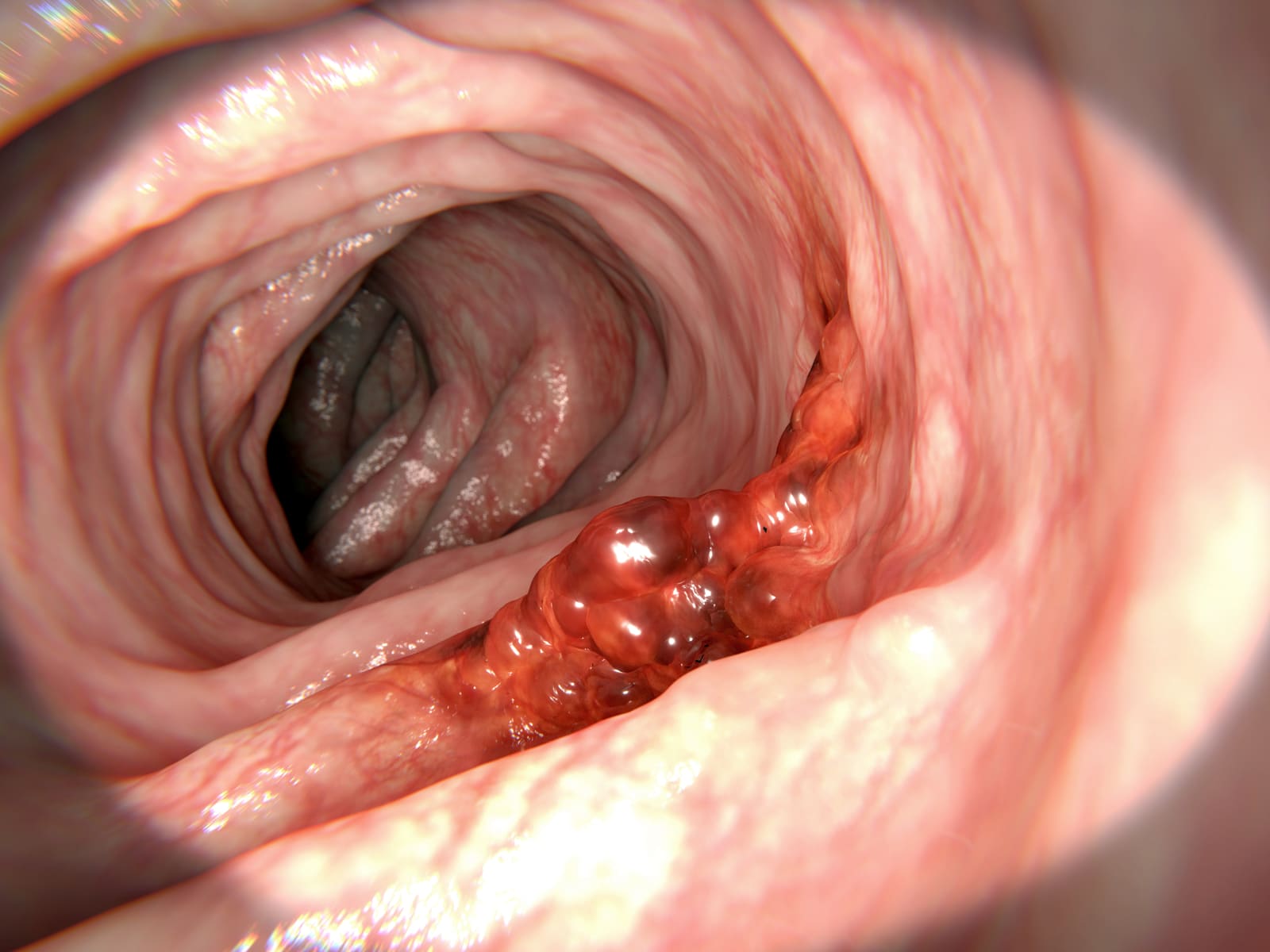
The human body is made up of several parts that must work together seamlessly to ensure all bodily functions are working appropriately. Two key parts of the gastrointestinal system are the small and large bowel. The small bowel connects to the large, allowing nutrients to be absorbed from food, water absorption, and solidifying foods and drinks to be excreted from the body.
What is bowel cancer?
The large bowel, often referred to as the large intestine or colon, is approximately 6 feet long. It’s actually shorter than the small intestine. However, it is called the large intestine due to its width, rather than its length.
Cancerous cells can grow anywhere in the body, and when they originate in the bowels, it is referred to as colon cancer or bowel cancer. Colon cancer primarily affects older adults, but it can occur at any age whether there is a family history or no known risk factors.
Before cancerous cells begin growing, a person will grow noncancerous polyps inside the colon. These polyps do not produce symptoms, leaving them undetected until cancerous cells begin to grow. Experts recommend beginning routine examinations near age 45 to assess for polyps or colon cancer, but the initiation and frequency of colon screening cancer can vary depending on individual risk factors.
Symptoms of colon cancer
As polyps begin to grow within the colon, there are little to no symptoms produced, meaning the growth often goes unnoticed until it progresses to bowel cancer. Even once cancerous cells have invaded the once-healthy tissue, there are few symptoms with many being minor. Symptoms of bowel cancer include:
- Changes in bowel habits, like diarrhea or constipation, that do not resolve within a reasonable time or with medication
- Hematochezia or blood in the stool
- Rectal bleeding
- Abdominal pain, cramping, or general discomfort
- Fatigue
- Weakness
- Unexplained weight loss
- Feeling like you cannot fully empty your bowels
Routine screening for cancerous cells is crucial and you mustn't panic if you experience any symptoms mentioned above as the symptoms of bowel cancer coincide with other noncancerous conditions, such as hemorrhoids.
How is colon cancer detected?
Have you experienced the symptoms mentioned above, like unresolved bowel changes or bloody stool? If so, it is time to contact your primary care physician for an examination and testing. Whether you are experiencing symptoms of colon cancer or not, several tests allow your doctor to assess, visualize, and determine if cancerous cells are present or if you are experiencing something with similar symptoms.
Your doctor will inquire about specific symptoms of concern, determine if there is a family history of bowel cancer, and perform a physical examination. During the physical examination, your doctor will palpate your abdomen to feel for swelling organs or masses.
The most common initial testing tool doctors use to assess for abnormalities in the colon is a digital rectal exam. During this type of exam, your doctor will place a gloved finger in the rectum to feel for a mass or abnormal area that may warrant further testing.
Other tests to diagnose cancer include:
- Colonoscopy
- Biopsy
- Cat scan
- Ultrasound
Advanced in colon cancer research
The American Cancer Society estimates a total of more than 100,000 new cases of colon cancer in 2022 alone. As with any medical condition, there is continual research on colon cancer to assess the viability of treatment options available, the possibility to detect cancer earlier, and even ways to prevent cancer growth.
Advances in detection
CRC screening is primarily used to detect colon cancers. However, many people choose not to get screened, making early detection impossible. Though not yet regulated, research suggests genetic analysis performed on a stool sample can detect the presence of cancerous DNA for early detection.
Advances in treatment
When caught early, colon cancer is often small and localized. During this stage, minimally invasive procedures, such as endoscopic surgery, are often used to remove the tumor or polyp entirely without needing harsh medications to treat. Advanced robotic surgery is a new technique and technology used by doctors to get hard-to-reach areas of the colon, reduce the risk of recurrence, and produce fewer side effects post-surgery.
It’s highly advised to treat bowel cancer early for the best outcome, so if you are having symptoms of bowel cancer, or at risk of developing it, speak to your doctor about getting tested.
General information, not medical advice
This article can't account for your health history or current treatment. Talk to a qualified clinician before you change anything about your care.
Read our medical disclaimer →
On this page
What is bowel cancer?
Symptoms of colon cancer
How is colon cancer detected?
Advanced in colon cancer research
Advances in detection
Advances in treatment
Put what you read to work
Track your medicines, check a symptom and talk with people managing the same condition, all in Healthread.
Get the app
Keep reading

Cancer-Updates
Gynecologic Cancer
Gynecologic cancer is a term used to describe a group of cancers that affect the female reproductive system. There are five types of gynecologic cancers named after the body part where they start.
November 5, 2024 · 3 min read

Cancer-Updates
Anal Cancer
Anal cancer is caused when the cancer cells in the anus grow uncontrollably, forming masses or tumors. The cancer cells can sometimes spread to other body parts, causing metastatic cancer.
August 18, 2024 · 3 min read

Cancer-Updates
Bile Duct Cancer (Cholangiocarcinoma)
Bile duct cancer, or cholangiocarcinoma, is a cancer that occurs in the bile ducts, the slender tubes that collect bile, a fluid made by the liver for breaking down fats in the digestion process.
April 17, 2024 · 2 min read


© 2026 Healthread
English · Español
Healthread does not provide medical advice, diagnosis or treatment. Always speak to a qualified clinician about your care.