

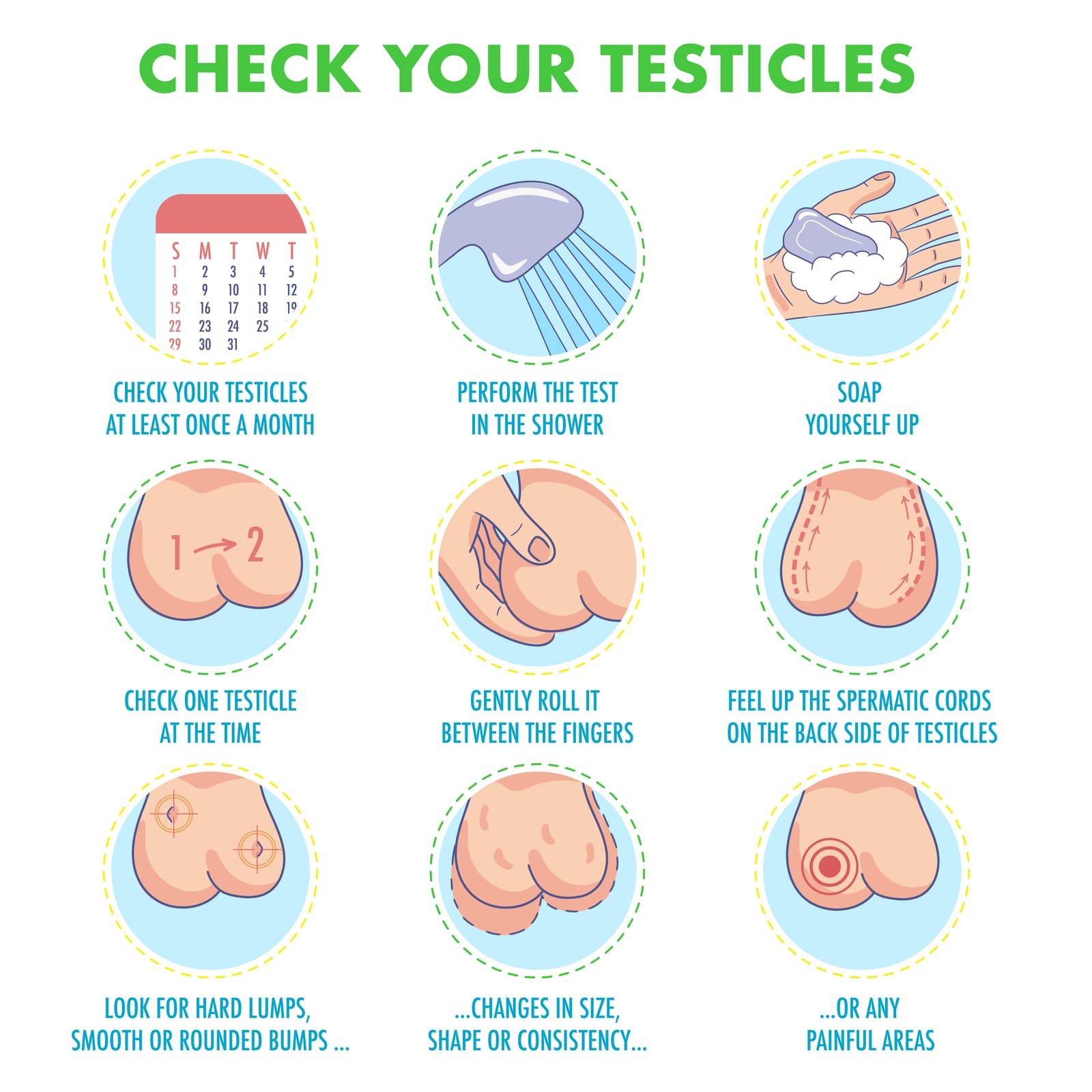
A man’s testicles produce sperm and the testosterone hormone. These sex glands are located in the scrotum, the skin sac beneath the penis. Testicular cancer occurs when malignant cells develop within the tissues. Usually, only one testicle is affected. The good news is that, if caught early, testicular cancer is curable.
Testicular Cancer Symptoms
The most common sign of testicular cancer is a painless lump in the testicle. Other signs of testicular cancer include:
- Swelling of the testicle
- Pain in the testicle, groin, or scrotum
- Fluid build-up in the scrotum
- Testicle shrinkage
- Heaviness in the scrotum
- Male breast tissue changes
Men tend to wait too long before contacting a doctor regarding these symptoms. These symptoms can indicate another issue, such as an inguinal hernia, but a “wait and see” attitude means if cancer is present, it is more likely to spread.
Testicular cancer that has spread may initially manifest itself as low back pain, chest pain, or coughing. Stomach pain is another symptom of metastasized testicular cancer.
Risk Factors
The majority of testicular cancers are diagnosed in men between the ages of 20 and 35. It is the most common type of cancer in that age group. There are rare types of testicular cancers that occur in men in their 60s and up.
Men whose fathers or brothers were diagnosed with testicular cancer are at higher risk. Those with undescended testicles at birth also have an increased risk of testicular cancer.
White men are more likely to develop testicular cancer than men of other races.
Infertility may play a role in the development of testicular cancer. Men diagnosed as infertile have higher odds of developing testicular cancer. There may prove a link between infertility and testicular cancer, but that has not been established at this time.
Types of Testicular Cancer
There are two primary types of testicular cancer: seminomas and non-seminomas. About 45 percent of testicular cancers fall into each group, and together they account for 90 percent of such cancer. Many testicular cancers consist of both seminomas and non-seminomas. Both of these types start in the sperm-creating germ cells.
Seminomas generally grow more slowly and are less likely to metastasize than non-seminomas. Non-seminomas more often affect younger men.
Stromal tumors account for about 5 percent of adult testicular cancers, but roughly one-fifth of childhood cancers. These tumors start in the stroma, the hormone-producing tissues.
These tumors are considered primary testicular cancer, meaning they originate in the testicle. Secondary testicular cancer starts in another organ, and the cancer spreads to the testicles. Lymphoma, most common in men over 50, is the most frequent source of secondary testicular cancer.
Diagnosis
Most men discover the lump in their testicles on their own, but it is sometimes found by a doctor during a physical examination. When the lump is detected, determining whether it is cancerous involves a series of diagnostic tests. These tests include:
- Blood test –These tests reveal whether there are tumor markers in the blood. Certain substances are elevated in the blood when testicular cancer is present. These elevated levels do not definitely mean the man has cancer, but it is a prognostic factor.
- Ultrasound –These tests allow doctors to clearly see the nature of any lumps within the testicle. Solid lumps may denote cancer, while fluid-filled lumps may not. Whether the mass is inside or outside the testicle is also detectable by ultrasound.
- CT scan –The doctor may order a computerized tomography scan to tell whether the cancer is confined to the testicle or whether it has spread into other parts of the body. When testicular cancer does spread, it tends to go toward the lungs or the lymph nodes in the pelvis, chest, and neck.
Testicular Cancer Treatment
Surgery is the primary treatment for testicular cancer. The cancerous testicle is removed via an orchiectomy. Analysis of the testicle reveals the type of cancer, as well as the size and stage of the tumor. Men can opt for a testicular prosthesis filled with saline to replace the removed testicle. It is placed there for psychological purposes and to improve appearance. The prosthesis has no functional capacity.
The loss of one testicle should not affect the ability to maintain an erection. The loss of both testicles will result in infertility.
For many patients, surgery is the only testicular cancer treatment if their cancer was a low stage and low grade. They will visit the doctor regularly for follow-up appointments to assess their condition.
Men with seminomas may receive radiation therapy to kill cancer cells. Those with either seminomas or non-seminomas may undergo chemotherapy to kill malignant cells.
Testicular Cancer and Fertility
Testicular cancer treatment can impact fertility. Men who want to have children should discuss sperm banking and other options with their doctor. Testicular cancer can lower sperm counts even if one testicle remains.
Sources
General information, not medical advice
This article can't account for your health history or current treatment. Talk to a qualified clinician before you change anything about your care.
Read our medical disclaimer →
On this page
Testicular Cancer Symptoms
Risk Factors
Types of Testicular Cancer
Diagnosis
Testicular Cancer Treatment
Testicular Cancer and Fertility
Sources
Put what you read to work
Track your medicines, check a symptom and talk with people managing the same condition, all in Healthread.
Get the app
Keep reading

Cancer-Updates
Gynecologic Cancer
Gynecologic cancer is a term used to describe a group of cancers that affect the female reproductive system. There are five types of gynecologic cancers named after the body part where they start.
November 5, 2024 · 3 min read

Cancer-Updates
Anal Cancer
Anal cancer is caused when the cancer cells in the anus grow uncontrollably, forming masses or tumors. The cancer cells can sometimes spread to other body parts, causing metastatic cancer.
August 18, 2024 · 3 min read

Cancer-Updates
Bile Duct Cancer (Cholangiocarcinoma)
Bile duct cancer, or cholangiocarcinoma, is a cancer that occurs in the bile ducts, the slender tubes that collect bile, a fluid made by the liver for breaking down fats in the digestion process.
April 17, 2024 · 2 min read


© 2026 Healthread
English · Español
Healthread does not provide medical advice, diagnosis or treatment. Always speak to a qualified clinician about your care.