

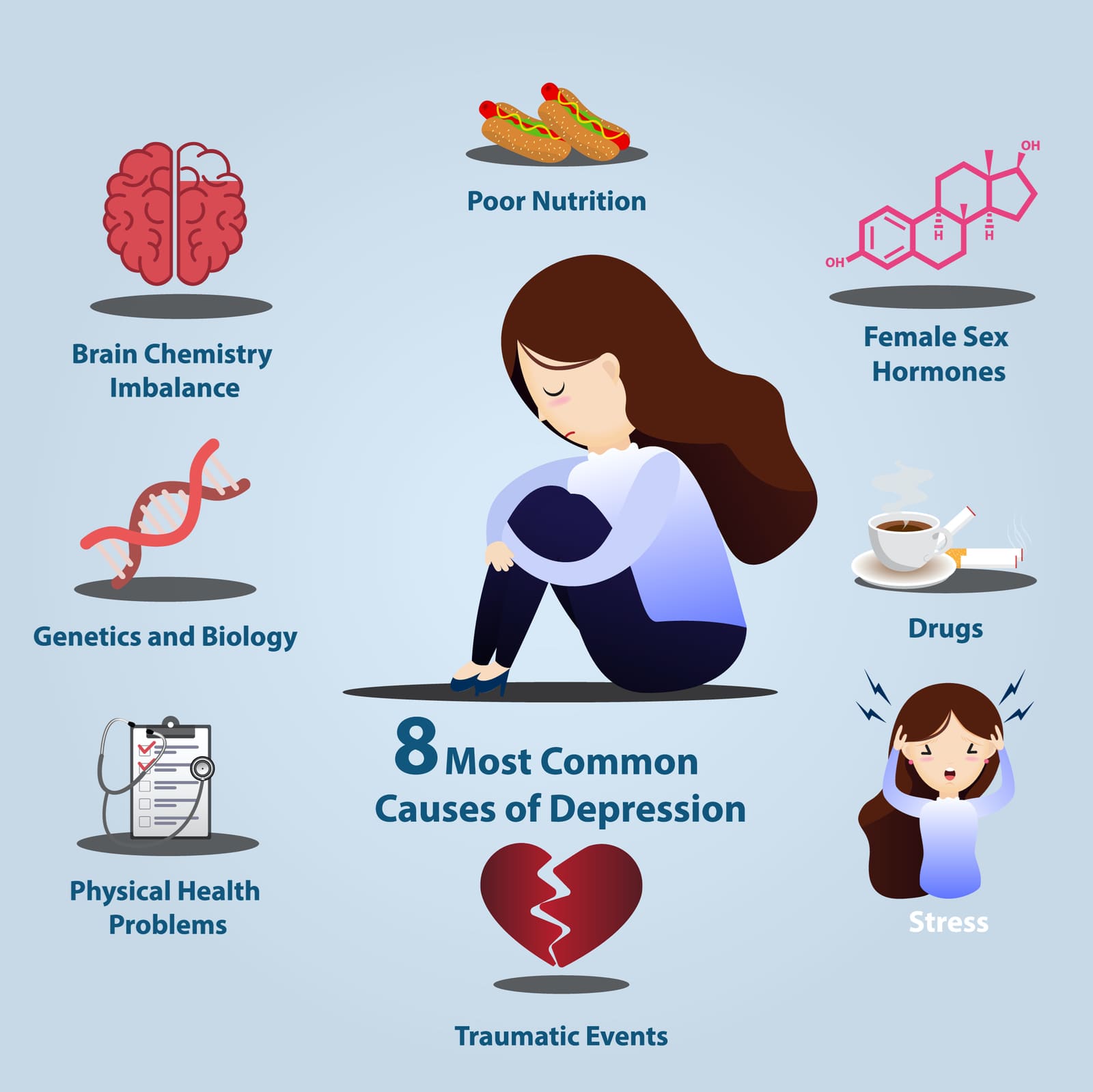
Do you think you'd be able to recognize if a loved one was depressed?
Now how about this question:
Do you think you'd be able to recognize if you were depressed?
The truth is, close to 7 percent of the adult U.S. population experiences depression in any given year. Major depressive disorder (also called clinical depression) is the leading cause of disability for Americans between the ages of 15 and 44. Despite how common it is, many people don't realize that depression often shows up with hidden or "uncommon" warning signs. It's good to be able to recognize these signs in yourself your loved one. That way, diagnosis, treatment, and beneficial lifestyle changes can be made sooner.
7 Unexpected Signs of Depression
Depression is a unique challenge. No two people living with this mental health condition will have the exact same experience. But there are a range of common symptoms. Aside from some more well-known issues like sadness and hopelessness, there are at least 7 other unexpected or less recognized signs to look out for:
- 1.Frequent or excessive use of drugs and alcohol. Substance abuse is often an unrecognized attempt to self-medicate or "numb" oneself to their inner distress and pain. This may or may not coincide with other risky behaviors, including promiscuity, reckless driving, and excessive gambling, shopping, or social media use.
- 2.Irritability, anger, and other unusual changes in mood—not necessarily just sadness or feeling feeling "down in the dumps."
- 3.Changes or difficulties with sleep and appetite. These may lead to issues like gaining or losing weight, feeling tired all the time, or sleeping too much or too little.
- 4.Unexplained physical symptoms, including back pain, headaches, jaw pain, and digestive issues. People who are depressed may also have lower tolerance to pain, so they may experience pain more intensely or frequently. Doctors and researchers are still learning why aches and pains are correlated to depression and other mood disorders, but several interesting theories exist. For instance, widespread inflammation in the body (caused by stress, poor diet, lack of exercise, etc.) is something that many health issues share in common, including depression, pain, and stomach problems. It ould be that underlying inflammation negatively affects brain, nerves, and other organs. Incredibly, research also shows that people who are depressed have different types of gut bacteria in their digestive tract, which could explain why bloating, indigestion, abdominal cramps are common and often overlooked signs of depression.
- 5.Impaired concentration. Depression can affect brain fucntion and make it harder to focus, remember things, or concentrate. Unfortunately, impaired concentration can give rise to even more challenges in social and work settings, and may make your depressed mood worse.
- 6.Disinterest in things that used to give you pleasure. Even if you don't feel "down" or "sad," you may take notice if you're suddenly not interested (or don't have the energy for) hobbies and activities that you normally enjoy and look forward to.
- 7.Decreased sex drive. Loss of libido is a common sign of depression in men and women, for many reasons. Depression may be linked with low self-esteem and low energy, which can make you uncomfortable about having sex. Depression can also change the level of certain neurotransmitters in the brain that normally drive sexual arousal and function.
If any of the above signs or symptoms resonate with you, consider asking yourself whether depression could be part of the puzzle. Additional questions to ask which could help you figure out if you're dealing with depression include:
- Did you recently experienced a major loss or life change?
- Does depression run in your family?
- Do you have other chronic health conditions?
- Did you recently give birth?
- Do you frequently feel sad or hopeless?
- Do you frequently think about death and dying?
- Do you think you could be depressed?
The only way to know for sure if you have depression is by talking to a doctor or licensed medical professional, just like millions of other people do every year. Depression is a treatable condition, and it's a courageous, self-affirming act to seek the help you deserve.
Could Your Unusual Symptoms Be Related to Depression?
Depression hurts, but you don't have to face it alone. Find others from close and far who are also living with depression, and help each other by sharing your stories within the Healthread community. For more information and resources, check out the National Helpline from the Substance Abuse and Mental Health Services Administration, 1-800-662-HELP (4357).
Sources
General information, not medical advice
This article can't account for your health history or current treatment. Talk to a qualified clinician before you change anything about your care.
Read our medical disclaimer →
On this page
7 Unexpected Signs of Depression
Could Your Unusual Symptoms Be Related to Depression?
Sources
Put what you read to work
Track your medicines, check a symptom and talk with people managing the same condition, all in Healthread.
Get the app
Keep reading
Mental Health
Bipolar I vs. Bipolar II
Bipolar I and II are the most common types of mental health disorders. While they both share certain similarities, they have two key differences.
August 8, 2024 · 3 min read

Mental Health
Narcissistic Personality Disorder (NPD)
NPD is a mental health condition that is characterized by an inflated opinion of oneself. Someone who is narcissistic may feel more important than other people.
May 4, 2024 · 3 min read
Mental Health
What is Treatment-Resistant Depression?
Treatment-resistant depression is a form of major depressive disorder that fails to respond to the standard depression treatments involving taking an anti-depressant or going to psychotherapy.
February 3, 2024 · 3 min read


© 2026 Healthread
English · Español
Healthread does not provide medical advice, diagnosis or treatment. Always speak to a qualified clinician about your care.