

Routine self-examinations can lead to the detection of lumps and bumps in various areas of the body, including the testicles of men. While many lumps in the body are harmless, some require further testing to determine whether the lump is malignant or benign. Lumps in the testicles are commonly the result of an injury or recent infection, but a diagnosis of the type of lump cannot be determined at home.
With April being Testicular Cancer Month, it’s a good time to talk about the importance of monthly self-exams and what testicular cancer feels like as early detection is key to its successful treatment.
What is testicular cancer?
Testicular cancer affects 1 in 263 men. However, it is often curable with treatment. The average age for a testicular cancer diagnosis is 33, according to the American Cancer Society.
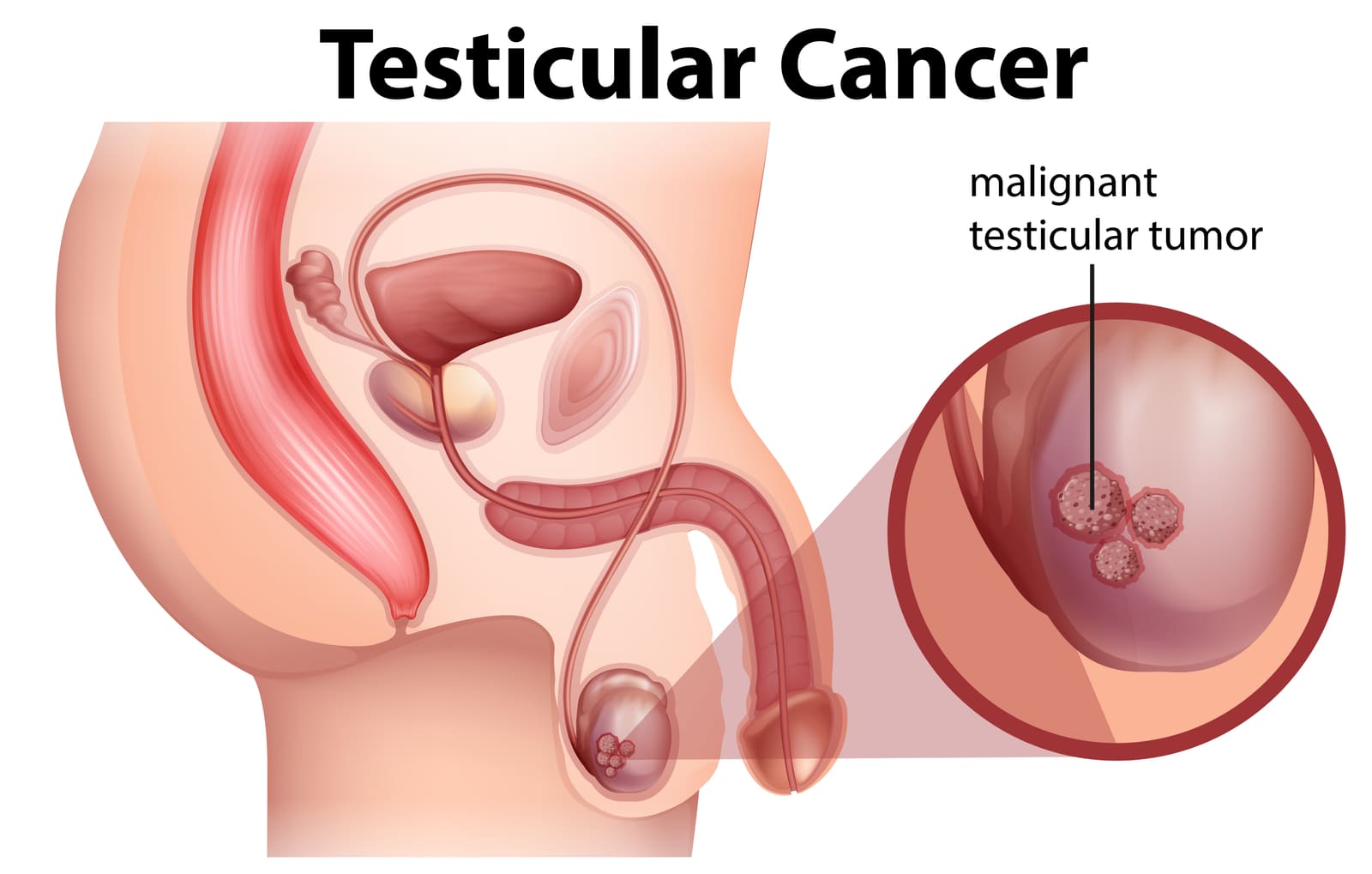
Testes are located inside the scrotum and are responsible for producing key hormones like testosterone as well as making sperm. Cancer can form in all areas of the body, however, testicular cancer is the result of cancerous cells developing in the testicles.
Cancerous cells typically develop in one testicle or the other, but, these cells can form in both or just beneath the surface of the skin. Testicular cancer can cause the entire scrotum to feel harder than usual.
Symptoms of testicular cancer
Many lumps found in the body are harmless and do not produce undesired symptoms. The formation of cancerous cells in the testes can result in the development of symptoms, including:
- A hard, painless lump
- Heaviness in the scrotum
- Swelling in a testicle or the scrotum
- Chest pain
- Unexplained fatigue, fever, shortness of breath, or sweating
- Numbness in a testicle or scrotum
- Headache
- Mental confusion
If testicular cancer has spread to the lymph nodes, you may experience pressure or dull pain in the abdomen, groin, or lower back. You might also experience swelling in some areas, such as the lymph nodes near the collarbone.
Other causes of lumps in the testicles
If you have found a lump in your testicles through self-examination do not fear the worst. Many things can cause a lump in the testicles that are not cancer, including:
- A cyst is a small, fluid-filled sac that is often harmless. A cyst can develop anywhere in the body, including the testicles.
- Hydrocele is a condition often the result of fluid collecting within the scrotum causing swelling. It is common after experiencing an infection of some type.
- Testicular torsion is a serious medical condition caused by the cord supplying blood to the testicles rotating and becoming twisted. When this occurs, blood supply is limited or completely obstructed to the testicles, causing extreme pain.
- Varicocele is similar to varicose veins forming in the legs. It is caused by veins in the scrotum swelling and becoming “lumpy” rather than smooth and straight.
Risk factors associated with testicular cancer
All men are at risk of developing testicular cancer at some point in their life, though certain factors can increase the risk, including abnormal development of the testicles, cryptorchidism, age, race, and family history.
Testicular cancer is more commonly seen in those between the age of 15 to 35 years old, as well as men who are white. In addition, a person may experience abnormal development of the testicles or testicles remaining in the abdomen rather than descending into the scrotum.
Treatment for testicular cancer
Cancer treatment is dependent upon many factors, including the type of cancer, stage of cancer, and patient history. Your physician will consider all test results to determine the best plan of action in treating your testicular cancer through chemotherapy, radiation therapy, or surgical intervention to remove the cancerous areas.
Can I prevent testicular cancer?
Testicular cancer cannot be prevented. That's why physicians recommend conducting routine self-examinations for the early detection of any abnormalities. Should you discover a lump, or have any of the symptoms listed above, contact your physician for a consultation to determine if further testing is needed.
Takeaway
Cancer in the testicles cannot be prevented, but it is often a curable disorder with early detection. Remember, it is important not to worry at the first sign of an abnormal lump in any area of the body as it could be caused by many things. Contact your physician with any concerns that arise.
Sources
- 1cancer.org/cancer/testicular-cancer/about/key-statistics.html
- 2testicularcancerawarenessfoundation.org/tc-awareness-month
- 3cancer.net/cancer-types/testicular-cancer/symptoms-and-signs#:~:text=A%20painless%20lump%20or%20swelling,of%20heaviness%20in%20the%20scrotum
- 4moffitt.org/taking-care-of-your-health/taking-care-of-your-health-story-archive/five-common-signs-of-testicular-cancer/
- 5cancer.org/content/dam/CRC/PDF/Public/6072.00.pdf
- 6cancer.net/cancer-types/testicular-cancer/symptoms-and-signs#:~:text=A%20painless%20lump%20or%20swelling,of%20heaviness%20in%20the%20scrotum
- 7mayoclinic.org/diseases-conditions/testicular-cancer-care/symptoms-causes/syc-20352986
- 8newsnetwork.mayoclinic.org/discussion/early-signs-of-testicular-cancer-often-noticeable/
- 9my.clevelandclinic.org/health/diseases/12183-testicular-cancer
General information, not medical advice
This article can't account for your health history or current treatment. Talk to a qualified clinician before you change anything about your care.
Read our medical disclaimer →
On this page
What is testicular cancer?
Symptoms of testicular cancer
Risk factors associated with testicular cancer
Treatment for testicular cancer
Can I prevent testicular cancer?
Takeaway
Sources
Put what you read to work
Track your medicines, check a symptom and talk with people managing the same condition, all in Healthread.
Get the app
Keep reading

Cancer-Updates
Gynecologic Cancer
Gynecologic cancer is a term used to describe a group of cancers that affect the female reproductive system. There are five types of gynecologic cancers named after the body part where they start.
November 5, 2024 · 3 min read

Cancer-Updates
Anal Cancer
Anal cancer is caused when the cancer cells in the anus grow uncontrollably, forming masses or tumors. The cancer cells can sometimes spread to other body parts, causing metastatic cancer.
August 18, 2024 · 3 min read

Cancer-Updates
Bile Duct Cancer (Cholangiocarcinoma)
Bile duct cancer, or cholangiocarcinoma, is a cancer that occurs in the bile ducts, the slender tubes that collect bile, a fluid made by the liver for breaking down fats in the digestion process.
April 17, 2024 · 2 min read


© 2026 Healthread
English · Español
Healthread does not provide medical advice, diagnosis or treatment. Always speak to a qualified clinician about your care.