

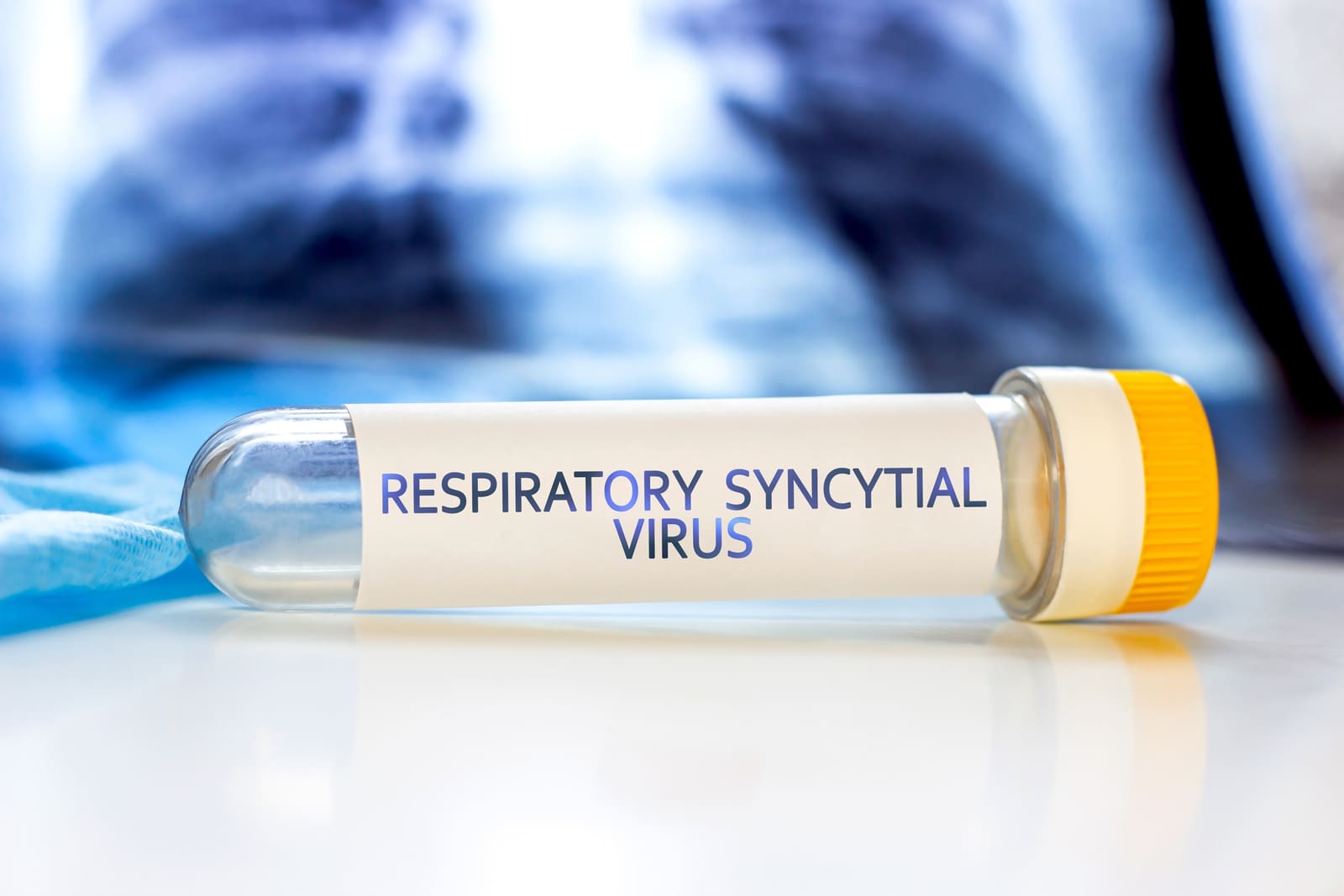
Respiratory syncytial virus, or RSV, is a common lung or respiratory infection. Although the virus causes mild cold-like symptoms in adults and healthier children, it can cause severe symptoms in babies 12 months and younger.
Premature babies, older adults, people with a weak immune system, and those with a pre-existing heart or lung disease can experience severe respiratory problems with the virus.
Symptoms
RSV infection commonly mimics the common cold symptoms in healthy adults and children. The symptoms appear four to six days after exposure to the virus and may include:
- Sore throat
- Dry cough
- Congested or runny nose
- Low-grade fever
- Headaches
In severe cases, the RSV virus can spread to the lower respiratory tract causing bronchitis or pneumonia with the following symptoms.
- Severe cough
- Difficulty in breathing
- Wheezing, where a high-pitched noise is heard while breathing out
- Fever
- Bluish tinge in skin color because of lack of oxygen
Severely affected infants can show symptoms like:
- Cough
- Poor feeding
- Irritability
- Breathing difficulties with short, shallow, and rapid breathing
- Lethargy or unusual tiredness
Most adults and children with RSV infection recover in one to two weeks. More severe cases may require hospital stays to make a full recovery.
FDA approves RSV vaccine for older adults
The U.S. Food and Drug Administration (FDA) has approved two new RSV vaccines for adults 60 and older. GSK’s Arexvy vaccine was approved on May 3, while Pfizer’s Abrysvo was approved on May 31, 2023.
Both vaccines are approved for older adults aged 60 and above, who are more vulnerable to the virus.
The vaccines would help prevent RSV infection in older adults, particularly those with an underlying health condition like a weakened immune system or a heart or lung disease that can increase the severity of the virus infection.
The Vaccine's Safety and Effectiveness
GSK’S Arexvy
The FDA’s approval of GSK’s vaccine, Arexvy, was based on research involving a clinical trial where a single dose of the vaccine was given to adults 60 years and older.
About 12,500 participants were given the vaccine Arexvy, while another 12,500 received a placebo.
The vaccine reduced the RSV infection risk by 82.6%, while the risk of developing a severe infection was decreased by 94.1%.
The common side effects experienced by participants receiving the vaccine were joint stiffness and pain, fatigue, muscle pain, and headache. Among all the participants, six people who received the vaccine and four who received the placebo had atrial fibrillation.
Two other studies were done where 2,500 older adults received the Arexby vaccine. In one study, the vaccine was given with an influenza vaccine. Two people had ADEM (acute disseminated encephalomyelitis), a rare brain and spinal cord inflammation; one died from the complication.
In the second study, one person had the Guillain-Barré syndrome.
The FDA has required the company to investigate the instances of ADEM and Guillain-Barré syndrome. The company has further committed to assessing the risks of atrial fibrillation through a post-marketing study.
Pfizer’s Abrysvo
The FDA has approved Abrysvo based on a clinical trial involving 17,000 participants who got the vaccine and another 17,000 people who received a placebo.
The vaccine reduced the risk of RSV with two or more symptoms by 66.7% while reducing the risk with three or more symptoms by 85.7%.
Pfizer’s Abrysvo was 62% effective in reducing RSV-related respiratory infections that may require hospitalization in older adults.
Some side effects reported were pain in the shot site, muscle pain, fatigue, and headache.
Ten people who got the vaccine and four who received a placebo experienced atrial fibrillation. One participant has Guillain-Barré syndrome, while another got a variant of it.
FDA required Pfizer to investigate the risks of Guillain-Barré syndrome. The company also offered to assess the risks of atrial fibrillation.
While both vaccines are considered comparable in effectiveness, no head-to-head comparison was done.
FDA Approves RSV Injection for Infants
The drug, called Beyfortus, is the first monoclonal antibody approved for all infants during their first RSV seasons.
The injectable drug can protect children up to 2 years old from respiratory syncytial virus.
How do the vaccines work?
Both GSK and Pfizer vaccines target the F protein present on the surface of the RSV virus. The protein changes shape, helping the virus infect the cells in humans.
The vaccines keep the K protein in its pre-fusion state to trigger the creation of antibodies that help the immune system in humans fight off the virus effectively.
What about the RSV vaccine recommended for pregnant women?
An FDA advisory panel is considering the approval of an RSV vaccine for infants. The vaccine made by Pfizer, if approved, would be given to pregnant women in their final semester to protect the unborn baby from RSV risks.
Sources:
- 1arexvy.com/
- 2abrysvo.com/older-adults
- 3cdc.gov/heartdisease/atrial_fibrillation.htm
- 4nejm.org/doi/pdf/10.1056/NEJMoa2216480
- 5cdc.gov/campylobacter/guillain-barre.html#:~:text=Guillain%2DBarr%C3%A9%20(Ghee%2DYAN,muscle%20weakness%20and%20sometimes%20paralysis
ttps://www.cdc.gov/rsv/index.html#:~:text=Related%20Pages,for%20infants%20and%20older%20adults. https://www.mayoclinic.org/diseases-conditions/respiratory-syncytial-virus/symptoms-causes/syc-20353098 https://www.healthychildren.org/English/health-issues/conditions/chest-lungs/Pages/RSV-When-Its-More-Than-Just-a-Cold.aspx https://medlineplus.gov/respiratorysyncytialvirusinfections.html https://www.cdc.gov/media/releases/2023/s0629-rsv.html#:~:text=These%20vaccines%20provide%20an%20opportunity,to%20help%20prevent%20respiratory%20infections. https://www.fda.gov/news-events/press-announcements/fda-approves-first-respiratory-syncytial-virus-rsv-vaccine
Información general, no consejo médico
Este artículo no puede tener en cuenta tu historial de salud ni tu tratamiento actual. Habla con un profesional sanitario cualificado antes de cambiar nada de tu cuidado.
Lee nuestro aviso médico →
En esta página
Symptoms
FDA approves RSV vaccine for older adults
The Vaccine's Safety and Effectiveness
GSK’S Arexvy
Pfizer’s Abrysvo
FDA Approves RSV Injection for Infants
How do the vaccines work?
What about the RSV vaccine recommended for pregnant women?
Pon en práctica lo que lees
Controla tus medicamentos, consulta un síntoma y habla con personas que viven con la misma enfermedad, todo en Healthread.
Descargar la app
Sigue leyendo

Beauty and Anti-Aging
Gastric Balloon for Weight Loss
The gastric balloon weight loss procedure is a new FDA-approved minimally invasive bariatric procedure for treating obesity. It is a temporary procedure that involves placing a saline-filled silicone balloon in the…
19 de junio de 2025 · 3 min de lectura
Beauty and Anti-Aging
Vitamin D Deficiency
Also known as the sunshine vitamin, vitamin D is an essential nutrient that is naturally absorbed by the skin through exposure to sunlight. It can also be obtained from dietary sources and supplements.
30 de diciembre de 2024 · 3 min de lectura

Beauty and Anti-Aging
Cellulite
Cellulite appears with an orange peel or cottage cheese-like texture with a dimpled or lumpy skin surface. Mild cellulite is visible when you pinch the area with cellulite, like the thighs. Severe cellulite can make the…
13 de agosto de 2024 · 3 min de lectura


© 2026 Healthread
English · Español
Healthread no ofrece asesoramiento médico, diagnóstico ni tratamiento. Consulta siempre a un profesional sanitario cualificado sobre tu atención.