

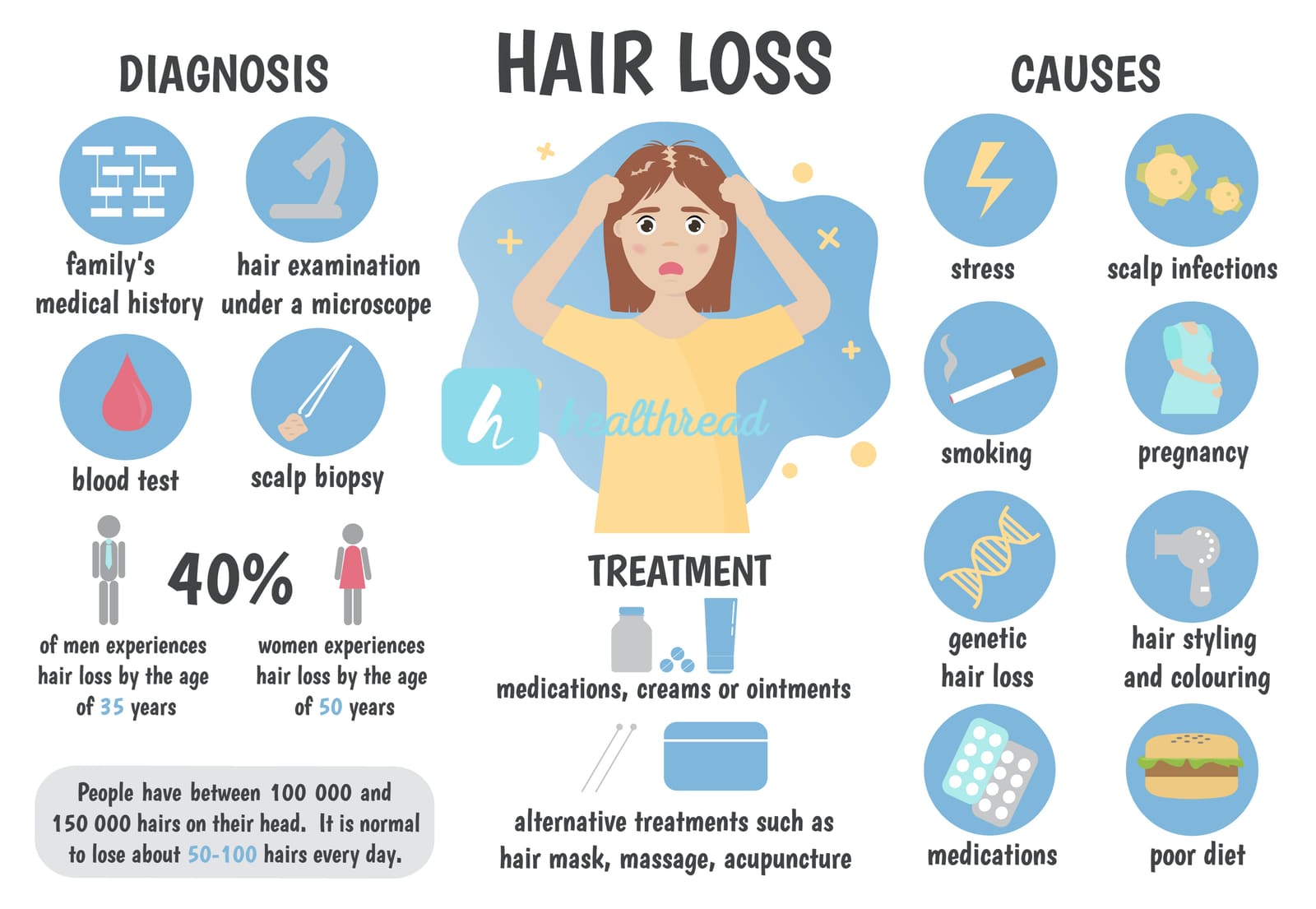
Alopecia, or alopecia areata, is an autoimmune disease of the skin. It can lead to loss of hair on the scalp, face, and other parts of the body. According to the National Alopecia Areata Foundation, the condition could affect up to 6.8 million people in the US alone. The lifetime risk for alopecia is 2.1%. Both sexes, all ages, and all ethnicities can be at risk for alopecia areata. Alopecia often starts during childhood. The disease varies from person to person. Just as people are unique, so are individual symptoms of alopecia.
What are the causes of alopecia areata?
According to Harvard Health, alopecia is primarily caused by an autoimmune system reaction when the body's immune system attacks hair follicles. The attack kills the follicle, causing hair to fall out.
Alopecia areata may also have genetic risk factors, but they aren't as simple as a single gene inherited disease. Multiple genes can influence alopecia. Alopecia can occur to multiple family members. Harvard Health reports that about 40% of people with alopecia who are under age 30 have another family member who also has the disease.
Alopecia risk factors include asthma, thyroid disease, vitiligo, certain types of anemia, and Down syndrome. Stress plays a role in alopecia, but recent research shows that while it may contribute to alopecia, it isn't a primary cause or a risk factor. Losing hair in patches or all over the body is very stressful and the condition can occur at a time of personal stress. Nearly two-thirds of people experience their first instance of hair loss before age 20.
What are the symptoms of alopecia?
Alopecia can cause small round or oval patches of hair loss on the scalp. However, hair loss anywhere on the body can occur, including brows, beard, body hair, and lashes. Hair loss can occur suddenly, or over a longer period of time.
Usually, the hair loss is painless, and the bald skin patches look normal, simply without hair. Some people with alopecia experience itching, tenderness, and a burning sensation. Harvard Health notes that fingernails and toenails can have dents, grooves, or pits as well.
Often, people who lose a few patches of hair experience hair regrowth. In about 30% of cases, people begin to experience more hair loss. Total hair loss on the head is called alopecia totalis, and hair loss all over the body is called alopecia universalis.
What treatments are available for alopecia areata?
Alopecia can be treated, but it cannot be cured. Alopecia treatments vary depending upon age, sex, and the stage or severity of hair loss.
Treatments for androgenetic alopecia (alopecia in women) and androgenic alopecia (alopecia in men) may also assist with female and male pattern baldness, except for steroid treatments. They include:
- Corticosteroid injections into bald areas
- High dose topical corticosteroids
- Platelet rich plasma (PRP)
- Low level laser therapy (LLLT) or laser comb
- Minoxidil, Anthralin, SADBE, and DPCP (hair regrowth medications)
Men may benefit from finasteride, a medication that can treat male hair loss, which is also used to benefit enlarged prostate glands. Spironolactone, a drug that slows the production of male hormones (androgens) can also help to slow hair loss and regrow hair. Medications that help to regrow hair can't prevent new alopecia bald patches from forming.
For patchy hair loss, hair transplant may be able to cover some of the patches, but it isn't considered beneficial for scalp-wide hair loss.
Prognosis and treatment for alopecia
According to Harvard Health, over 90% of people with alopecia experience regrowth of hair that will fill patchy bald spots without any type of treatment. Alopecia can recur, and people can experience more than one episode during their lives. About 7% of people with alopecia lose large areas of hair, and some people do lose all of the hair on their head and body.
Hair provides valuable protection against the sun, so people with alopecia (as well as other forms of baldness) should wear sunscreen while they're outside. They can also wear hats, wigs, and scarves.
Alopecia isn't a contagious disease. It can be emotionally traumatic and difficult for those who are suffering sudden hair loss. Support groups for people with alopecia are available. Family members, friends, and medical providers should be willing to help and support people who experience this autoimmune health condition.
Sources
Información general, no consejo médico
Este artículo no puede tener en cuenta tu historial de salud ni tu tratamiento actual. Habla con un profesional sanitario cualificado antes de cambiar nada de tu cuidado.
Lee nuestro aviso médico →
En esta página
What are the causes of alopecia areata?
What are the symptoms of alopecia?
What treatments are available for alopecia areata?
Prognosis and treatment for alopecia
Pon en práctica lo que lees
Controla tus medicamentos, consulta un síntoma y habla con personas que viven con la misma enfermedad, todo en Healthread.
Descargar la app
Sigue leyendo

Beauty and Anti-Aging
Gastric Balloon for Weight Loss
The gastric balloon weight loss procedure is a new FDA-approved minimally invasive bariatric procedure for treating obesity. It is a temporary procedure that involves placing a saline-filled silicone balloon in the…
19 de junio de 2025 · 3 min de lectura
Beauty and Anti-Aging
Vitamin D Deficiency
Also known as the sunshine vitamin, vitamin D is an essential nutrient that is naturally absorbed by the skin through exposure to sunlight. It can also be obtained from dietary sources and supplements.
30 de diciembre de 2024 · 3 min de lectura
Beauty and Anti-Aging
Cellulite
Cellulite appears with an orange peel or cottage cheese-like texture with a dimpled or lumpy skin surface. Mild cellulite is visible when you pinch the area with cellulite, like the thighs. Severe cellulite can make the…
13 de agosto de 2024 · 3 min de lectura


© 2026 Healthread
English · Español
Healthread no ofrece asesoramiento médico, diagnóstico ni tratamiento. Consulta siempre a un profesional sanitario cualificado sobre tu atención.