

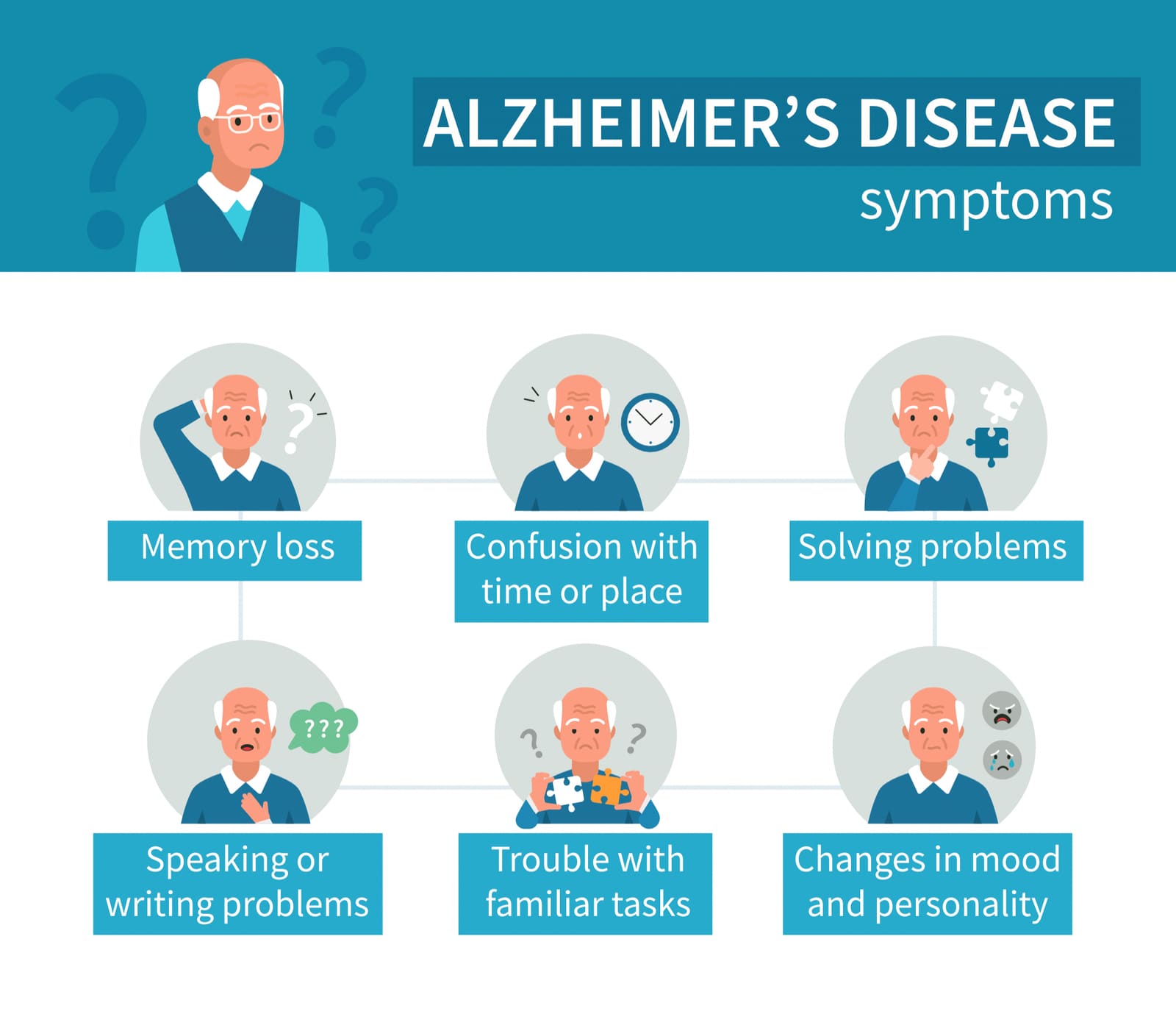
Alzheimer’s is a neurologic disorder that affects more than 5 million people over the age of 65. This disease causes atrophy (shrinking) in the brain, resulting in cellular death. A diagnosis of Alzheimer’s Disease is often provided upon initial mild symptoms. However, scientists believe the damage to the brain begins several years before the onset of symptoms in many. While symptoms appear at differing rates, varying from one person to the next, there are a few classic or tell-tale signs to be aware of.
Is Alzheimer’s a normal part of aging?
No, Alzheimer’s Disease is not a normal attribute of the aging process. Though it is more common in people over 65 years old, Alzheimer’s Disease can affect people much younger - known as early-onset Alzheimer’s. If there is a family history of genetic Alzheimer’s Disease in your family, a person is at an increased risk of developing early-onset Alzheimer’s as early as 30 years of age.
Symptoms of Alzheimer’s Disease
The beginning stages of this disease process produce mild symptoms that progressively worsen as the disease progresses. Though early symptoms are often not life-threatening, they can impact a person’s ability to be self-sufficient. A person may experience:
Memory impairment
During the initial onset of Alzheimer’s Disease, a person may begin showing significant memory problems. This may include repetition of questions, memory loss, wandering or getting lost, and misplacing common household items like the telephone, car keys, or television remote.
Problems with language
You may notice your significant other, mother, or father has begun experiencing difficulty following along with a conversation or experiencing difficulty reading, writing, or doing mathematical work. Because Alzheimer’s Disease causes brain cell death, the more this disease progresses the more trouble your loved one will experience with language and communication.
Mood and personality changes
People experiencing symptoms of Alzheimer’s Disease may begin to feel uncomfortable in certain social settings, and can lead to increased agitation, anxiety, depression, or fear. These feelings can occur whether a person is at home or outside of their comfort zone in a public area.
When to see a doctor
As symptoms of forgetfulness or serious mood changes become more apparent, you may grow concerned for your loved ones' wellbeing, insisting they seek consultation from their primary care physician. It is important to consult a medical provider as the first symptom appears as early detection will help to enhance the person’s quality of life and help them get the therapy or additional help needed.
Alzheimer’s Disease has no known cure, however, treatment to address brain health, slow symptoms, and treat behavioral or mood changes is available. It is important to consider therapy or counseling for the patient, as well as caregivers, as it can become increasingly difficult to see your loved one slowly decline.
Sources
- 1cdc.gov/aging/publications/features/Alz-Greater-Risk.html#:~:text=Alzheimer%27s%20disease%20is%20the%20most,65%20with%20younger%2Donset%20Alzheimer%27s
- 2nia.nih.gov/health/what-are-signs-alzheimers-disease
- 3hopkinsmedicine.org/health/conditions-and-diseases/alzheimers-disease/earlyonset-alzheimer-disease
Información general, no consejo médico
Este artículo no puede tener en cuenta tu historial de salud ni tu tratamiento actual. Habla con un profesional sanitario cualificado antes de cambiar nada de tu cuidado.
Lee nuestro aviso médico →
En esta página
Is Alzheimer’s a normal part of aging?
Symptoms of Alzheimer’s Disease
Memory impairment
Problems with language
Mood and personality changes
When to see a doctor
Sources
Pon en práctica lo que lees
Controla tus medicamentos, consulta un síntoma y habla con personas que viven con la misma enfermedad, todo en Healthread.
Descargar la app
Sigue leyendo

Beauty and Anti-Aging
Gastric Balloon for Weight Loss
The gastric balloon weight loss procedure is a new FDA-approved minimally invasive bariatric procedure for treating obesity. It is a temporary procedure that involves placing a saline-filled silicone balloon in the…
19 de junio de 2025 · 3 min de lectura
Beauty and Anti-Aging
Vitamin D Deficiency
Also known as the sunshine vitamin, vitamin D is an essential nutrient that is naturally absorbed by the skin through exposure to sunlight. It can also be obtained from dietary sources and supplements.
30 de diciembre de 2024 · 3 min de lectura

Cancer-Updates
Gynecologic Cancer
Gynecologic cancer is a term used to describe a group of cancers that affect the female reproductive system. There are five types of gynecologic cancers named after the body part where they start.
5 de noviembre de 2024 · 3 min de lectura


© 2026 Healthread
English · Español
Healthread no ofrece asesoramiento médico, diagnóstico ni tratamiento. Consulta siempre a un profesional sanitario cualificado sobre tu atención.