

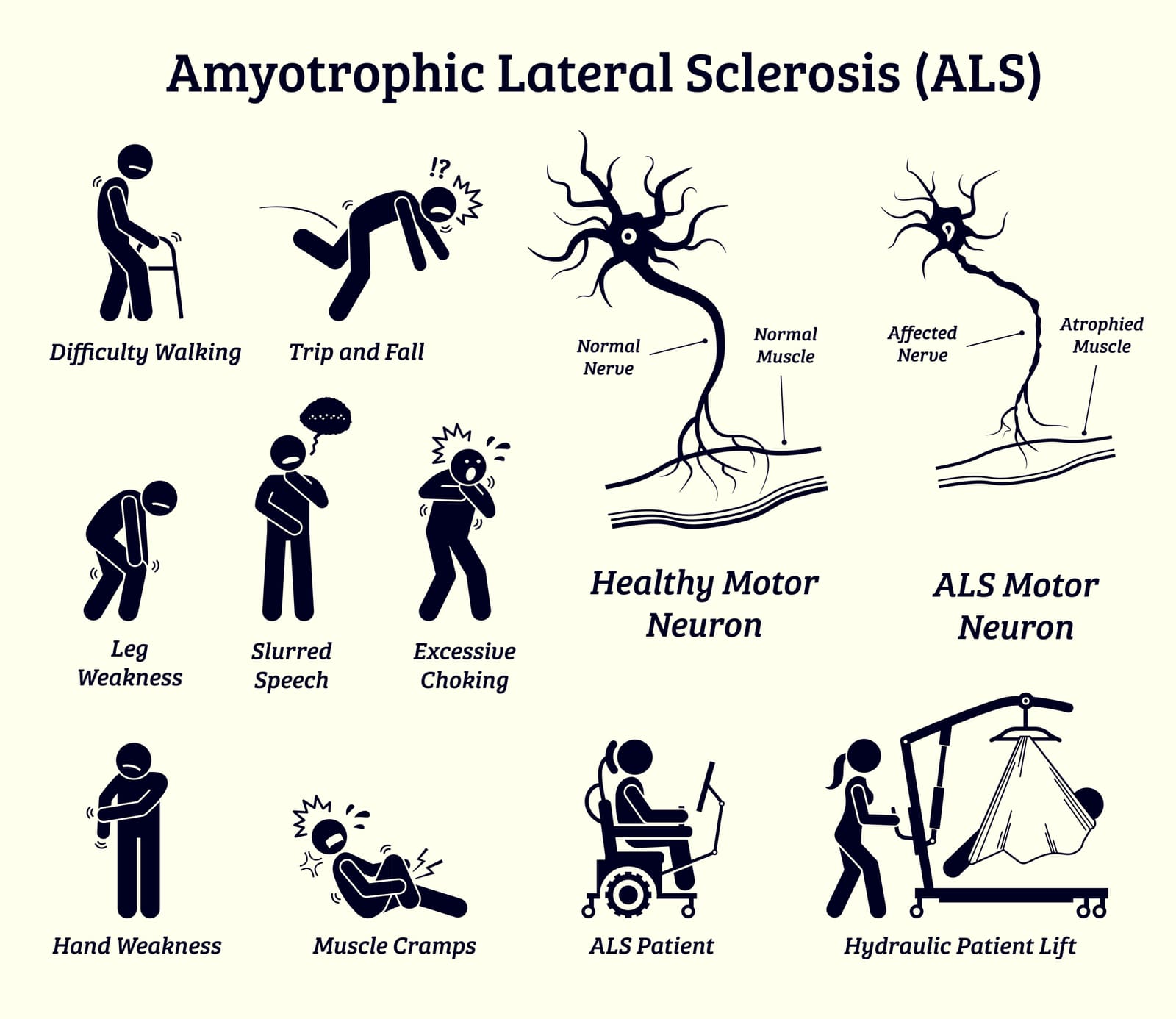
Amyotrophic lateral sclerosis (ALS) is a relentlessly progressive, degenerative neuron disease. Also known as Lou Gehrig’s disease or motor neuron disease. ALS in the most common form of motor neuron disease. ALS affects cells in the brain and spinal cord. It causes significant disability and difficulty with everyday activities.
What Is ALS?
Amyotrophic lateral sclerosis literally means loss of (“a”) muscle (“myo”) nourishment (“trophic”) that causes scarring (“sclerosis”) in the outer (“lateral”) portion of the spinal cord. The disease affects motor neurons, which travel from the brain down the spinal cord and then to muscles throughout the body. When you want to move a body part, your brain sends a signal that quickly passes down the spinal cord and causes the relevant muscle to contract. If motor neurons are diseased, this process no longer works properly. That means that the brain will continue to send signals to move, but your body will not be able to carry out the orders.
ALS affects voluntary motor neurons, meaning the muscles that create intentional action. Other muscles in your body, such as those in your heart or digestive system, are typically unaffected.
What Causes ALS?
There is no single known cause of ALS. In approximately 5 to 10% of people, ALS is inherited from a parent. If your parent has ALS, you have a 50-50 chance of developing the disease. In the majority of cases, however, the cause is not known. There are some genes that appear to be associated with risk for ALS. Currently, scientists think that the disease occurs as a result of an interaction between genetic factors and environmental causes.
Certain demographic and lifestyle factors increase your risk of developing ALS, including:
· Age. As you get older, your risk of ALS increases. It is most commonly diagnosed between 40 and 60 years of age.
· Being a man. More men than women develop ALS before the age of 65. For cases that begin in the 70s or later, there is no difference between men and women.
· Genetic factors, such as having a relative with ALS.
· Smoking. Smoking increases risk for ALS, especially among postmenopausal women.
· Environmental toxins. Certain environmental toxins may increase risk for ALS, although there is no single chemical that seems to be responsible.
· Military service. People who have served in the military are at higher risk for ALS, although it’s not clear why. Possibilities include exposure to toxic chemicals or metals, traumatic injuries, intense exertion, or viral infections.
Symptoms of ALS
The loss of motor neurons results in the primary clinical symptoms and signs of ALS. These may produce impairment affecting limb, bulbar, axial, and respiratory function. Symptoms of ALS begin gradually and eventually progress. Symptoms vary a lot from person to person, as the exact signs depend on what neurons are affected. The most common symptoms include:
●Weak arm or leg muscles, usually starting in one arm or leg and later spreading to other parts of the body
●Trouble speaking or swallowing
●Slow, stiff, or awkward movements
●Muscle twitches and spasms
If a person gets weak muscles in the hands or arms, he or she might have problems with:
●Using buttons or zippers
●Handling coins or other small things
●Writing
If a person gets weak muscles in the legs or feet, he or she might have problems with:
●Walking and turning
●Balance
●Climbing stairs
●Standing up from a chair or the floor
If these symptoms happen, the person might have other problems, such as:
●Feeling like the legs are "heavy"
●Dragging the front of the foot on the ground when walking
●Tripping or falling
If a person gets weak muscles in the head, neck, or chest, he or she might:
●Have a stiff jaw and a hard time opening the mouth
●Have trouble swallowing
●Have trouble moving the mouth and tongue to speak clearly
●Drool
●Not be able to fully close the eyes
●Have trouble holding up the head due to weak neck muscles
●Have trouble breathing
· Some people with ALS have mood and personality changes. They also might laugh, cry, or yawn at times when it doesn't make sense to do those things. Changes in personality or behavior, such as saying inappropriate things, swearing more frequently, changes in eating behavior, apathy, and loss of motivation
· In some people, ALS affects the mind and causes problems with thinking and language. For example, a person might have trouble finding the right words for things. Cognitive changes, including becoming disorganized, having difficulty with impulse control, poor problem solving, and poor judgment
Most commonly, motor (movement) symptoms begin in the hands or feet and then progress to the rest of the body. In the severe stages of the disease, loss of nerve cells affects chewing, speaking, swallowing, and breathing. As ALS progresses, you may develop frontotemporal dementia, which is characterized by language and behavioral changes. ALS is not usually painful, even in its later stages, although it can be very frustrating to deal with physical limitations. The progressive course of ALS eventually produces one or both of the life-threatening aspects of the disease, neuromuscular respiratory failure and dysphagia.
Diagnosis of ALS
Getting an accurate diagnosis of ALS sometimes takes time, as its symptoms appear similar to other neurological problems. Usually, your doctor will order a number of tests to rule out other causes of nerve or muscle changes. This might include:
· Electromyogram (EMG). This involves putting a needle electrode into various muscles to measure their electrical activity.
· Nerve conduction study. This test the ability of your nerves to send signals to the muscles.
· MRI. An MRI of the brain and spinal cord cannot detect ALS, but it can reveal other problems that may explain ALS-like symptoms.
· Blood or urine tests.
· Spinal tap (lumbar puncture). Removing a small amount of fluid from your spinal column helps to diagnose neurodegenerative conditions.
· Muscle biopsy. Removing a small amount of muscle for testing can help to diagnose problems that cause ALS-like symptoms.
ALS Treatment Options
There is no cure for ALS. The goal is to maintain functional independence for as long as possible. Your doctor may recommend medications that may slow the progression of the disease. Other medications treat symptoms like muscle spasms, fatigue, or depression. Physical therapy, occupational therapy, and speech therapy are also recommended to maintain your physical and mental abilities.
Treatments for ALS include a medicine called riluzole (brand name: Rilutek). This medicine works by slowing down the progress of the disease a little bit. It can help people live a few months longer. Another medicine, edaravone (brand name: Radicava), might also help slow the progress of ALS in some people.
Other treatments help people cope with the symptoms of ALS. They include:
●Breathing support – For this treatment, you wear a tight-fitting mask on your face or nose. Air and oxygen flow through the mask to help you breathe.
●Feeding tube – This is a small, flexible tube that goes through the skin over your belly into your stomach. You can then get special liquid food and fluids through the tube directly into your stomach.
●Devices to help with walking and talking, such as:
•A cane, crutches, or motorized wheelchair.
•A special computer that "talks" for you. You can control the computer with hand or eye movements.
●Medicines to treat muscle spasms and weakness, drooling, sleep problems, pain, and depression.
Sources
Información general, no consejo médico
Este artículo no puede tener en cuenta tu historial de salud ni tu tratamiento actual. Habla con un profesional sanitario cualificado antes de cambiar nada de tu cuidado.
Lee nuestro aviso médico →
En esta página
What Is ALS?
What Causes ALS?
Symptoms of ALS
Diagnosis of ALS
ALS Treatment Options
Sources
Pon en práctica lo que lees
Controla tus medicamentos, consulta un síntoma y habla con personas que viven con la misma enfermedad, todo en Healthread.
Descargar la app
Sigue leyendo

Beauty and Anti-Aging
Gastric Balloon for Weight Loss
The gastric balloon weight loss procedure is a new FDA-approved minimally invasive bariatric procedure for treating obesity. It is a temporary procedure that involves placing a saline-filled silicone balloon in the…
19 de junio de 2025 · 3 min de lectura
Beauty and Anti-Aging
Vitamin D Deficiency
Also known as the sunshine vitamin, vitamin D is an essential nutrient that is naturally absorbed by the skin through exposure to sunlight. It can also be obtained from dietary sources and supplements.
30 de diciembre de 2024 · 3 min de lectura

Cancer-Updates
Gynecologic Cancer
Gynecologic cancer is a term used to describe a group of cancers that affect the female reproductive system. There are five types of gynecologic cancers named after the body part where they start.
5 de noviembre de 2024 · 3 min de lectura


© 2026 Healthread
English · Español
Healthread no ofrece asesoramiento médico, diagnóstico ni tratamiento. Consulta siempre a un profesional sanitario cualificado sobre tu atención.