

Cataracts are a common cause of vision loss. Since there are often no symptoms of cataracts early on in their development, it's so helpful to understand this condition and be aware of its risk factors and signs and symptoms.
Keep reading for five helpful things to know about cataracts.
1. Cataracts Are a Leading Cause of Vision Loss
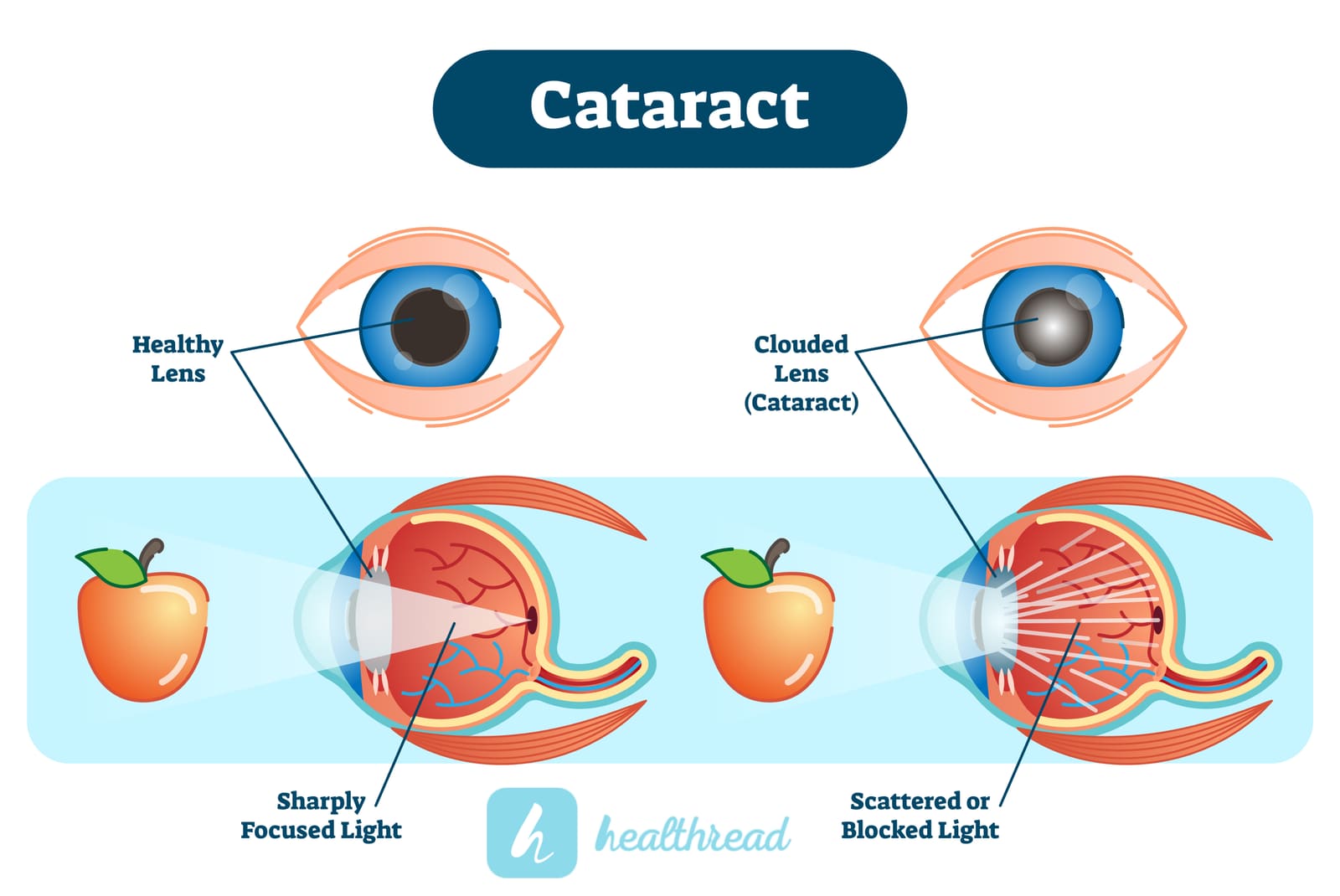
A cataract develops when the lens inside one or both eyes becomes cloudy or milky. The lens is normally clear and sits right behind the pupil (the dark spot in the center of your eye). The lens is curved and helps light bend properly into the eye so you can see.
When something causes the proteins and fibers inside the lens to change their alignment and shape, a cataract can form. Many people compare a cataract to a foggy window. If a cataract becomes large enough, it can make it very difficult for you to see.
2. Cataracts Can Affect People of All Ages
More than 90 percent of people over age 65 have at least one cataract. But while advancing age is a leading risk factor for cataracts, even children and infants can have cataracts. Causes of cataracts in infancy or childhood include genetics, infections during pregnancy, and eye trauma.
3. Many Risk Factors for Cataracts Are Preventable
We can't do much about getting older. But research suggests that many of the leading risk factors for cataracts can be avoided or prevented. They include excessive exposure to sunlight and smoking. A history of eye trauma, infection, or surgery, as well as the presence of other health conditions like obesity, high blood pressure, and diabetes, may also increase your risk of developing cataracts.
More recently, doctors and researchers believe that excessive exposure to blue light emitted from digital screens can increase the risk of cataracts. This is because blue light is a powerful form of light that can deeply penetrate the eyes and may lead to oxidative stress in the tissues inside your eyes.
4. There Are Signs and Symptoms of Cataracts
Not everyone who has cataracts will develop noticeable signs and symptoms. But if a cataract grows big enough to cause symptoms, a person may begin to notice issues such as:
- What appears to be "halos" around bright light sources
- Blurry or clouded vision
- The frequent need to change or update prescription eyewear
- Increased sensitivity to light
- Difficulty with night vision
- The appearance of yellowing or faded colors
Large cataracts in their advanced stages can even cause a person's eye to appear cloudy or milky.
5. Cataracts Can be Treated
Eye doctors can diagnose cataracts even before you notice any problems with your vision. This kind of early diagnosis can be useful for helping you initiate earlier lifestyle habits—like diet, exercise, and smoking cessation—that will support vision health and reduce the impact of cataract risk factors. Implementing these healthy lifestyle choices may help slow the progression of your cataract and preserve your eyesight.
Once a cataract begins affecting your vision, you and your doctor may decide to implement updated prescription eyewear or low-vision strategies. Many people also choose to undergo surgical removal of their cataracts. This surgery is done as an outpatient procedure by an ophthalmologist, who will remove the damaged cataract through a small incision in the eye, then replace it with an artificial replacement called an intraocular (IOL) lens.
Prognosis after cataract surgery is generally good, according to the U.S. National Library of Medicine. It's important to follow your surgeon's recommendations and make any follow-up appointments to ensure your recovery goes smoothly.
Are you ready to talk to your eye doctor about cataracts?
Whether you have cataract risk factors or simply think it's time to be screened, now's a great time to schedule an eye exam with your eye doctor. In the meantime, be sure to explore the rest of Healthread and our app for more information that can help boost your well-being.
Sources
Información general, no consejo médico
Este artículo no puede tener en cuenta tu historial de salud ni tu tratamiento actual. Habla con un profesional sanitario cualificado antes de cambiar nada de tu cuidado.
Lee nuestro aviso médico →
En esta página
1. Cataracts Are a Leading Cause of Vision Loss
2. Cataracts Can Affect People of All Ages
3. Many Risk Factors for Cataracts Are Preventable
4. There Are Signs and Symptoms of Cataracts
5. Cataracts Can be Treated
Are you ready to talk to your eye doctor about cataracts?
Sources
Pon en práctica lo que lees
Controla tus medicamentos, consulta un síntoma y habla con personas que viven con la misma enfermedad, todo en Healthread.
Descargar la app
Sigue leyendo

Beauty and Anti-Aging
Gastric Balloon for Weight Loss
The gastric balloon weight loss procedure is a new FDA-approved minimally invasive bariatric procedure for treating obesity. It is a temporary procedure that involves placing a saline-filled silicone balloon in the…
19 de junio de 2025 · 3 min de lectura

Beauty and Anti-Aging
Vitamin D Deficiency
Also known as the sunshine vitamin, vitamin D is an essential nutrient that is naturally absorbed by the skin through exposure to sunlight. It can also be obtained from dietary sources and supplements.
30 de diciembre de 2024 · 3 min de lectura

Cancer-Updates
Gynecologic Cancer
Gynecologic cancer is a term used to describe a group of cancers that affect the female reproductive system. There are five types of gynecologic cancers named after the body part where they start.
5 de noviembre de 2024 · 3 min de lectura


© 2026 Healthread
English · Español
Healthread no ofrece asesoramiento médico, diagnóstico ni tratamiento. Consulta siempre a un profesional sanitario cualificado sobre tu atención.