

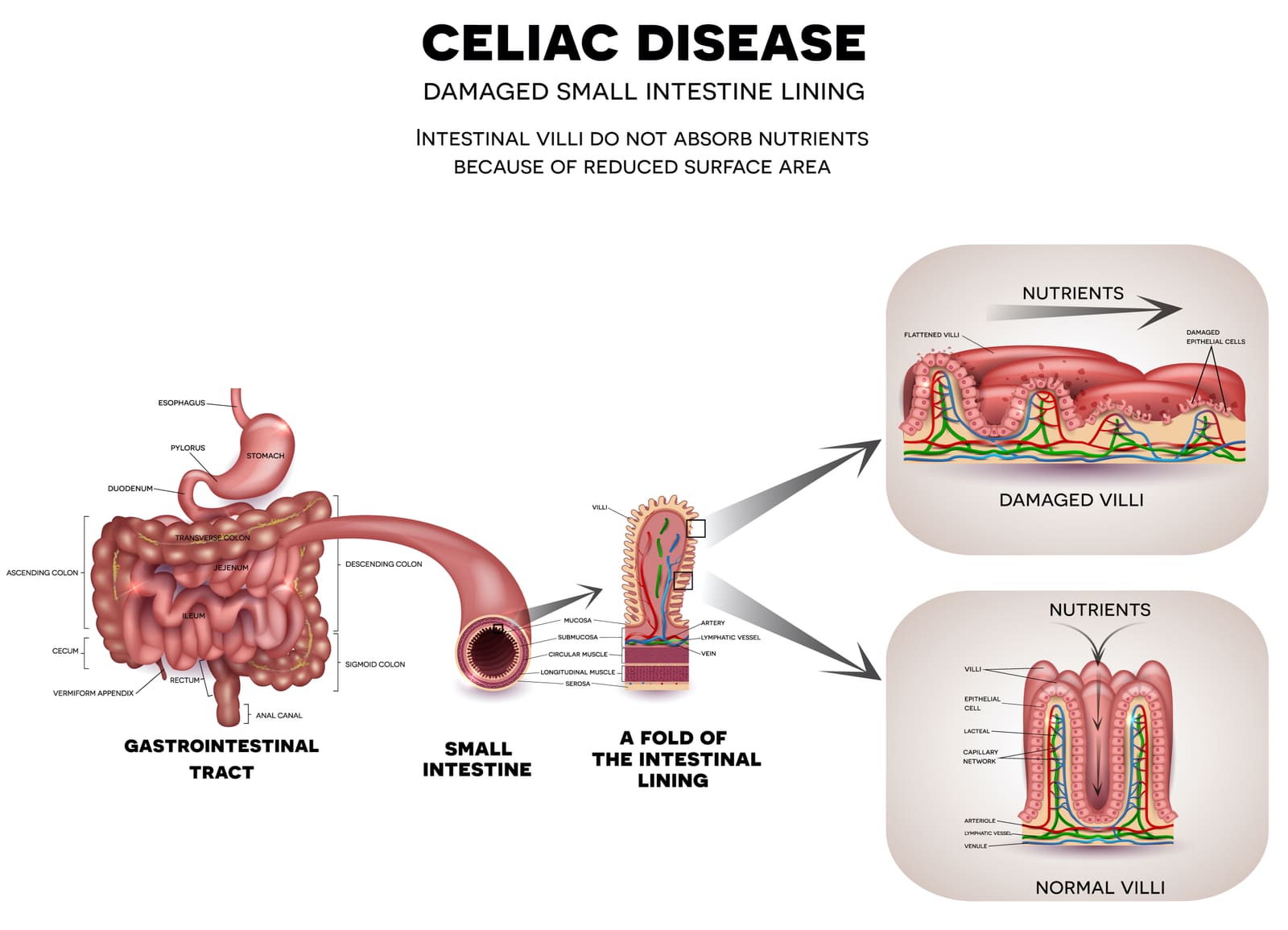
All of those gluten-free foods available in the supermarket were originally formulated for those dealing with celiac disease. The autoimmune condition known as celiac disease results from the consumption of gluten, a protein found in wheat, along with rye and barley.
When those with celiac disease eat gluten, the protein causes an immune response in the small intestine. This, in turn, causes damage to the small intestine and affects its ability to absorb nutrients. It is especially serious in children, as poor nutrient absorption can lead to growth and development delays.
In a worst-case scenario, people, especially youngsters, may develop malnutrition from celiac disease. Infertility may result from a lack of sufficient calcium. That lack can also lead to osteoporosis, or bone thinning. Seizures or other problems with the central nervous system may appear. There is also an increased risk of various forms of gastrointestinal cancer.
There is no cure for celiac disease, but most people respond well to careful dietary management.
Celiac Disease Symptoms
Celiac disease affects people in different ways, so there are many potential symptoms. That is one reason it is often a difficult condition to diagnose. Suspect celiac disease if experiencing some of the following symptoms:
- Abdominal pain
- Anemia
- Bloating
- Constipation
- Diarrhea
- Fatigue
- Flatulence
- Nausea
- Pale stools with an especially foul odor
- Vomiting
- Weight loss
Adults may deal with symptoms unrelated to the gastrointestinal system, including headache, joint pain, skin rashes, mouth ulcers, depression, and balance or cognitive issues.
If these problems do not resolve within a few weeks, visit your doctor. However, do not attempt to go on to a gluten-free diet prior to diagnosis. These symptoms are common in many other conditions, and not eating gluten for a prolonged period prior to testing can change test results and a possible diagnosis.
Risk Factors
Celiac disease may run in families. If you had a close relative with the condition, such as parents or siblings, your odds of developing celiac disease rise.
Those with Type 1 diabetes are at increased risk of celiac disease. Celiac disease often accompanies other conditions, including Down syndrome, Addison’s disease, Turner’s disease, and thyroid disease.
Celiac Disease Diagnosis
Blood tests can confirm celiac disease. Patients with this disease will have elevated levels of certain antibodies in their blood, indicating the body has an immune reaction to gluten. If the patient receives a positive antibody test, further testing is necessary. These may include an endoscopy to view the small intestine.
In an endoscopy, also known as an intestinal biopsy, the doctor inserts a long tube with a minute camera attached to it into the upper throat. From there, the camera can take photos of the small intestine as well as take a tissue sample. The procedure is done under local anesthesia.
An alternative is capsule endoscopy. In this procedure, the patient swallows a small capsule with a camera within. The camera takes and sends photos as it travels through the digestive tract.
Because the symptoms are so common in other ailments, blood testing can also rule out a celiac disease diagnosis. Genetic tests for certain leukocyte antigens serve this purpose.
Celiac Disease Treatment
While a gluten-free diet is a primary celiac disease treatment, this is not a DIY endeavor. Many people with celiac disease do not respond to what they think is gluten-free eating because they are inadvertently still consuming gluten products. Consulting a doctor and nutritionist is essential to ensure you are indeed avoiding gluten.
If a patient’s small intestine is particularly damaged, the doctor may prescribe steroids for inflammation reduction.
Within a few weeks of starting a gluten-free diet, the overwhelming majority of patients will feel better and symptoms should lessen, then disappear. In time, the damage done to the small intestine will heal. However, keep in mind that a gluten-free diet is a lifelong commitment. Breaking the diet or accidentally eating food containing gluten will result in symptoms returning.
There is a rare condition known as refractory celiac disease in which patients truly do not respond to a gluten-free diet. If a prescribed, carefully-adhered-to gluten-free diet does not offer symptom relief after six months, consult your doctor. This condition does not heal, and patients require specialized evaluation.
The good news is that most children are healed significantly within a few months of eating gluten-free. It may take longer for adults, although they should feel better relatively soon. Completing healing may take a few years.
Gluten Avoidance
Gluten is not only found in food. Thousands of ordinary products contain gluten. These may include:
- Lipsticks and lip balm
- Mouthwash
- Over-the-counter medications
- Prescription medications
- Toothpaste
- Vitamin and herbal supplements
Then there is the gluten hiding in items as diverse as Communion wafers and Play-dough. Successfully battling celiac disease requires constant vigilance about anything you eat, drink, or put in or on your mouth.
Sources
- 1medlineplus.gov/celiacdisease.html
- 2celiac.org/about-celiac-disease/what-is-celiac-disease/
- 3mayoclinic.org/diseases-conditions/celiac-disease/symptoms-causes/syc-20352220
- 4niddk.nih.gov/health-information/digestive-diseases/celiac-disease
- 5my.clevelandclinic.org/health/diseases/14240-celiac-disease
- 6nationalceliac.org/celiac-disease-support-groups/
Información general, no consejo médico
Este artículo no puede tener en cuenta tu historial de salud ni tu tratamiento actual. Habla con un profesional sanitario cualificado antes de cambiar nada de tu cuidado.
Lee nuestro aviso médico →
En esta página
Celiac Disease Symptoms
Risk Factors
Celiac Disease Diagnosis
Celiac Disease Treatment
Gluten Avoidance
Sources
Pon en práctica lo que lees
Controla tus medicamentos, consulta un síntoma y habla con personas que viven con la misma enfermedad, todo en Healthread.
Descargar la app
Sigue leyendo

Beauty and Anti-Aging
Gastric Balloon for Weight Loss
The gastric balloon weight loss procedure is a new FDA-approved minimally invasive bariatric procedure for treating obesity. It is a temporary procedure that involves placing a saline-filled silicone balloon in the…
19 de junio de 2025 · 3 min de lectura
Beauty and Anti-Aging
Vitamin D Deficiency
Also known as the sunshine vitamin, vitamin D is an essential nutrient that is naturally absorbed by the skin through exposure to sunlight. It can also be obtained from dietary sources and supplements.
30 de diciembre de 2024 · 3 min de lectura

Cancer-Updates
Gynecologic Cancer
Gynecologic cancer is a term used to describe a group of cancers that affect the female reproductive system. There are five types of gynecologic cancers named after the body part where they start.
5 de noviembre de 2024 · 3 min de lectura


© 2026 Healthread
English · Español
Healthread no ofrece asesoramiento médico, diagnóstico ni tratamiento. Consulta siempre a un profesional sanitario cualificado sobre tu atención.