

The heart is responsible for pumping oxygen and nutrient-rich blood throughout your body. The heart is also a muscle that requires oxygen and nutrients to function. Coronary artery disease (CAD) occurs when the blood vessels that carry blood to your heart (coronary arteries) narrow or become blocked. This slows the flow of blood, decreasing the amount of oxygen and nutrients that reach the heart. Over time, blood flow further decreases and symptoms of CAD occur. Without treatment, CAD can weaken the heart, leading to heart failure or abnormal beating patterns (arrhythmia).
CAD, also known as heart disease, is the leading cause of death in the United States. According to the Centers for Disease Control and Prevention, an estimated 18 million adults (6.7% of the US population) have been diagnosed and are living with CAD. Fortunately, there are preventative steps you can take to lower your risk. CAD starts during the childhood and adolescent years, and progresses with age to the point of causing symptoms. After CAD starts, lifestyle changes and treatment are required to manage the symptoms and reduce the risk of serious complications or death.
Atherosclerosis and Ischemia
The inside of healthy arteries is open, smooth, and flexible. During atherosclerosis, cholesterol, proteins, inflammatory cells, and other fatty material building up on the inside of the artery. This substance, called plaque, increases over time, eventually leading to hardening and narrowing of the arteries. Plaque can attract platelets from the blood, forming clots inside the arteries that narrow and become irritated. Sometimes, the clots may break off and prevent blood flow to part of the heart, which causes the heart muscle to cramp. This is called ischemia and may result in a sensation of chest pain (angina). Depending on the severity of the blockage, changes in heart rhythm may be noticeable using a test called electrocardiogram (ECG).
Symptoms of Coronary Artery Disease
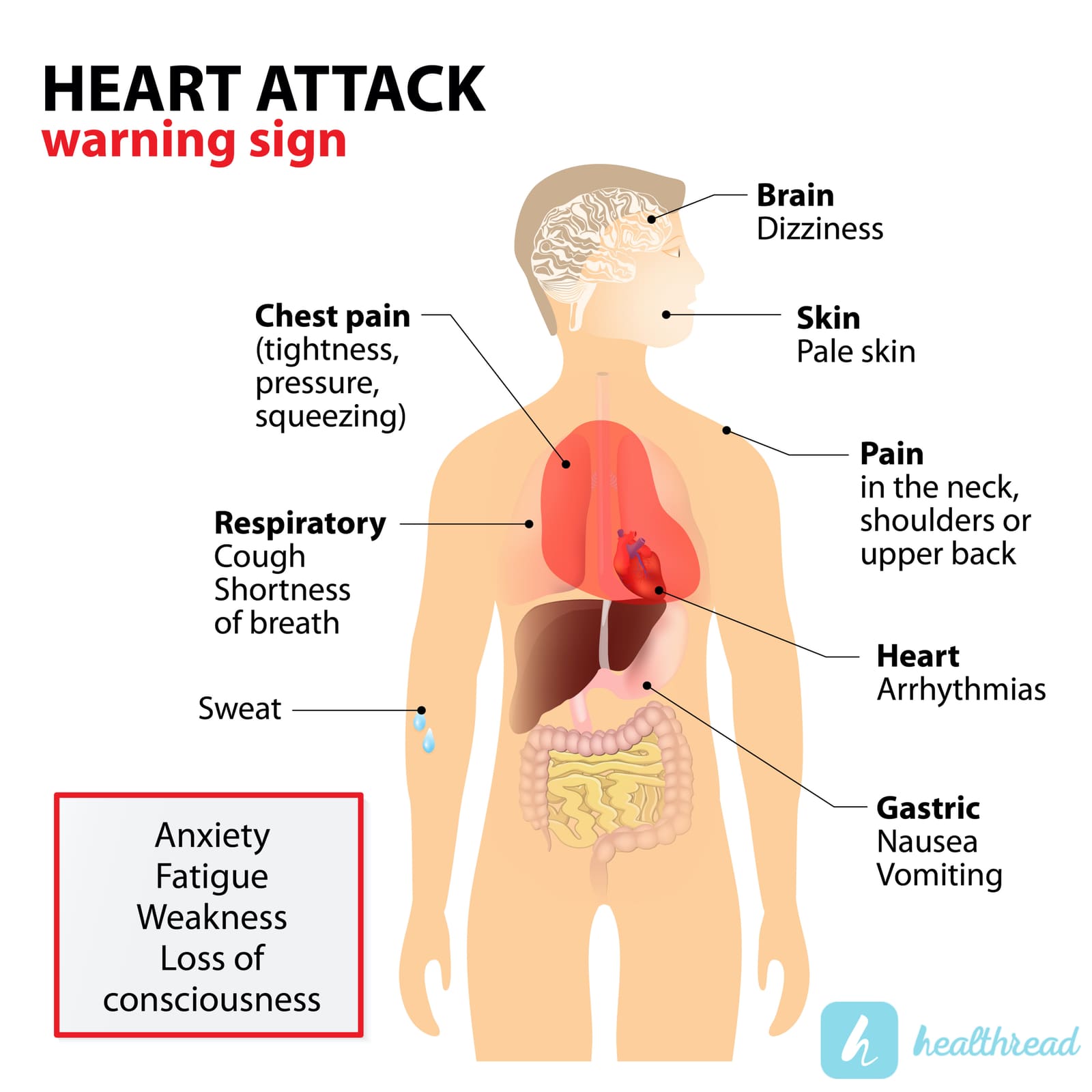
Angina (chest pain) may be experienced as discomfort, tightness, burning, pain, or heaviness. Some people can confuse angina with heartburn or indigestion. Other symptoms of coronary artery disease include:
- Pain in the arms, left shoulder, back, neck, or jaw area
- Shortness of breath
- Irregular heartbeats (palpitations) or racing heart beat (tachycardia)
- Nausea
- Dizziness
- Sweating
- Weakness
If you have any of these symptoms, you should contact your doctor immediately. If you suspect you may be having a heart attack, dial 911. Time to treatment is incredibly important for minimizing damage from a heart attack.
Acute coronary syndrome
Acute coronary syndrome occurs when the heart has a sudden block in blood supply. Symptoms may occur before this occurs, or the block can occur suddenly. Several terms are used to describe common patterns of acute coronary syndrome:
- Unstable angina: Chest pain may be most noticeable when the heart is working hard, such as when a person is exercising, feeling stressed, eating, or exposed to cold. Often, the pain resolves as soon as the person rests. When the pain lasts longer or is more intense, it is called unstable angina. These symptoms will require medication to reduce the risk of a heart attack.
- Myocardial infarction: This is the medical term for a heart attack, which occurs when the heart is deprived of blood flow. The muscle spasms and pumps in an abnormal pattern. Depending on the severity of the blockage, an ECG may show major changes. Small or temporary blockages that caused symptoms may not show up on an ECG, but a blood test can show if the heart muscle has been damaged.
Prevention and Risk Factors
There are many steps individuals can take to decrease their risk of developing coronary artery disease:
- Maintain a healthy blood pressure
- Decrease cholesterol and triglyceride levels
- Maintain a healthy weight
- Eat a healthy diet that is low in saturated fat, salt, cholesterol, and added sugars
- Exercise regularly
- Reduce stress
- Limit alcohol
- Avoid cigarettes
- Get enough sleep
There are some risk factors that you cannot change:
- Age: The risk of coronary artery disease increases with age, because the plaque deposits have more time to build up to the point of causing symptoms.
- Gender: The risk is higher for men than women, because estrogen provides some protection.
- Family history plays a role in risk level, likely due to genetics and lifestyle factors.
- Race and ethnicity: African Americans, Hispanics, and South Asians having elevated risk levels compared to other groups.
Although coronary artery disease is common, it is possible to reduce your risk or experiencing symptoms. If you already have coronary artery disease, you can manage your risk of further disease progression by living a healthy lifestyle and taking medications prescribed by your doctor.
Sources
Información general, no consejo médico
Este artículo no puede tener en cuenta tu historial de salud ni tu tratamiento actual. Habla con un profesional sanitario cualificado antes de cambiar nada de tu cuidado.
Lee nuestro aviso médico →
En esta página
Atherosclerosis and Ischemia
Symptoms of Coronary Artery Disease
Prevention and Risk Factors
Sources
Pon en práctica lo que lees
Controla tus medicamentos, consulta un síntoma y habla con personas que viven con la misma enfermedad, todo en Healthread.
Descargar la app
Sigue leyendo

Beauty and Anti-Aging
Gastric Balloon for Weight Loss
The gastric balloon weight loss procedure is a new FDA-approved minimally invasive bariatric procedure for treating obesity. It is a temporary procedure that involves placing a saline-filled silicone balloon in the…
19 de junio de 2025 · 3 min de lectura
Beauty and Anti-Aging
Vitamin D Deficiency
Also known as the sunshine vitamin, vitamin D is an essential nutrient that is naturally absorbed by the skin through exposure to sunlight. It can also be obtained from dietary sources and supplements.
30 de diciembre de 2024 · 3 min de lectura

Cancer-Updates
Gynecologic Cancer
Gynecologic cancer is a term used to describe a group of cancers that affect the female reproductive system. There are five types of gynecologic cancers named after the body part where they start.
5 de noviembre de 2024 · 3 min de lectura


© 2026 Healthread
English · Español
Healthread no ofrece asesoramiento médico, diagnóstico ni tratamiento. Consulta siempre a un profesional sanitario cualificado sobre tu atención.