

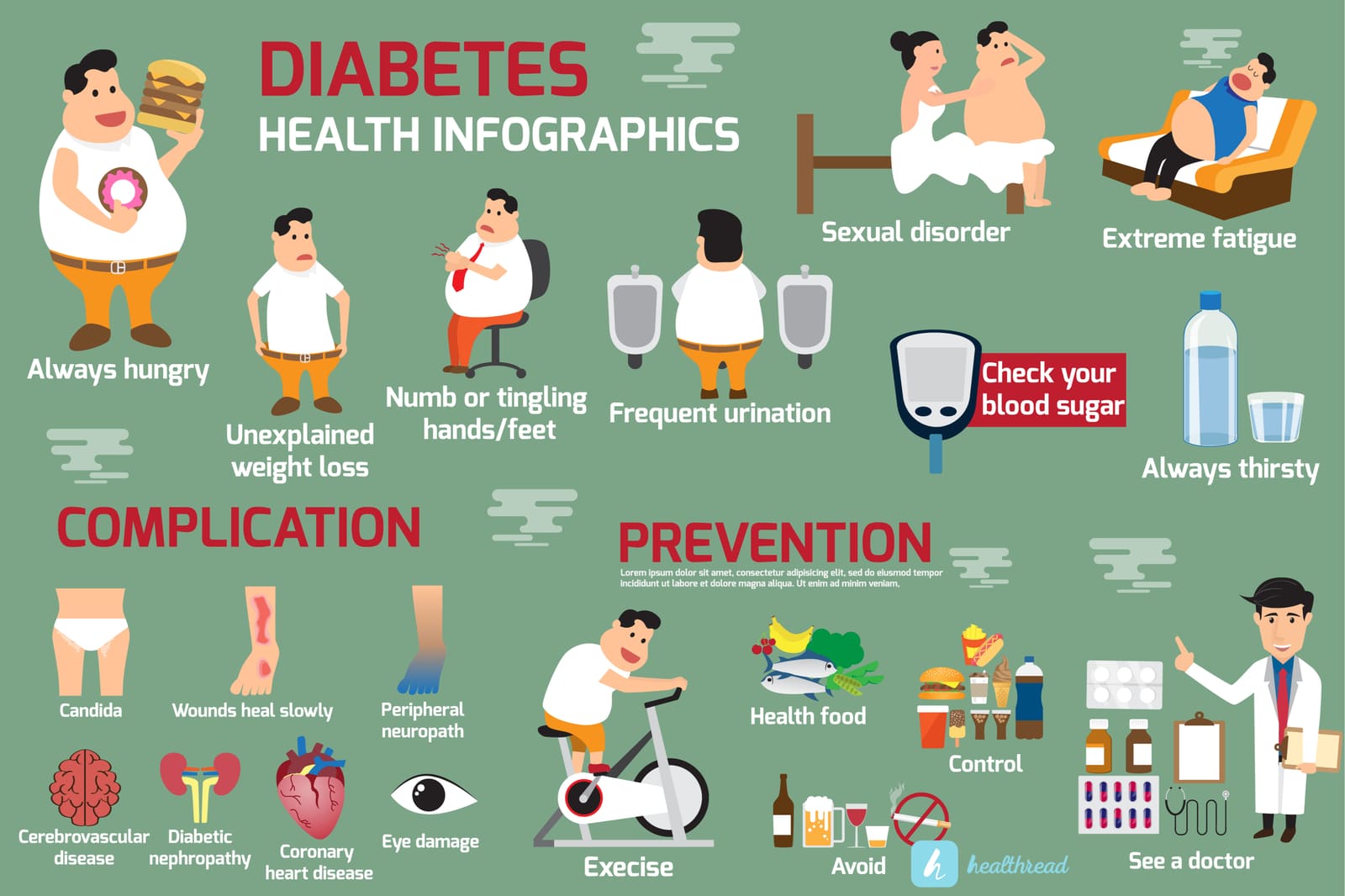
Diabetes is a metabolic disease associated with high levels of sugar in the blood, which can lead to serious problems with an individual’s heart, nerves, blood vessels, eyes, and kidneys if not diagnosed and treated early. Luckily, much is known about diabetes and the treatments are extremely effective.
What is Diabetes?
Diabetes, also known as diabetes mellitus, is a chronic, metabolic disease that occurs when your blood sugar is too high and your body is unable to naturally produce insulin in the pancreas. The failure in an individual’s pancreas to create insulin or use it effectively causes spikes in blood sugar known as hyperglycemia.
In simpler terms, what happens when someone has diabetes is that their body has trouble turning food into energy. When you eat food, your body naturally breaks down the food into sugar (glucose), which is a great source of energy for your body, and releases it into your bloodstream. When your blood sugar rises, your pancreas is signaled to release insulin as a response, so the sugar in your blood can be absorbed into your cells and used for energy.
However, if you have diabetes, your body isn’t properly making or using insulin, so instead of the sugar in your blood being released and absorbed by your cells to be used as energy, it remains in your blood. In a healthy person, insulin causes your blood sugar levels to drop to be used in cells, but in a diabetic, your blood sugar levels remain high and can do serious damage to your body, such as causing heart disease, kidney problems, and even loss of vision.
How Common Is Diabetes?
While most people consider diabetes to be a relatively common disease, it is probably much more common than you would imagine. The World Health Organization estimates that 422 million people worldwide have diabetes, especially in low and middle-income countries. While the United States is considered a high-income country, diabetes is still quite common. The Centers for Disease Control and Prevention (CDC) states that 34.2 million Americans have diabetes, which is over 1-in-10 Americans, and 88 million American adults are prediabetic (which is about 1-in-3 adult Americans).
According to the WHO, diabetes has risen dramatically in the last 30 years across countries of all income levels. Why is diabetes so common, and why is it quickly becoming more common on a global scale? This question will be answered in the section below.
Diabetes Mellitus Types and Causes
Type 1 Diabetes. Type 1 diabetes, is the least common form of diabetes, affecting only 5%-10% of individuals with diabetes. Type 1 diabetes is believed to be caused by an autoimmune response in the body, one in which the body’s immune system attacks itself. This prevents your pancreas from producing insulin. Symptoms usually develop quickly with Type 1 diabetes and affect children, teens, and young adults. While it is not known how to prevent type 1 diabetes, individuals can survive the disease if they take insulin every day.
Type 2 Diabetes. Type 2 diabetes is when your body produces or uses insulin ineffectively. 90%-95% of people with diabetes have type 2 diabetes. Unlike type 1 diabetes, type 2 usually develops over a long period of time. And while it is usually diagnosed in adults, it is quickly becoming more common in teens and children. Also, symptoms can go unnoticed so it is important to get tested if you are at risk for type 2 diabetes.
You are more prone to getting type 2 diabetes if you are 45 years or older, have a family history of diabetes, and/or are overweight. You are also at risk for diabetes if you have prediabetes or gestational diabetes (diabetes that develops when you are pregnant).
Prediabetes. As stated, more than 1 in 3 adults in the US have prediabetes, about 88 million people have prediabetes. Prediabetes is simply when an individual’s blood sugar levels are higher than normal, but not high enough to be diagnosed with type 2 diabetes.
Gestational Diabetes. The onset of this diabetes mellitus type happens during pregnancy. The CDC reports that up to 10% of pregnancies in the U.S. are affected by gestational diabetes annually. Blood sugar typically returns to normal after birth, but women who have had gestational diabetes are at a higher risk of developing type 2 diabetes.
Diabetes Treatments
Treatment for diabetes is relatively simple. If you have type 1 diabetes, you need to take insulin every day. Treatment for type 2 diabetes includes losing weight, eating healthy, taking medicine, and being active (exercising). Treatments for diabetes also include managing complications, such as peripheral neuropathy and eyesight issues. Talk to your doctor if you believe you are at risk for diabetes or are prediabetic.
Diabetes Support
Individuals looking to learn more about diabetes can look to the many associations and foundations, including the American Diabetes Association (ADA), Diabetes Research Institute, Diabetes Foundation. In addition, Healthread offers a platform where users can connect and talk about health issues, including diabetes mellitus.
Sources
Información general, no consejo médico
Este artículo no puede tener en cuenta tu historial de salud ni tu tratamiento actual. Habla con un profesional sanitario cualificado antes de cambiar nada de tu cuidado.
Lee nuestro aviso médico →
En esta página
What is Diabetes?
How Common Is Diabetes?
Diabetes Mellitus Types and Causes
Diabetes Treatments
Diabetes Support
Sources
Pon en práctica lo que lees
Controla tus medicamentos, consulta un síntoma y habla con personas que viven con la misma enfermedad, todo en Healthread.
Descargar la app
Sigue leyendo

Beauty and Anti-Aging
Gastric Balloon for Weight Loss
The gastric balloon weight loss procedure is a new FDA-approved minimally invasive bariatric procedure for treating obesity. It is a temporary procedure that involves placing a saline-filled silicone balloon in the…
19 de junio de 2025 · 3 min de lectura

Beauty and Anti-Aging
Vitamin D Deficiency
Also known as the sunshine vitamin, vitamin D is an essential nutrient that is naturally absorbed by the skin through exposure to sunlight. It can also be obtained from dietary sources and supplements.
30 de diciembre de 2024 · 3 min de lectura

Cancer-Updates
Gynecologic Cancer
Gynecologic cancer is a term used to describe a group of cancers that affect the female reproductive system. There are five types of gynecologic cancers named after the body part where they start.
5 de noviembre de 2024 · 3 min de lectura


© 2026 Healthread
English · Español
Healthread no ofrece asesoramiento médico, diagnóstico ni tratamiento. Consulta siempre a un profesional sanitario cualificado sobre tu atención.