

Do You Have Diabetes? You May be at Risk of Other Diseases
9 de marzo de 2023
4 min de lectura
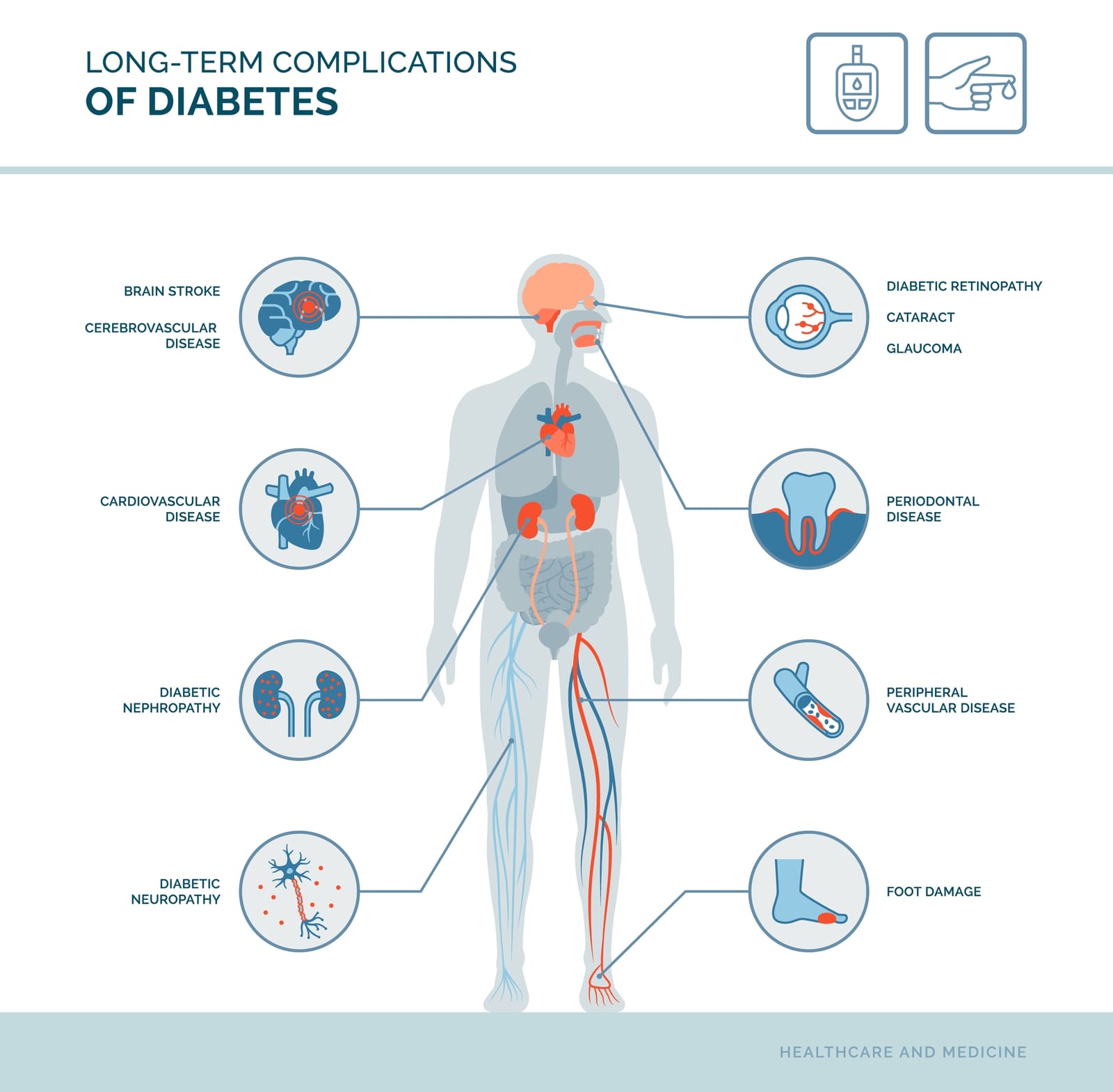
Did you know that high blood sugar can increase your risk of other serious conditions?
Diabetes is characterized by high blood glucose levels. People with diabetes have an excessive amount of sugar in their blood for a long time after they eat.
Body cells use sugar as energy. When you eat, your body converts carbohydrates into a form of sugar your cells can use. This sugar, also known as glucose, enters the bloodstream. After eating a meal, your blood glucose level naturally rises. Your blood sugar level drops as your cells absorb the glucose from the bloodstream.
While sugar is beneficial for cellular health, the presence of excessively high glucose can have a damaging effect on body tissues. High blood sugar, also known as hyperglycemia, can affect the heart, blood vessels, nerves, kidneys and eyes. Hyperglycemia can also affect other body systems.
Diabetes Increases Your Risk of Several Conditions
The damage hyperglycemia inflicts on body tissues can cause complications and co-existing conditions, also known as comorbidities. In other words, high blood sugar can increase your risk of other diseases.
Heart and blood vessel disease
As glucose flows, it can damage the blood vessels that carry it. Doctors refer to this as diabetic vascular disease. The sugar causes inflammation and thickening of the lining of blood vessels, in a condition known as atherosclerosis.
Diabetic vascular disease usually affects smaller arteries, which are the blood vessels that carry oxygen-rich blood from your heart to the rest of your body. The disease most commonly affects arteries in the eyes, kidneys, fingers, feet, and toes. Diabetic vascular disease can cause poor circulation in your legs.
Diabetes can increase the risk of high blood pressure, heart disease, and stroke.
Nerve damage in your limbs
Over time, high blood glucose can damage or destroy nerves, a condition known as neuropathy. Nerve damage can cause numbness, tingling, pain, or burning in your fingers and toes. You may even experience loss feeling that starts in your fingertips or tips of your toes then gradually spreads upward.
Other nerve damage
Diabetes can damage nerves in your heart, and the damage can lead to irregular heart rhythms, known as arrhythmia. In your digestive system, nerve damage can cause nausea and vomiting, diarrhea, or constipation. Men with nerve damage from diabetes may experience erectile dysfunction.
Kidney disease
High blood sugar can damage the blood vessels in your kidneys, and this damage can lead to chronic kidney disease or even end-stage kidney disease that requires dialysis or a kidney transplant. High blood pressure caused by diabetes can also contribute to the development of diabetic kidney disease.
Eye damage
High blood sugar levels can damage the tiny blood vessels at the back of your eyes. Damaged blood vessels can leak fluid into the eye and cause swelling. New, weak blood vessels can grow and bleed into the center of your eye to cause scarring or dangerously high pressure inside your eye.
Diabetic eye disease is a group of eye problems that affect people with diabetes. Diabetic eye diseases include:
- Diabetic retinopathy - damaged blood vessels in the eye’s retina, which is the light-sensitive tissue lining the back of your eye that captures visual information about the world around you
- Diabetic macular edema - swelling of the macula, which is the part of the retina responsible for close-up vision you use when reading, driving a car, and seeing faces
- Glaucoma - damage to the optic nerve that carries images from the retina to your brain; diabetes doubles your chances of having glaucoma
- Cataracts - people with diabetes are more likely to develop cataracts, a condition in which the eye’s lenses are cloudy
Skin conditions
Having diabetes increases your risk for developing skin conditions, including bacterial and fungal infections. Other skin conditions associated with diabetes includes:
- Diabetic dermopathy - a harmless skin condition that causes brown spots
- Diabetic blisters
- Eruptive xanthomatosis - causes firm, yellow pea-like bumps in the skin
- Diabetic ulcers - painful sores caused by poor circulation, nerve damage and susceptibility to infections
Slow healing
Diabetes causes your system to produce enzymes and hormones that slow down healing. Untreated cuts and blisters may develop serious infections that heal poorly. Severe damage from infections may require amputation, especially when wounds occur on the lower legs, feet, or toes.
Diabetes can affect other body systems to cause conditions and diseases, such as hearing impairment, sleep apnea, and even dementia.
For more information on other disease associated with diabetes, or to learn if your diabetes is increasing your risk for developing a serious condition, consult with a doctor. Your physician can also help you find ways to lower your blood sugar levels and reduce your risk for serious illness associated with diabetes.
Información general, no consejo médico
Este artículo no puede tener en cuenta tu historial de salud ni tu tratamiento actual. Habla con un profesional sanitario cualificado antes de cambiar nada de tu cuidado.
Lee nuestro aviso médico →
En esta página
Diabetes Increases Your Risk of Several Conditions
Heart and blood vessel disease
Nerve damage in your limbs
Other nerve damage
Kidney disease
Eye damage
Skin conditions
Slow healing
Pon en práctica lo que lees
Controla tus medicamentos, consulta un síntoma y habla con personas que viven con la misma enfermedad, todo en Healthread.
Descargar la app
Sigue leyendo

Beauty and Anti-Aging
Gastric Balloon for Weight Loss
The gastric balloon weight loss procedure is a new FDA-approved minimally invasive bariatric procedure for treating obesity. It is a temporary procedure that involves placing a saline-filled silicone balloon in the…
19 de junio de 2025 · 3 min de lectura

Beauty and Anti-Aging
Vitamin D Deficiency
Also known as the sunshine vitamin, vitamin D is an essential nutrient that is naturally absorbed by the skin through exposure to sunlight. It can also be obtained from dietary sources and supplements.
30 de diciembre de 2024 · 3 min de lectura

Cancer-Updates
Gynecologic Cancer
Gynecologic cancer is a term used to describe a group of cancers that affect the female reproductive system. There are five types of gynecologic cancers named after the body part where they start.
5 de noviembre de 2024 · 3 min de lectura


© 2026 Healthread
English · Español
Healthread no ofrece asesoramiento médico, diagnóstico ni tratamiento. Consulta siempre a un profesional sanitario cualificado sobre tu atención.