

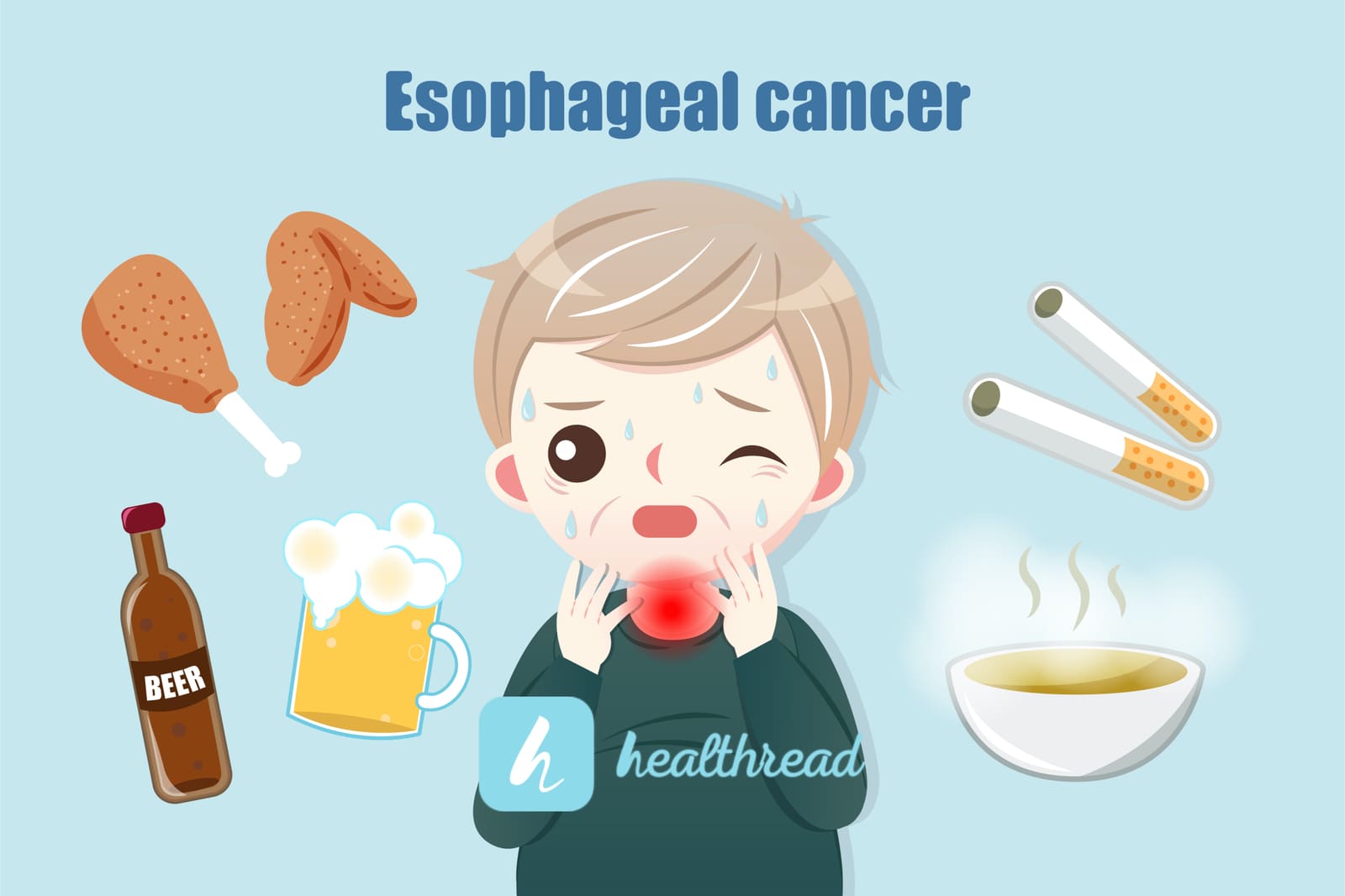
Did you know the average human esophagus is about 8 inches long? This thin muscular tube connects your throat to your stomach and acts as the passageway through which the food you eat enters your digestive system. Word buffs and etymologists will tell you that "esophagus" comes from the Greek roots oisein (to carry) and phagein (to eat).
Heartburn and acid reflux are common disorders affecting the esophagus. Less commonly known is esophageal cancer, sometimes called esophageal carcinoma. In this article, we're discussing seven important things to know about this condition.
7 Fast Facts About Esophageal Cancer
1. Statistics
Surprisingly, esophageal cancer is one of the top ten most common cancers worldwide. According to the American Cancer Society, about 18,440 new cases of esophageal cancer are expected to be diagnosed in 2020.
Men are more likely than women to get esophageal cancer; they have a lifetime risk of 1 in 125 of becoming diagnosed. In comparison, women have a 1 in 417 chance of getting esophageal cancer.
2. Types
Esophageal cancer can be classified into different types based on where the cancerous cells begin to grow. These types include:
- Squamous cell carcinoma: this type of cancer begins in the inner lining of the esophagus, called the mucosa. It's most likely to develop in the upper and middle portions of the esophagus. About 30 percent of esophageal cancers in the United States are this type.
- Adenocarcinoma: this type of cancer begins in the cells within the esophagus that make mucus (gland cells). It's most likely to develop in the lower portion of the esophagus.
Sometimes, adenocarcinomas can develop at the point where the esophagus meets the upper portion of the stomach. More rarely, other types of cancer can affect the esophagus, including sarcomas, lymphomas, and melanomas.
3. Causes and Risk Factors
Cancer happens when DNA damage or mutation in cells causes cells to grow out of control. You may be more likely to develop esophageal cancer if you have any of the following known risk factors:
- Older age
- Male gender
- Tobacco and alcohol use
- Family history
- Chronic acid reflux (heartburn)
- Barrett's esophagus (a condition in which cells in the lower part of the esophagus begin to change due to long-term untreated acid reflux)
- A history of other kinds of head or neck cancer
- Human papillomavirus (HPV)
- Exposure to certain chemicals, such as cleaning solvents
4. Signs and Symptoms
According to Cleveland Clinic, some of the key signs and symptoms of esophageal cancer include difficulty swallowing, painful swallowing, chronic cough, hoarse voice, pain in the throat, behind the breast bone, or between the shoulder blades, vomiting or coughing blood, and unintended weight loss. These symptoms usually only show up once the cancerous tumor grows large enough to narrow the opening of the esophagus. That means there likely aren't any obvious signs or symptoms of esophagus cancer early on.
5. Diagnosis
Diagnosing esophageal cancer usually requires the input of several medical doctors and specialists. Common tests and measures used to diagnose this condition (and rule out any other conditions that may present with similar symptoms) include:
- Imaging studies, like X-rays, PET scans, CT scans, MRIs, and barium swallow studies (you swallow a special liquid that allows doctors to see inside your esophagus when you sit in front of an X-ray machine)
- Medical and physical exam
- Blood work and lab work
- Endoscopy (where doctors insert a tiny camera on the end of a flexible tube into the esophagus to see inside the tube)
6. Treatment
When a person is diagnosed with esophageal cancer, the type of treatment they end up receiving depends on factors like how far along their cancer is and what their overall health status is like. Common treatments for esophageal cancer include surgical treatments to remove cancerous tissue and to open up the esophagus, surgery to remove parts of the esophagus, chemotherapy, radiation, and targeted drug therapy and other medications that help destroy cancerous tissue and manage symptoms.
Right now, there's a lot of interesting research going on to investigate new ways to treat and prevent esophageal cancer. For instance, researchers are exploring the use of certain medications like acid-reducing drugs and aspirinto prevent esophageal cancer in people with Barrett's esophagus.
7. Prognosis
According to the American Cancer Society, the 5-year relative survival rate of esophageal cancer is 47%. This number means that people diagnosed with esophageal cancer that hasn't spread into other tissues are a little less than half as likely to be alive 5 years after getting their diagnosis, relative to people who don't have this type of cancer. People with adenocarcinomas seem to have a better chance at survival compared to people with squamous cell carcinomas.
Keep in mind that treatments for esophageal cancer continue to advance, and many factors influence a person's prognosis, including the stage of their cancer at diagnosis, their age, their overall health, and even their mental outlook.
Do You Have a Story About Esophageal Cancer You'd Like to Share?
Getting a cancer diagnosis can be alarming, but there are so many resources out there to help you understand your condition. If you'd like to share or hear stories about cancer of the esophagus, reach out to your fellow Healthread community members today. You can also check out the Cancer Survivors Network from the American Cancer Society.
Sources
Información general, no consejo médico
Este artículo no puede tener en cuenta tu historial de salud ni tu tratamiento actual. Habla con un profesional sanitario cualificado antes de cambiar nada de tu cuidado.
Lee nuestro aviso médico →
En esta página
7 Fast Facts About Esophageal Cancer
1. Statistics
2. Types
3. Causes and Risk Factors
4. Signs and Symptoms
5. Diagnosis
6. Treatment
7. Prognosis
Sources
Pon en práctica lo que lees
Controla tus medicamentos, consulta un síntoma y habla con personas que viven con la misma enfermedad, todo en Healthread.
Descargar la app
Sigue leyendo

Cancer-Updates
Gynecologic Cancer
Gynecologic cancer is a term used to describe a group of cancers that affect the female reproductive system. There are five types of gynecologic cancers named after the body part where they start.
5 de noviembre de 2024 · 3 min de lectura

Cancer-Updates
Anal Cancer
Anal cancer is caused when the cancer cells in the anus grow uncontrollably, forming masses or tumors. The cancer cells can sometimes spread to other body parts, causing metastatic cancer.
18 de agosto de 2024 · 3 min de lectura

Cancer-Updates
Bile Duct Cancer (Cholangiocarcinoma)
Bile duct cancer, or cholangiocarcinoma, is a cancer that occurs in the bile ducts, the slender tubes that collect bile, a fluid made by the liver for breaking down fats in the digestion process.
17 de abril de 2024 · 2 min de lectura


© 2026 Healthread
English · Español
Healthread no ofrece asesoramiento médico, diagnóstico ni tratamiento. Consulta siempre a un profesional sanitario cualificado sobre tu atención.