

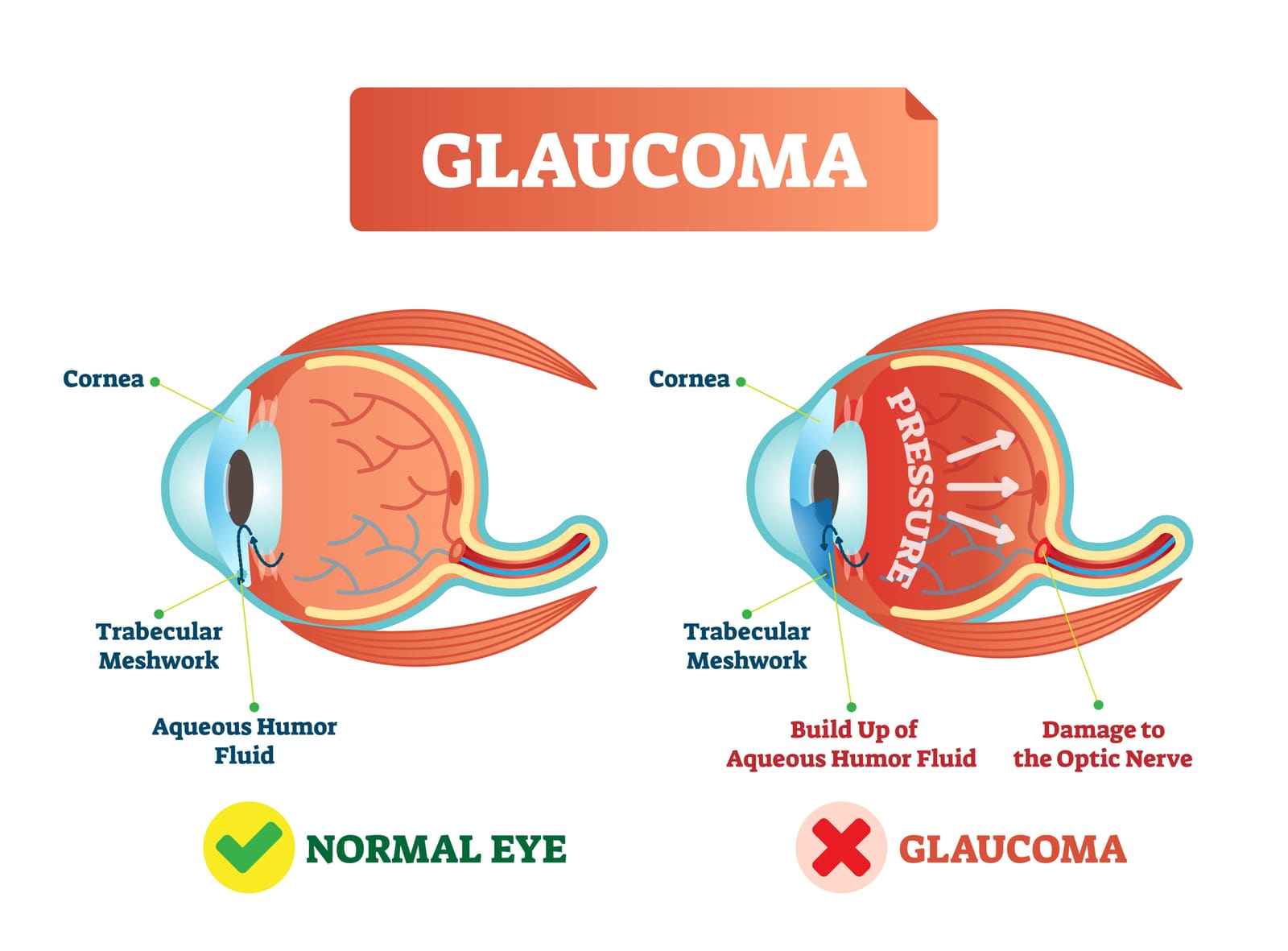
Presently, over 3 million individuals in the U.S. have glaucoma, according to the Glaucoma Research Foundation. And, the National Eye Institute projects a 58% increase in this number with about 4.2 million having the disease by 2030. Glaucoma is the top reason behind irreversible blindness.
January is Glaucoma Awareness Month
January is National Glaucoma Awareness Month. It's an essential time for spreading the word about glaucoma. The National Eye Health Education Program (NEHEP) would like you to join them in encouraging individuals with a greater risk for the disease to make a New Year's resolution out of eye health by getting a dilated eye exam.
What Is Glaucoma?
Glaucoma is a group of eye diseases that slowly take away your sight without warning. While the most common types mainly impact the elderly and middle-aged, glaucoma can impact individuals of any age.
Damage to the optic nerve is what causes vision loss. This nerve works similar to an electric cable that has more than a million wires. It's in charge of carrying images to your brain from your eye.
There's no cure for glaucoma as of yet. But, medicine or surgery could slow down the vision loss or prevent it altogether. The proper treatment depends on the form of glaucoma you have. Early detection is important to stop the disease's progression, which is why glaucoma awareness is so very important.
Types of Glaucoma
There are a couple of major forms of glaucoma. These are:
1. Primary Open-Angle Glaucoma
This type of glaucoma is most common. It occurs slowly, where your eye doesn't drain fluid like it should (i.e. a blocked drain). Because of this, there's a build-up of eye pressure and it begins damaging your optic nerve. This form of glaucoma doesn't cause any changes to vision at first and is painless.
Certain individuals could have optic nerves with sensitivity to regular eye pressure, meaning their risk for glaucoma is higher than it normally would be. Routine eye exams are essential for finding early signs of optic nerve damage.
2. Angle-Closure Glaucoma
A type of glaucoma, which is also referred to as "narrow-angle glaucoma" or "closed-angle glaucoma", angle-closure glaucoma happens when the drainage angle in your eye is too close to your iris is extremely near the drainage angle in your eye. The iris could wind up causing a blockage to the drainage angle. Imagine it as if it were a piece of paper that slides over a drain in a sink.
As the drainage angle becomes totally blocked, patients can see a quick increase in eye pressure. This is referred to as an acute attack and you should contact your ophthalmologist immediately or you could go blind.
Share Glaucoma Awareness
Here are some ways to help to raise awareness:
- 1.Talk to your family and friends about glaucoma. If you're dealing with glaucoma, don't hide it from your family.
- 2.
- 3.
- 4.Involve yourself in your community through information sessions, fundraisers, inviting expert speakers, group discussions, and more.
- 5.Go on social media to spread the word. Use these Facebook and Twitter posts to inform your followers about Glaucoma Awareness Month. You can also use them to make posts all year round about Glaucoma.
- 6.Give a presentation. Share essential information about how individuals with glaucoma can use this presentation to help protect their vision. Lead a community educational session through the use of this toolkit. It's simple to use, even if you haven't led group discussions or know a whole lot about eye care.
Who Is at Risk for Glaucoma?
Glaucoma is the second top cause of blindness worldwide, according to the World Health Organization (WHO). Different risk factors for this disease are:
- Age: Individuals older than 60 years old have a higher risk of glaucoma and this risk slightly increases as each year passes. Your increased risk starts at age 40 if you're African-American.
- Eye problems: Thin corneas and chronic eye inflammation could cause increased eye pressure. Physical injury or eye trauma, like being hit in your eye, could also lead to increased eye pressure.
- Ethnicity: African-Americans or individuals of African descent are substantially more likely of developing this disease than Caucasians. Individuals of Asian descent have a greater risk of angle-closure glaucoma and individuals of Japanese descent have a greater risk of low-tension glaucoma.
- Medical history: Individuals with high blood pressure, diabetes or heart disease have a greater risk of developing glaucoma.
- Family history: Certain types of glaucoma might run in families. If you have a parent or a grandparent who had open-angle glaucoma, you have a greater risk of developing it as well.
- Use of certain medication: If you use corticosteroids for an extended period of time, it could increase your risk for secondary glaucoma.
Getting Screened for Glaucoma
For your ophthalmologist to diagnose glaucoma, they'll want to give you a thorough eye exam. They'll look for signs of deterioration such as nerve tissue loss. They might also screen you with one or more of the following procedures and tests:
- 1.Tonometry test: This test measures the internal pressure of your eyes.
- 2.Detailed medical history: The doctor will ask you about symptoms you've been struggling with and if you have any family or personal history of glaucoma. They'll request a general health assessment so they can determine if you have any other medical conditions that could be affecting your eye health like high blood pressure or diabetes.
- 3.Perimetry test: This test, which is also called a visual field test, will let your doctor know if glaucoma is impacting your vision through the measurement of side, peripheral, and central vision.
- 4.Pachymetry test: Individuals who have thin corneas have a greater risk for glaucoma. This test tells your doctor if you have thinner-than-average corneas.
- 5.Monitoring your optic nerve: If your opthalmologist wishes to monitor you for gradual optic nerve changes, they might take photos of your optic nerve so they can conduct an overtime side-by-side comparison.
Foundations and Societies for Glaucoma
- 1.Glaucoma Research Foundation: This is a national non-profit organization committed to finding a glaucoma cure. They fund research for glaucoma worldwide.
- 2.American Glaucoma Society Foundation: This foundation is a 501(c)(3) not-for-profit organization established in 2011 and is based out of San Francisco, California.
- 3.The Glaucoma Foundation: This foundation is committed to the development of a glaucoma cure through cutting-edge education, research, and collaboration. Their goal is to eradicate glaucoma-related blindness.
Latest Insights on Glaucoma
The USC Roski Eye Institute offers the following most innovative advancements available for diagnosing, treating, and preventing the glaucoma group of diseases:
- Glaucoma Drainage Devices
- Intraocular Pressure Sensors
- Drug Delivery Systems
One technique, the production of the Protrudin protein, to regenerate optic nerve provides hope for future treatment of glaucoma.
Are You a Glaucoma Patient?
Join Healthread to connect with other people who might be also struggling with Glaucoma. Join different public chat groups based on certain health interests. Healthread has a Glaucoma group you can join, for instance where you can talk with others dealing with the same symptoms and struggles. Press the "Discover Button" to search other groups you might be interested in too.
Sources
- 1who.int/bulletin/volumes/82/11/feature1104/en/
- 2eye.keckmedicine.org/todays-cutting-edge-advancements-glaucoma-treatment/
- 3optometrytimes.com/view/technological-advancements-glaucoma-management
- 4glaucoma.org/news/blog/recent-advances-in-glaucoma-treatment-what-do-they-mean-for-patients.php
- 5glaucoma.org/news/glaucoma-awareness-month.php
- 6nei.nih.gov/learn-about-eye-health/resources-for-health-educators/glaucoma-resources/glaucoma-awareness-month
- 7integracareclinics.com/january-is-glaucoma-awareness-month-heres-what-you-should-know/
- 8aao.org/eye-health/diseases/what-is-glaucoma
- 9aao.org/eye-health/diseases/glaucoma-diagnosis
- 10nei.nih.gov/learn-about-eye-health/eye-conditions-and-diseases/glaucoma
- 11healthline.com/health/glaucoma#risk-factors
Información general, no consejo médico
Este artículo no puede tener en cuenta tu historial de salud ni tu tratamiento actual. Habla con un profesional sanitario cualificado antes de cambiar nada de tu cuidado.
Lee nuestro aviso médico →
En esta página
January is Glaucoma Awareness Month
What Is Glaucoma?
Types of Glaucoma
1. Primary Open-Angle Glaucoma
2. Angle-Closure Glaucoma
Share Glaucoma Awareness
Who Is at Risk for Glaucoma?
Getting Screened for Glaucoma
Foundations and Societies for Glaucoma
Latest Insights on Glaucoma
Are You a Glaucoma Patient?
Sources
Pon en práctica lo que lees
Controla tus medicamentos, consulta un síntoma y habla con personas que viven con la misma enfermedad, todo en Healthread.
Descargar la app
Sigue leyendo

Beauty and Anti-Aging
Gastric Balloon for Weight Loss
The gastric balloon weight loss procedure is a new FDA-approved minimally invasive bariatric procedure for treating obesity. It is a temporary procedure that involves placing a saline-filled silicone balloon in the…
19 de junio de 2025 · 3 min de lectura
Beauty and Anti-Aging
Vitamin D Deficiency
Also known as the sunshine vitamin, vitamin D is an essential nutrient that is naturally absorbed by the skin through exposure to sunlight. It can also be obtained from dietary sources and supplements.
30 de diciembre de 2024 · 3 min de lectura

Beauty and Anti-Aging
Cellulite
Cellulite appears with an orange peel or cottage cheese-like texture with a dimpled or lumpy skin surface. Mild cellulite is visible when you pinch the area with cellulite, like the thighs. Severe cellulite can make the…
13 de agosto de 2024 · 3 min de lectura


© 2026 Healthread
English · Español
Healthread no ofrece asesoramiento médico, diagnóstico ni tratamiento. Consulta siempre a un profesional sanitario cualificado sobre tu atención.