

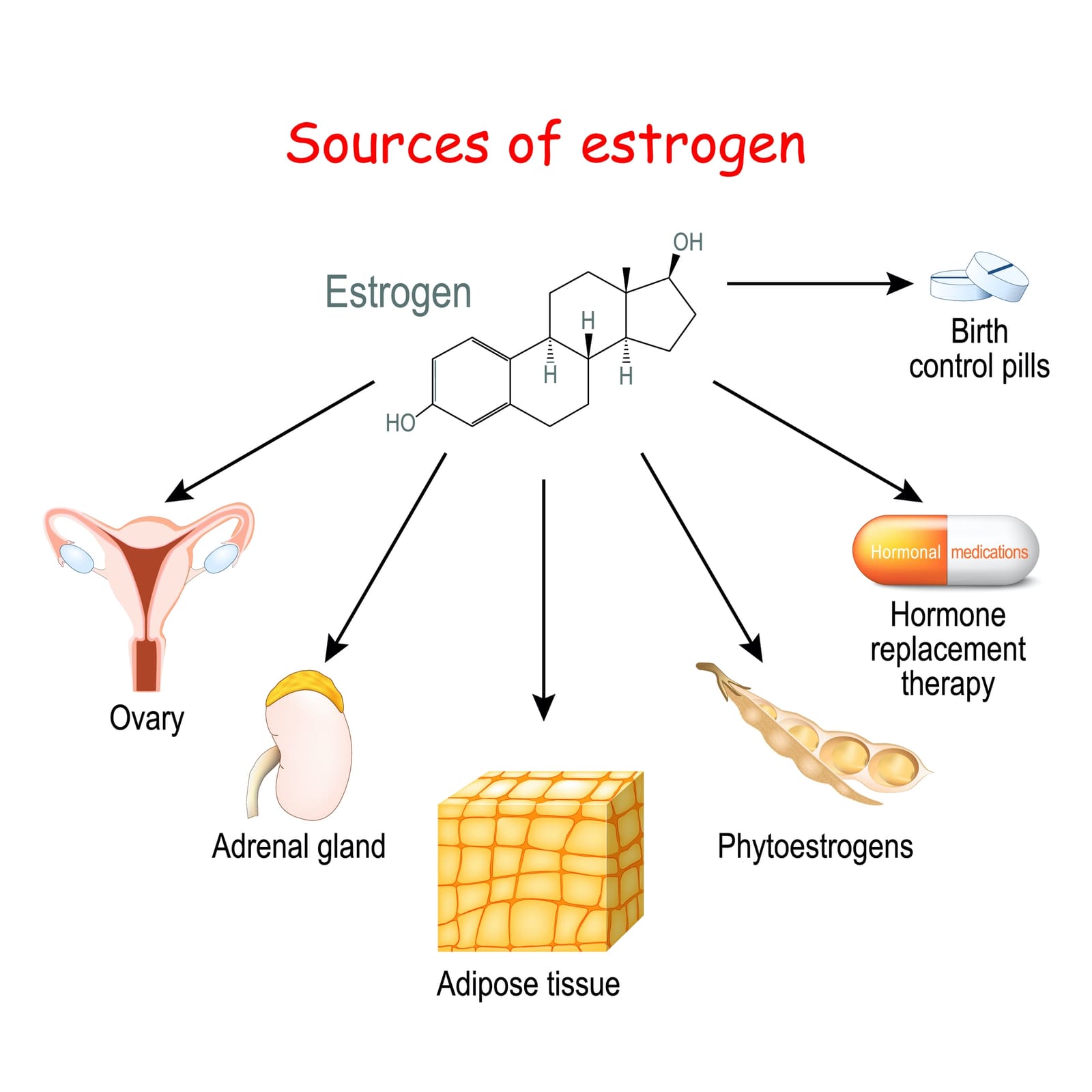
Hormone replacement therapy (HRT) is commonly used by women in the years before, during, and immediately following menopause. These therapies replace estrogen, the main female hormone, with the goal of decreasing some of the unpleasant symptoms that can occur during menopause. This article explains the basics of HRT, as well as the known benefits and risks, so that you can make an informed decision about if these therapies are the right choice for you.
Female Hormones
Hormone levels naturally fluctuate over the course of a female’s life. These fluctuations happen on a small scale (e.g., monthly menstrual cycles), as well as on a longer scale (e.g., puberty and menopause). A basic understanding of the main female hormones is important when deciding if hormone replacement therapy is the right choice for you.
- Estrogen is the main hormone that drives the female abilities to bear children. Estrogen levels rise from the start of the monthly cycle until ovulation occurs, after which it falls. The presence of estrogen in the body also supports development of female sexual characteristics during adolescence.
- Progesterone is the hormone that supports uterine tissue to build up after ovulation in preparation for accepting a fertilized egg. If pregnancy results, progesterone levels will remain high throughout pregnancy to nurture the womb. If pregnancy does not occur, progesterone levels fall and the women menstruates, completing the monthly cycle.
The female body becomes accumstomed to these fluctations over time, so any changes in them can lead to symptoms throughout the body.
Menopause
During the time around and following menopause, the levels of estrogen and progesterone naturally decrease; because the body no longer needs to complete the monthly cycle to get pregnant or to support pregnancy. Menopause is defined as the absence of a menstrual period for 12 months. This milestone formally marks the end of a woman’s childbearing years.
Many women experience unpleasant symptoms before and during menopause. These symptoms include the following:
- Hot flashes
- Night sweats
- Vaginal dryness or pain
- Vaginal discomfort during intercourse
- Sleep disturbances
- Bone density loss
- Mood swings
- Depression
- Urinary incontinence
These symptoms are thought to be due to natural decreases hormones, particularly estrogen. They are often noticed around 1 year before the last menstrual period (perimenopause) and can continue for several months or years after the menopausal transition is completed. The average length of menopausal symptoms is 4.5 years, although it can be longer for many women. In time, the woman’s body becomes acclimated to the lack of hormones and the symptoms decrease or stop completely. During the years symptoms are experienced, the woman can feel very uncomfortable, so many women seek help from modern medicine.
Types of HRT
HRT can be prescribed in a medication that contains only estrogen or a medication that contains estrogen and synthetic progesterone (progestogen). Estrogen is used on its own, because it provides the most significant relief of menopausal symptoms. The main benefit of adding progestogen to HRT is that it can protect from endometrial cancer, which women are at increased risk of developing when estrogen alone is used long-term (recall from above that progesterone’s natural roll is to stimulate growth of the uterine lining). The type of HRT prescribed to a woman depends on their specific situation, including their overall risk for endometrial cancer or if they are not at risk due to having had a hysterectomy.
There are many options for taking HRT that can be selected to best meet a woman’s lifestyle and preferences.
- Tablets
- Patches
- Gels and emulsions
- Sprays
- Injections
- Vaginal rings, creams, or tablets
Assessing the risks of HRT
The Women’s Health Initiative started a large, long-term health study of postmenopausal women in 1992. The goal was to better understand the health risks in these women and identify the best therapies to manage them. In 2002, an analysis of 27,000 women in this study cast doubt on widely held beliefs that HRT protects women from many health conditions observed late in life, such as heart disease and dementia. The study found some negative effects of taking HRT, including increased risk of stroke, blood clots, uterine cancer, and breast cancer. Many women were scared away from HRT as a result.
Since that initial study, the results have been further analyzed and approximately 100 additional studies have been done. The results of the initial and follow-up studies better informed physicians and women how to safely use HRT and improve their overall health during and after menopause. The overall conclusion is that HRT is not beneficial for preventing chronic diseases, but women can safely use HRT and avoid much of the discomfort and long-term health risks associated with menopause.
Should you use HRT?
The decision to use HRT is specific to each woman. There is no one way to take HRT, because all women have different symptoms, different levels of discomfort with their symptoms, and different medical situations. The specific medication taken determines the risks and benefits: estrogen only versus estrogen plus progestogen medications, or systemic (e.g., tablet and injection) versus local (e.g., vaginal ring) methods of administration will have different risk profiles. For specific side effects, the consumer insert of each HRT should be consulted and discussed with your doctor.
Women should only take HRT as long as needed and at the lowest dose necessary to manage their symptoms. For most women, HRT can be safely used within 10 years of menopause and until age 59. The risks of side effects, including increased risk of cancers, can be managed by taking the medications intermittently, at the lowest effective dose, and for shorter periods of time.
Ultimately, the decision to use HRT should be made by discussing symptoms that need managing and your medical history with your physician. HRT can be safely used and provide menopausal symptom relief for many women.
Sources
Información general, no consejo médico
Este artículo no puede tener en cuenta tu historial de salud ni tu tratamiento actual. Habla con un profesional sanitario cualificado antes de cambiar nada de tu cuidado.
Lee nuestro aviso médico →
En esta página
Female Hormones
Menopause
Types of HRT
Assessing the risks of HRT
Should you use HRT?
Sources
Pon en práctica lo que lees
Controla tus medicamentos, consulta un síntoma y habla con personas que viven con la misma enfermedad, todo en Healthread.
Descargar la app
Sigue leyendo

Beauty and Anti-Aging
Gastric Balloon for Weight Loss
The gastric balloon weight loss procedure is a new FDA-approved minimally invasive bariatric procedure for treating obesity. It is a temporary procedure that involves placing a saline-filled silicone balloon in the…
19 de junio de 2025 · 3 min de lectura
Beauty and Anti-Aging
Vitamin D Deficiency
Also known as the sunshine vitamin, vitamin D is an essential nutrient that is naturally absorbed by the skin through exposure to sunlight. It can also be obtained from dietary sources and supplements.
30 de diciembre de 2024 · 3 min de lectura
Cancer-Updates
Gynecologic Cancer
Gynecologic cancer is a term used to describe a group of cancers that affect the female reproductive system. There are five types of gynecologic cancers named after the body part where they start.
5 de noviembre de 2024 · 3 min de lectura


© 2026 Healthread
English · Español
Healthread no ofrece asesoramiento médico, diagnóstico ni tratamiento. Consulta siempre a un profesional sanitario cualificado sobre tu atención.