

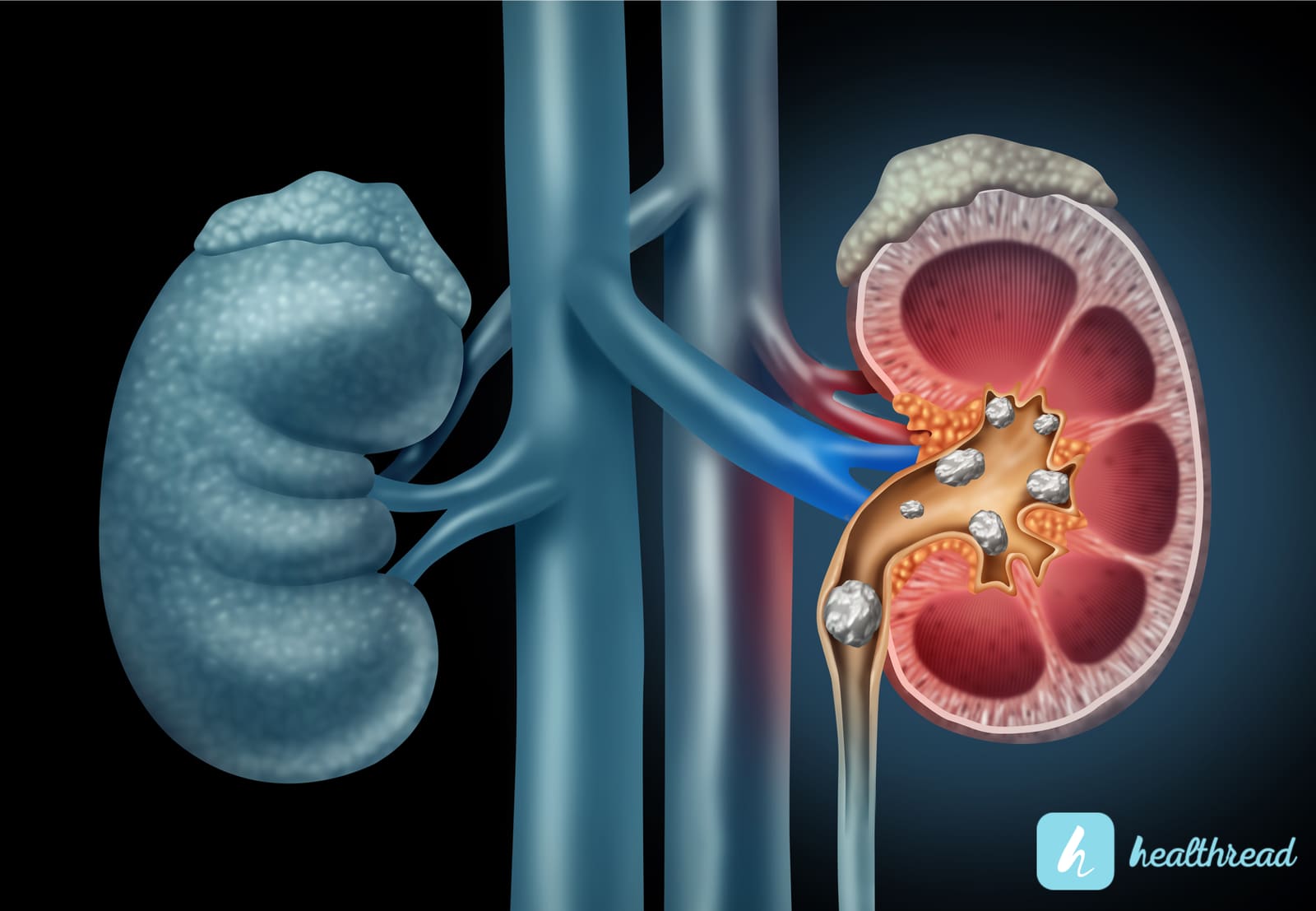
Kidneys filter out wastes from the blood while making urine. When your urine has too much waste, it can get deposited in the body, resulting in kidney stones.
According to the Centers for Disease Control and Prevention (CDC), at least 2.4% of adults aged 18 and above have kidney diseases in the USA.
What are kidney stones?
Kidney stones are pebble-like objects formed from excess waste and chemicals in the urine. When kidneys fail to flush out the excess wastes in urine, they can crystallize into stones and get deposited in the kidney or moved through the urinary tract in the urethra.
Types of Kidney Stones
Kidney stones can be of four types: Calcium oxalate, uric acid, struvite, and cysteine, calcium stones being the most common.
Symptoms of Kidney Stones
There is usually no symptom in the case of smaller stones as they pass out through the urine. However, bigger stones might get stuck in the urinary tract, blocking the normal urine flow and causing severe pain. Having large kidney stones can cause excruciating pain in the lower back and the lower abdomen. It intensifies when the stones move around in the urinary tract or reach the ureter to block it.
The symptoms can be:
- Urine having traces of blood
- Back or abdominal pain
- Frequent throwing up
- Fever and chills
- Cloudy urine with an unpleasant smell
Causes of Kidney Stones
Anyone can suffer from kidney stones, but according to studies, about 11% of men and 6% of women are likely to experience kidney stones in their lifetime, making men a little more susceptible to the disease. Heredity is also a contributing factor in this case.
You can have kidney stones for the following reasons:
- Not drinking enough fluids
- Eating foods with an excess of protein, salt, and sugar
- Suffering from chronic inflammation of the bowel
- Being overweight
- Having a blockage in the urinary tract or suffering from frequent UTIs
- Having polycystic kidney disease
- Having health issues that cause an excess deposit of calcium, uric acid, cystine, or oxalate in the kidney
- Having underlying health issues that cause swelling in the joints or digestive system
- Taking certain medicines, like calcium-based antacids and diuretics or water pills, in excess
- Having it in heredity
Diagnosing kidney stones
Healthcare professionals can diagnose kidney stones by looking at your family history, symptoms, physical tests, and lab and imaging tests.
After looking at your symptoms and conducting physical tests, healthcare professionals can ask for the following tests:
- Lab Tests: Urine tests and a blood test help your doctor to determine the excess wastes and chemicals in your kidneys and analyze them to determine their composition. Based on your symptoms, your doctor might recommend a urinalysis, which requires taking your urine sample to test for blood or certain chemicals and wastes.
- Imaging Tests: Your doctor might recommend an abdominal x-ray called “KUB x-ray” to determine the size and location of the stone in your body. Sometimes a high-resolution CT scan is done to get a comprehensive picture of your kidneys and the bladder.
Treatment for Kidney Stones
Kidney stones can be treated depending on their size and location in your body. Your doctor can advise you to drink more water and include more fluids in your diet to ease the process.
Kidney stones can be broken down using:
- Shockwave lithotripsy into smaller pieces which will then pass through your urine. Or,
- Ureteroscopy, where the doctor uses a tube-like device to remove the stone or break it into smaller pieces.
In rare cases, surgery can be done where the doctor will perform laparoscopic or robotic surgery to remove the stones.
After removing stones, the doctor might test them to determine their chemical composition to decide on a further treatment preventing future recurrence.
Complications of Kidney Stones
Kidney stones, when small, do not cause any problem and can be flushed out through urine. But bigger stones in your kidney can disrupt your life.
Kidney stones can cause frequent urination and can make you susceptible to UTIs.It can make you prone to kidney infections as well. Kidney infections are severe conditions that can be fatal if not treated.
In rare cases, kidney stones can damage your kidney, leading to kidney failure.
Kidney Stones Prevention
You can prevent kidney stones by drinking more water, reducing salt and sugar intake, limiting certain protein-rich foods from your diet, and maintaining your weight in general.
Further Information on Kidney Disease
Find more information about kidney disease at the National Kidney Foundation, American Kidney Fund, and American Association of Kidney Patients.
Sources
- 1cdc.gov/nchs/fastats/kidney-disease.htm
- 2cdc.gov/nchs/fastats/kidney-disease.htm
- 3mayoclinic.org/tests-procedures/ct-urogram/about/pac-20393602
- 4kidney.org/atoz/content/kidneystones_shockwave
- 5niddk.nih.gov/health-information/diagnostic-tests/cystoscopy-ureteroscopy
- 6my.clevelandclinic.org/health/treatments/4819-laparoscopy
Información general, no consejo médico
Este artículo no puede tener en cuenta tu historial de salud ni tu tratamiento actual. Habla con un profesional sanitario cualificado antes de cambiar nada de tu cuidado.
Lee nuestro aviso médico →
En esta página
What are kidney stones?
Types of Kidney Stones
Symptoms of Kidney Stones
Causes of Kidney Stones
Diagnosing kidney stones
Treatment for Kidney Stones
Complications of Kidney Stones
Kidney Stones Prevention
Further Information on Kidney Disease
Sources
Pon en práctica lo que lees
Controla tus medicamentos, consulta un síntoma y habla con personas que viven con la misma enfermedad, todo en Healthread.
Descargar la app
Sigue leyendo

Beauty and Anti-Aging
Gastric Balloon for Weight Loss
The gastric balloon weight loss procedure is a new FDA-approved minimally invasive bariatric procedure for treating obesity. It is a temporary procedure that involves placing a saline-filled silicone balloon in the…
19 de junio de 2025 · 3 min de lectura
Beauty and Anti-Aging
Vitamin D Deficiency
Also known as the sunshine vitamin, vitamin D is an essential nutrient that is naturally absorbed by the skin through exposure to sunlight. It can also be obtained from dietary sources and supplements.
30 de diciembre de 2024 · 3 min de lectura

Cancer-Updates
Gynecologic Cancer
Gynecologic cancer is a term used to describe a group of cancers that affect the female reproductive system. There are five types of gynecologic cancers named after the body part where they start.
5 de noviembre de 2024 · 3 min de lectura


© 2026 Healthread
English · Español
Healthread no ofrece asesoramiento médico, diagnóstico ni tratamiento. Consulta siempre a un profesional sanitario cualificado sobre tu atención.