

Let’s Talk about the color of your Urine.
16 de febrero de 2021
5 min de lectura
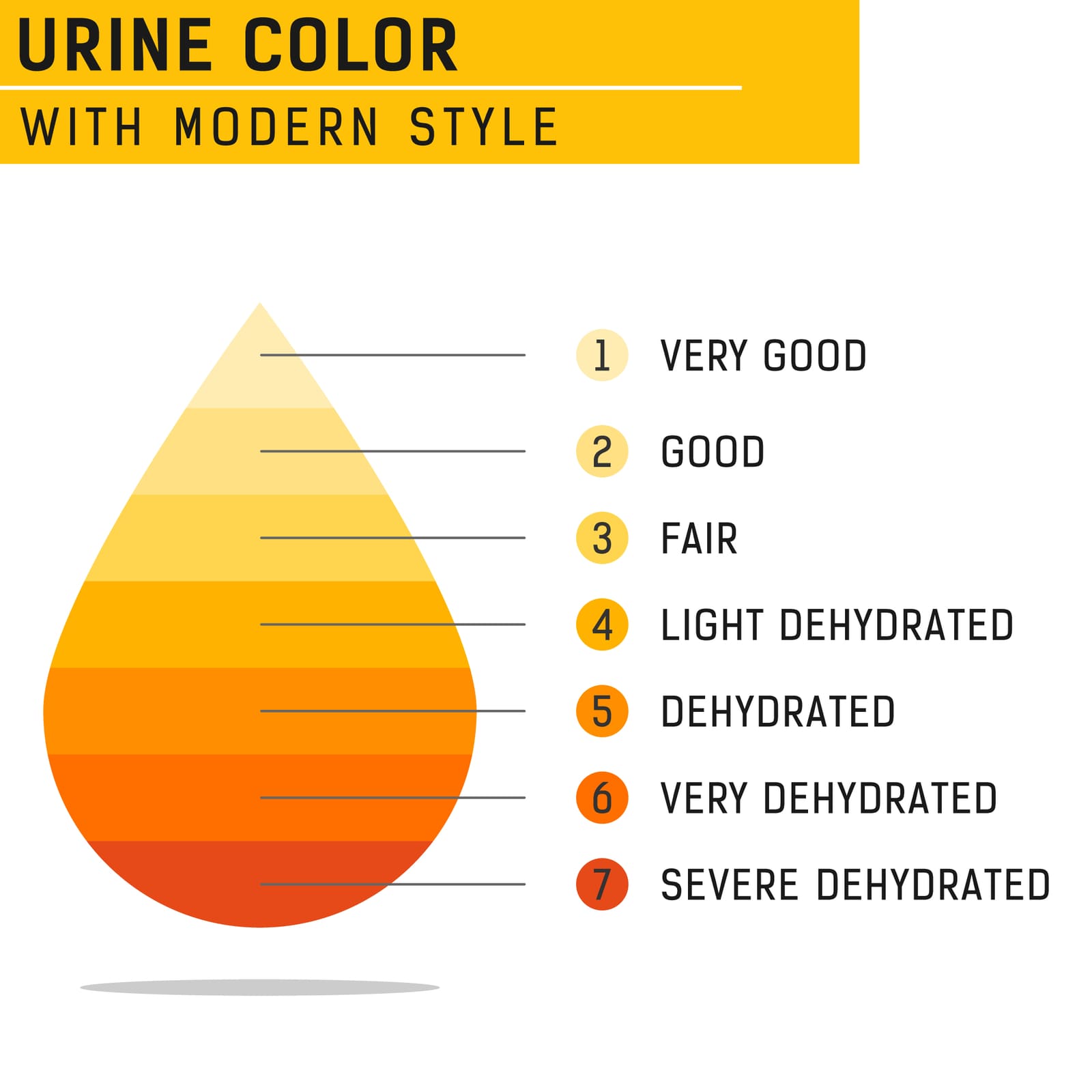
Nobody wants to discuss urine in the company of others, but your urine does say a lot about you. The consistency, odor, and color of your urine are all indicators of your well-being and lifestyle, ranging from what you had to eat or drink to a medical condition you may not even know you have.
What the Color of Your Urine May Mean?
- Sodium
- Chloride
- Urea
- Creatinine
- Potassium
- Inorganic and organic compounds
- Other dissolved ions
Your urine's standard color is what doctors refer to as "urochrome." It should naturally carry a yellow pigment. It's a light yellow to almost a clear color when you're adequately hydrated.
Depending on what you ate, any medicines you're taking, and how hydrated you are, the color of your urine could vary.
Colors of your urine may include:
1. Clear
When your urine is clear, it indicates you're drinking more water than what's recommended daily. While it's a good thing to be hydrated well, when you drink too much water, you could be robbing your body of electrolytes. There's no reason to panic if your urine is occasionally clear, but if it's always clear, it could be an indication you have to reduce your water intake a little.
2. Yellowish to Amber
The "typical" color of urine will fall on a light yellow to a deeper color of the amber spectrum. Your urine's natural urochrome pigment will become more diluted as you're drinking water. When your bloodstream is filled with a lot of B-vitamins, it could turn your urine neon yellow.
3. Red or Pink
Your urine might appear pink or red if you consume fruits with naturally magenta or deep pink pigments like:
- Rhubarb
- Beets
- Blueberries
But fishthere's also other causes of your urine turning red or pink and it could indicate a medical condition that causes blood to show up in your urine (hematuria) such as:
- Kidney stones
- Enlarged prostate
- Tumors in the kidney and bladder
See your doctor if you notice any blood in your urine.
4. Dark Brown
Typically, if urine is dark brown in color, it can indicate dehydration. But, urine that's dark brown could also be a side effect of specific medications like chloroquine (Aralen) or metronidazole (Flagyl), or it could be an indication of liver disease.
5. Orange
Orange urine could be a dehydration symptom. If you have orange urine as well as light-colored stools, it could mean bile is getting into your bloodstream due to problems with your liver or bile ducts.
6. Blue or Green
Food coloring often turns urine blue or green. But, the bacterial infection, pseudomonas aeruginosa, could also turn your urine green, blue, or even indigo purple. Generally, blue urine is rare and is probably due to something you ate.
Foods That May Change Your Urine Color
Urine color changes that are mostly harmless are those that come from something you ate, such as:
- Carrots could turn your urine a light orange color
- Foods like fava beans, beets, rhubarb, and blackberries could turn your urine a reddish or dark brown color
- Foods with strong color dyes could change your urine color temporarily
- B vitamins could turn your urine a greenish tinge
Medications That May Change Your Urine Color
There are also certain medications that could change your urine's color, including:
- Phenazopyridine (Pyridium), a medication that numbs discomfort of the urinary tract, and laxatives that contain senna could cause your urine to turn reddish-orange.
- The antidepressant amitriptyline, the anesthetic propofol, and the pain reliever indomethacin (Tivorbex, Indocin) could cause your urine to turn green or blue.
- Phenazopyridine, the anti-inflammatory drug sulfasalazine, certain chemotherapy medications and some laxatives could turn your urine orange.
Other Changes in Your Urine
There could be other changes in your urine as well that you'll want to look out for, including:
1. Odor
Changes in the odor of your urine could also be due to vitamins, diet, or medicine. Asparagus gives urine a sulfur-smelling odor. Urine also takes on a strong odor from B-6 supplements.
Uncontrolled diabetes leads to sugar in the urine, and can give it a sweet, fruity aroma. Urine with an ammonia odor could be an indication of kidney disease as chemical concentrations build.
2. Foamy/Frothy
Regardless of the color of your urine, if it looks frothy and foamy consistently, it could be a sign there's protein in your urine. You should see your doctor as this indicates you could have problems with your kidneys.
3. Cloudy
Cloudy urine might be a sign of a UTI (urinary tract infection). It could also be a sign of certain kidney conditions and chronic diseases. Or, it could mean you're dehydrated.
Cloudy urine with bubbles or foam is known as pneumaturia. This could be a sign of a severe medical condition like diverticulitis or Crohn's disease.
4. Frequency
Each person is different, but most individuals have to urinate up to eight times daily. This could change, depending on medications you're taking, what you eat and drink, and other factors like pregnancy.
If you notice you're suddenly having to urinate more frequently than normal, it could be a sign of a medical condition like:
- Diabetes
- Kidney disease
- Incontinence
- Interstitial cystitis
- An enlarged prostate in men
It's important you talk with your doctor about any consistent changes in your urine whether it's the color, odor, or other types of changes.
Foundations and Societies
- Urology Care Foundation: Supports research for the goal of helping millions of people struggling with urologic cancer and disease.
- The Urology Foundation: Fights against urology disease.
- The Simon Foundation for Continence: Promotes continence and changes lives.
Looking for Tips on Urology Health?
Subscribe to Healthread and connect with others with similar urology health interests and experiences. Share insights, experiences, stories, and more. Participate in group chats, individual direct messaging, and more where you can feel a part of a community. You don't have to struggle with your health issues alone. On the Healthread technology platform, you can connect with others who can show you their support.
Sources
- 1health.ucsd.edu/news/features/Pages/2014-04-21-colors-that-suggest-urine-trouble.aspx
- 2urologyhealth.org/healthy-living/care-blog/2018/the-meaning-behind-the-color-of-urine
- 3health.harvard.edu/diseases-and-conditions/urine-color-and-odor-changes
- 4medicalnewstoday.com/articles/321478#serious-causes
- 5health.harvard.edu/newsletter_article/red-brown-green-urine-colors-and-what-they-might-mean
- 6health.clevelandclinic.org/what-the-color-of-your-urine-says-about-you-infographic/
- 7my.clevelandclinic.org/health/diseases/15357-urine-changes
- 8mayoclinic.org/diseases-conditions/urine-color/symptoms-causes/syc-20367333
- 9healthline.com/health/urine-color-chart
- 10webmd.com/urinary-incontinence-oab/truth-about-urine
- 11medicalnewstoday.com/articles/313779
- 12health.ucsd.edu/news/features/pages/2014-04-21-colors-that-suggest-urine-trouble.aspx
Información general, no consejo médico
Este artículo no puede tener en cuenta tu historial de salud ni tu tratamiento actual. Habla con un profesional sanitario cualificado antes de cambiar nada de tu cuidado.
Lee nuestro aviso médico →
En esta página
What the Color of Your Urine May Mean?
1. Clear
2. Yellowish to Amber
3. Red or Pink
4. Dark Brown
5. Orange
6. Blue or Green
Foods That May Change Your Urine Color
Medications That May Change Your Urine Color
Other Changes in Your Urine
1. Odor
2. Foamy/Frothy
3. Cloudy
4. Frequency
Foundations and Societies
Looking for Tips on Urology Health?
Sources
Pon en práctica lo que lees
Controla tus medicamentos, consulta un síntoma y habla con personas que viven con la misma enfermedad, todo en Healthread.
Descargar la app
Sigue leyendo

Beauty and Anti-Aging
Gastric Balloon for Weight Loss
The gastric balloon weight loss procedure is a new FDA-approved minimally invasive bariatric procedure for treating obesity. It is a temporary procedure that involves placing a saline-filled silicone balloon in the…
19 de junio de 2025 · 3 min de lectura

Beauty and Anti-Aging
Vitamin D Deficiency
Also known as the sunshine vitamin, vitamin D is an essential nutrient that is naturally absorbed by the skin through exposure to sunlight. It can also be obtained from dietary sources and supplements.
30 de diciembre de 2024 · 3 min de lectura

Beauty and Anti-Aging
Cellulite
Cellulite appears with an orange peel or cottage cheese-like texture with a dimpled or lumpy skin surface. Mild cellulite is visible when you pinch the area with cellulite, like the thighs. Severe cellulite can make the…
13 de agosto de 2024 · 3 min de lectura


© 2026 Healthread
English · Español
Healthread no ofrece asesoramiento médico, diagnóstico ni tratamiento. Consulta siempre a un profesional sanitario cualificado sobre tu atención.