

Living with Overactive Bladder
21 de marzo de 2021
3 min de lectura
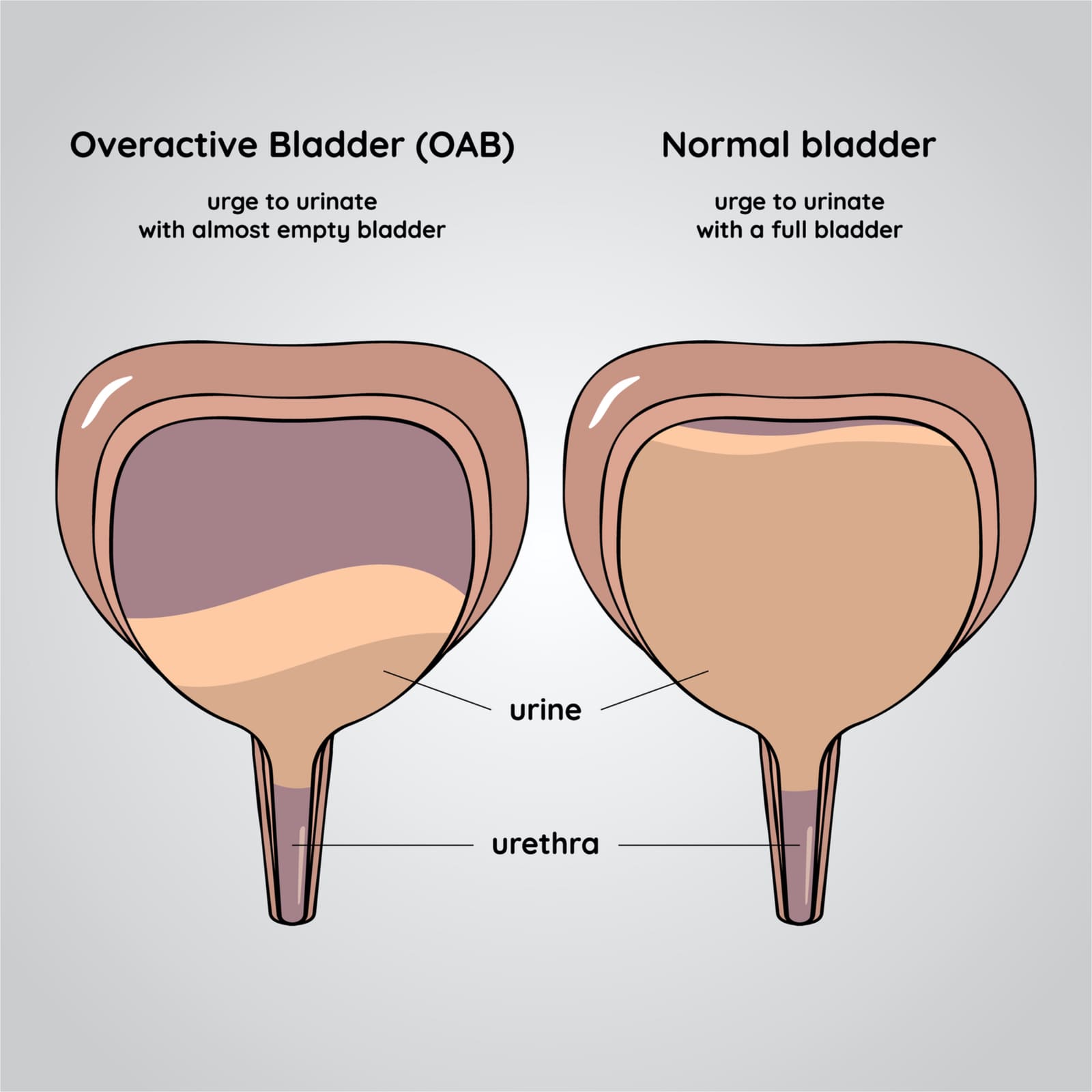
An estimated 33 million people in U.S. are believed to be affected by an overactive bladder (OAB). An overactive bladder, which is sometimes referred to as a spastic bladder, is where you have a sudden urge to urinate despite your bladder not being full. For certain individuals, it's just a nuisance, but for other people, they can't control the urge and it leads to not just incontinence, but also severely affecting their quality of life.
Tips For Living With an Overactive Bladder
Fortunately, there are some things you can try when you're living with OAB, including the following:
1. Perform Kegels
When done properly, Kegels, which are pelvic floor exercises that strengthen your muscles holding your bladder, help decrease symptoms of OAB in women. But, you must perform these bladder training exercises properly.
To learn which muscles are the correct ones, try stopping your urine mid-stream. Once you identify those muscles, perform 10 contractions a couple of times daily. Hold each contraction for about five to 10 seconds.
2. Encourage Uninterrupted Sleep
Don't drink any fluids after 6 PM. This will ensure your bladder is empty when it's time to go to bed. If you're worried about having an OAB accident in the nighttime, wear protective panties or pads which can help ease your mind.
3. Change the Timing of Your Medications
If medicines, such as diuretics, are leading to you producing more urine, take them in the morning instead of before bed. Discuss this with your doctor, however.
4. Get Botulinum Toxin (BOTOX®) Injections
BOTOX is a muscle relaxant that helps reduce brow wrinkles and clams facial spasms. It's now approved for relaxing bladder muscles in both women and men, although it's really only appropriate in men if the cause of their OAB is a bladder muscle issue and not an enlarged prostate. It's an effective method, but the results will wear off so you'll have to have a repeat injection in six to 12 months.
5. Track Your Symptoms
If you're struggling with OAB symptoms, keep a diary and let your doctor see it. You might notice a pattern eventually that could show that specific times you drink liquids or certain foods have an impact.
6. Avoid Overwashing and Wiping
When wearing pads for managing OAB, you might constantly feel like you must clean yourself. All the soap, showering, and wiping, however, isn't good for your skin since it strips your skin of healthy, good bacteria. When it comes to the vagina, the feeling there shouldn't be an odor or discharge is wrong. The vagina has a natural cleansing process.
Other Options for an Overactive Bladder
If the above tips fail to resolve your OAB symptoms to the point where they are impacting your quality of life, there are other options you and your doctors can discuss, such as:
- Medications
- Intermittent catheterization
- Biofeedback
- Nerve stimulation
- Surgery
Sometimes a combination of treatments is the ideal approach to manage symptoms of an overactive bladder.
Foundations and Societies for Overactive Bladder and/or Incontinence
- The Simon Foundation for Continence: This 501 (c)(3) organization has the mission of bringing out in the open the topic of incontinence and removing the stigma that surrounds it. They also offer hope and help to those with the condition, their families, and the doctors who are providing their care.
- Urology Care Foundation: This foundation supports urologic research and strives to offer the most up-to-date, thorough, and reliable urologic health information for the public and patients.
Latest Insights on Overactive Bladder
New treatments (device-based and pharmacological) are presently in development to expand our overactive bladder armamentarium. Patients with OAB may now have a larger range of options to improve their quality of life with the development and FDA approval of vibegron (Gemtesa).
Are You Trying to Cope with an Overactive Bladder?
If so, you can take a look at the technology platform, Healthread. The Healthread web app and smartphone app connects individuals with similar health interests. You can read health articles, make posts, follow people with the same illness, share insights and experiences and chat in groups or through direct messages on Healthread. Join today and see for yourself that you no longer need to deal with incontinence alone.
Sources
- 1nafc.org/overactive-bladder
- 2pharmacytimes.com/publications/issue/2014/june2014/living-with-an-overactive-bladder
- 3health.harvard.edu/diseases-and-conditions/overcoming-an-overactive-bladder
- 4nafc.org/bhealth-blog/living-with-overactive-bladder-oab
- 5healthywomen.org/content/article/top-tips-living-overactive-bladder
- 6myrbetriq.com/living-with-overactive-bladder/
- 7premierintmed.com/assets/Downloads/NCQA-PED-OAB.pdf
- 8alwaysdiscreet.com/en-us/incontinence-advice-support/managing-living-with-incontinence/living-with-overactive-bladder
- 9mayoclinic.org/diseases-conditions/overactive-bladder/diagnosis-treatment/drc-20355721
- 10urologytimes.com/view/fda-approves-vibegron-for-overactive-bladder
Información general, no consejo médico
Este artículo no puede tener en cuenta tu historial de salud ni tu tratamiento actual. Habla con un profesional sanitario cualificado antes de cambiar nada de tu cuidado.
Lee nuestro aviso médico →
En esta página
Tips For Living With an Overactive Bladder
1. Perform Kegels
2. Encourage Uninterrupted Sleep
3. Change the Timing of Your Medications
4. Get Botulinum Toxin (BOTOX®) Injections
5. Track Your Symptoms
6. Avoid Overwashing and Wiping
Other Options for an Overactive Bladder
Foundations and Societies for Overactive Bladder and/or Incontinence
Latest Insights on Overactive Bladder
Are You Trying to Cope with an Overactive Bladder?
Sources
Pon en práctica lo que lees
Controla tus medicamentos, consulta un síntoma y habla con personas que viven con la misma enfermedad, todo en Healthread.
Descargar la app
Sigue leyendo
Beauty and Anti-Aging
Gastric Balloon for Weight Loss
The gastric balloon weight loss procedure is a new FDA-approved minimally invasive bariatric procedure for treating obesity. It is a temporary procedure that involves placing a saline-filled silicone balloon in the…
19 de junio de 2025 · 3 min de lectura
Beauty and Anti-Aging
Vitamin D Deficiency
Also known as the sunshine vitamin, vitamin D is an essential nutrient that is naturally absorbed by the skin through exposure to sunlight. It can also be obtained from dietary sources and supplements.
30 de diciembre de 2024 · 3 min de lectura
Beauty and Anti-Aging
Cellulite
Cellulite appears with an orange peel or cottage cheese-like texture with a dimpled or lumpy skin surface. Mild cellulite is visible when you pinch the area with cellulite, like the thighs. Severe cellulite can make the…
13 de agosto de 2024 · 3 min de lectura


© 2026 Healthread
English · Español
Healthread no ofrece asesoramiento médico, diagnóstico ni tratamiento. Consulta siempre a un profesional sanitario cualificado sobre tu atención.