

With lung cancer being the second most common cancer in the U.S. for both men and women, it is more important than ever to understand what it is, what symptoms to be alert to, and how to properly treat this disease.
What is lung cancer?
Cancer occurs when abnormal cells grow out of control within an area of the body. When these abnormal cancer cells originate within the lungs, this is known as lung cancer.
Lung cancer is the leading cause of death caused by cancer in both men and women. There are two main types of lung cancer, including small cell lung cancer and non-small cell lung cancer.
Non-small cell lung cancer accounts for approximately 80% to 85% of all lung cancer diagnoses. There are three common types of non-small cell lung cancer including:
- Adenocarcinoma: lung cancer that originates in the cells that secrete a substance (mucus-secreting cells)
- Squamous cell carcinoma: cancer originating in the cells that line the inner airway of the lungs
- Large cell carcinoma: affects any part of the lung and grows and spreads rapidly, making it more difficult to treat
Small cell lung cancer grows much quicker than non-small cell lung cancer and accounts for 10% to 15% of cancer diagnoses. Approximately 70% of patients that have received a diagnosis of small cell lung cancer reported that it has already spread at the time of their diagnosis.
What are the symptoms of lung cancer?
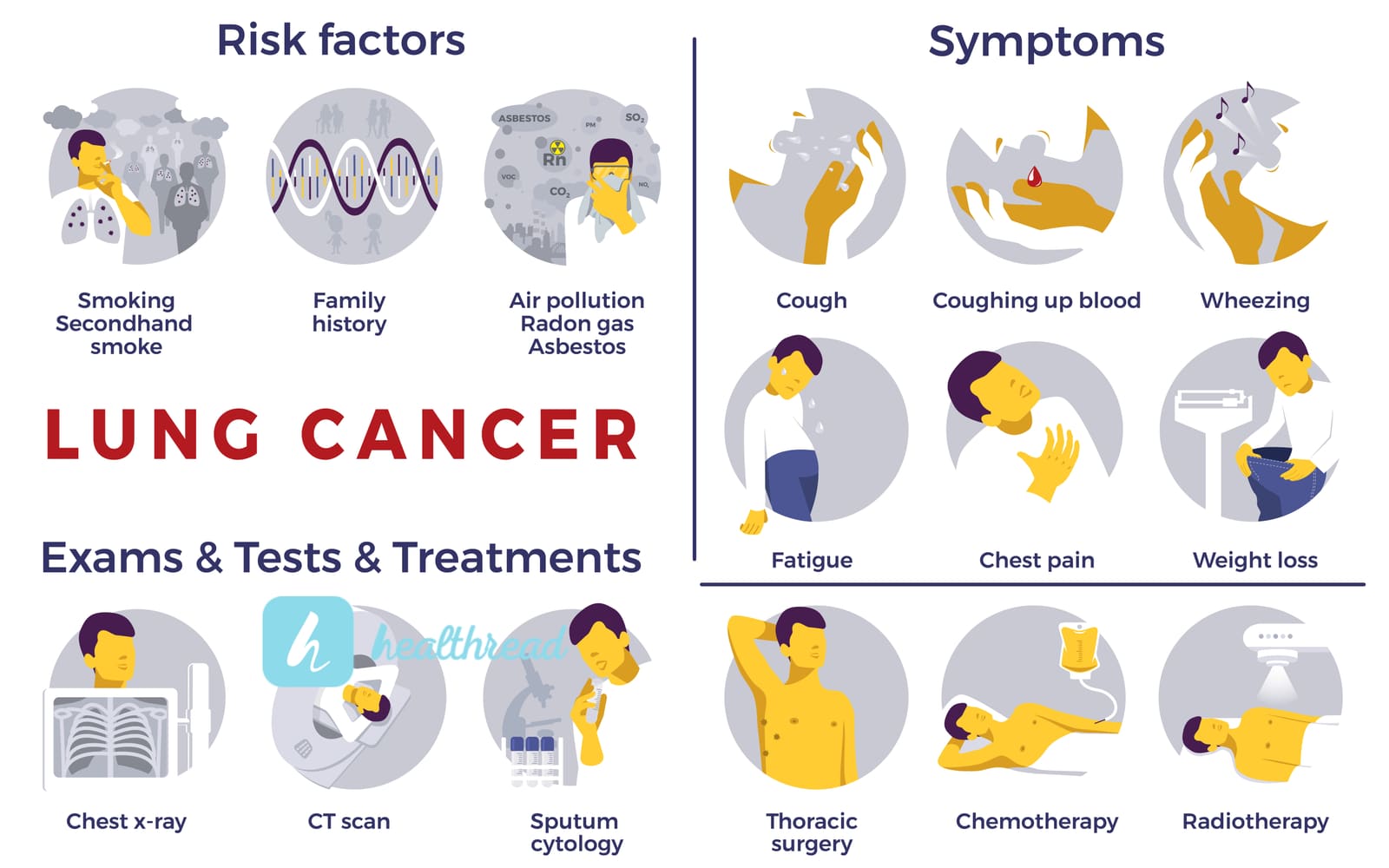
Lung cancer can produce a variety of symptoms including but not limited to:
- Chest pain
- Chest discomfort
- A persistent cough that worsens over time
- Difficulty breathing
- Wheezing
- Bloodstained sputum
- Unexplained weight loss
- Dysphagia or trouble swallowing
- Swelling in the face and/or neck veins
- Fatigue
Risk factors for lung cancer
There are several risk factors for lung cancer including a family history of lung cancer, long-term smoking, exposure to secondhand smoke, exposure to asbestos, arsenic, soot, chromium, tar, or radiation, air pollution, and HIV infection.
How is lung cancer diagnosed?
A lung cancer diagnosis is provided by a licensed physician. When you are consulting with your physician, he/she will examine your personal medical history and family history for any associated risk factors. He/she will also conduct a physical exam to feel for any abnormalities.
In addition to the above-mentioned, imaging and lab work will be performed, such as a chest x-ray, chest CT scan, blood test, and lab testing of the sputum. If an abnormal area of tissue is detected through imaging, your physician will recommend a biopsy of the affected area be performed to determine if the area is cancerous or not.
If a lung cancer diagnosis has been established, the next step is to stage cancer. This step is to determine if cancer has spread to other areas including lymph nodes or other organs, as well as determine how badly cancer has affected the body from stages 1, 2, 3, or 4. The type and stage of cancer will help your physician construct the appropriate treatment plan.
Lung cancer treatment
Treatment is dependent on the stage and type of cancer as well as your personal medical history and medication allergies.
For small cell lung cancer, treatment options include:
- Surgery
- Chemotherapy
- Radiation therapy
- Immunotherapy
- Laser therapy
- Placement of an endoscopic stent to open an airway blocked by abnormal tissue
Non-small cell lung cancer treatment includes:
- Surgery
- Chemotherapy
- Radiation
- Targeted therapy to attack abnormal cells without damaging the normal cells in the area
- Immunotherapy
- Laser therapy
- Cryosurgery to freeze and destroy the abnormal tissue
Lung cancer is a scary diagnosis to receive, but early intervention may help. To reduce your risk of lung cancer, stop smoking immediately and remove yourself from the area of others smoking around you. It is important to take care of yourself at all costs. Attendance of routine check-up appointments with your primary care physician, yearly lab work, and seeking immediate medical care for any unexplained symptoms is essential in helping with early detection.
Resources for Lung Cancer
In addition to the above resources, Healthread offers you the ability to connect with others with similar health concerns. If you or someone you know is affected by lung cancer, you can reach out to others on the platform to talk about managing the condition and more.
Sources
- 1cancer.org/cancer/lung-cancer/about/key-statistics.html
- 2medlineplus.gov/lungcancer.html
- 3cancer.org/cancer/lung-cancer/about/what-is.html
- 4cancer.org/cancer/lung-cancer.html
- 5cancer.org/cancer/lung-cancer/about/what-is.html
- 6medlineplus.gov/lungcancer.html
- 7cancer.gov/types/lung
- 8cdc.gov/cancer/lung/basic_info/what-is-lung-cancer.htm
Información general, no consejo médico
Este artículo no puede tener en cuenta tu historial de salud ni tu tratamiento actual. Habla con un profesional sanitario cualificado antes de cambiar nada de tu cuidado.
Lee nuestro aviso médico →
En esta página
What is lung cancer?
What are the symptoms of lung cancer?
How is lung cancer diagnosed?
Lung cancer treatment
Resources for Lung Cancer
Sources
Pon en práctica lo que lees
Controla tus medicamentos, consulta un síntoma y habla con personas que viven con la misma enfermedad, todo en Healthread.
Descargar la app
Sigue leyendo

Cancer-Updates
Gynecologic Cancer
Gynecologic cancer is a term used to describe a group of cancers that affect the female reproductive system. There are five types of gynecologic cancers named after the body part where they start.
5 de noviembre de 2024 · 3 min de lectura
Cancer-Updates
Anal Cancer
Anal cancer is caused when the cancer cells in the anus grow uncontrollably, forming masses or tumors. The cancer cells can sometimes spread to other body parts, causing metastatic cancer.
18 de agosto de 2024 · 3 min de lectura

Cancer-Updates
Bile Duct Cancer (Cholangiocarcinoma)
Bile duct cancer, or cholangiocarcinoma, is a cancer that occurs in the bile ducts, the slender tubes that collect bile, a fluid made by the liver for breaking down fats in the digestion process.
17 de abril de 2024 · 2 min de lectura


© 2026 Healthread
English · Español
Healthread no ofrece asesoramiento médico, diagnóstico ni tratamiento. Consulta siempre a un profesional sanitario cualificado sobre tu atención.