

Merkel Cell Carcinoma (MCC) is an aggressive and rare form of cancer where cancer cells form in the skin. This type of skin cancer carries a high risk of spreading and returning, frequently between two or three years of initial diagnosis.
You may have just recently heard of MCC because the famous singer and songwriter Jimmy Buffet fought Merkel Cell Carcinoma disease for four years before his passing on September 1, 2023. Below, we’ll go over important information to know about MCC, including what it is, its causes, symptoms, and treatment options.
What is Merkel Cell Carcinoma?
Merkel cells develop in the topmost layer of the skin, called the epidermis. These cells sit near nerve endings in the skin that give us the sensation of touch and help us encode the touch stimulation.
When these Merkel cells begin to grow out of control, a person is said to have MCC, also known as trabecular cancer or neuroendocrine cancer of the skin. This cancer usually begins in areas of the skin that are most exposed to the sun including the neck, head, arms, legs, and the abdomen, chest, and back.
Melanoma skin cancer causes only about 1% of all skin cancer cases in the U.S. but is responsible for the most skin cancer-caused deaths, making it a relatively rare form of skin cancer, but a dangerous one. Merkel Cell Carcinoma is 40 times more rare than melanoma, with roughly 3,000 new cases in the U.S. each year.
What Causes Merkel Cell Carcinoma and What are the Risk Factors?
There are no outright causes of MCC, but there are several risk factors that put individuals at higher risk of developing the disease. If these risk factors apply to you, it doesn’t mean you’ll get the disease, and if you don’t have these risk factors you may still get MCC, but you’ll be at a lower risk of doing so.
Risk factors for MCC include:
- Exposure to lots of natural sunlight.
- Exposure to artificial sunlight such as tanning beds and PUVA therapy for psoriasis.
- Weakened immunity due to diseases like HIV or chronic lymphocytic leukemia.
- Being older than 50 years of age, caucasian (white), or male.
- History of other types of cancer.
- Using prescription medication that weakens the immune system. For example, medication used after an organ transplant.
Symptoms and Signs of MCC
If you have recently contracted MCC, you may not notice at all. The first sign that you may have MCC is a painless bump appearing on skin that is (often) exposed to the sun. However, having a painless bump on your skin does not mean you necessarily have MCC, it could be indicative of another condition. Therefore, it’s important you notify your doctor and have them check you out.
An MCC-related bump on the skin will grow quickly, be shaped like a dome or raised above the skin, feel firm, and look red or violet in color in addition to being painless.
How is MCC Diagnosed?
Once a health care professional is notified, there are a few tests or procedures they might use to diagnose you, including:
- A skin biopsy: A small sample of tissue is removed and examined under a microscope by a pathologist.
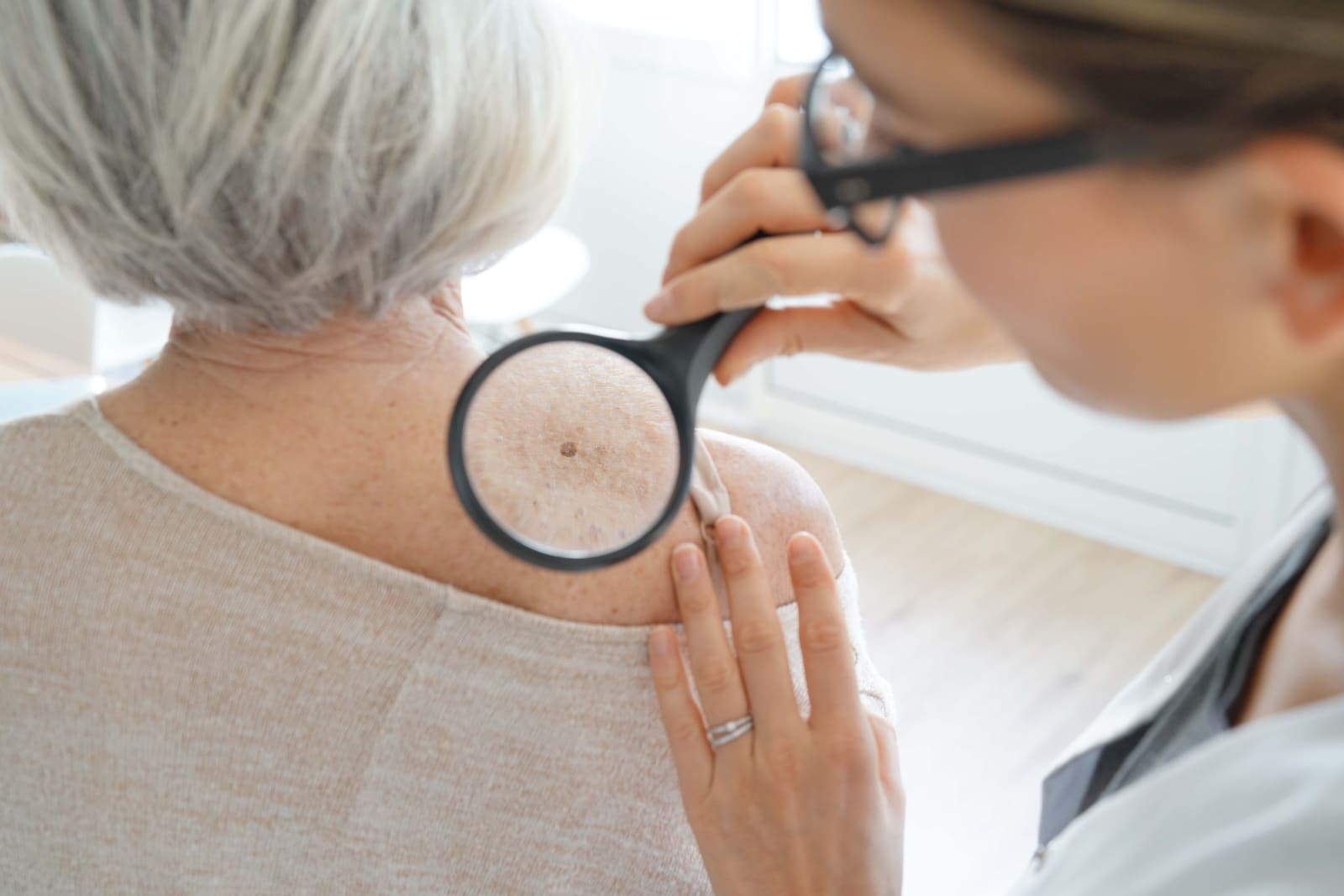
- Full-body skin exam: This is a common exam used to diagnose conditions like skin cancer. A healthcare professional looks over your body to look out for abnormal spots and bumps that could be indicative of a disease like MCC. They will examine the size, color, and shape of bumps and also check your lymph nodes.
- Physical exam: This test is similar to a full-body exam but checks the body for general signs of health and disease like lumps or anything else unusual. Your doctor or nurse will also likely ask for a history of your health, illnesses, and past treatments.
Generally, when a spot that could be MCC is found, the doctor will then take a biopsy to test it for cancer. Once, MCC has been diagnosed, other tests will be done to determine whether the cancer has spread to other areas of the body.
Treatment Options
If you are diagnosed with MCC, there are many treatment options available.
Standard MCC treatment options include:
- Surgery
- Radiation
- Chemotherapy
- Immunotherapy
Takeaway
It can be easy to overreact when we think we have this disease or that, but if you find a suspicious, quickly growing bump on your skin, you should get it checked out by your doctor before you cause yourself any more stress. As Jimmy Buffet said, “It takes as little time to see the positive side of life as it does the negative side.”
Sources:
https://www.cancer.gov/types/skin/patient/merkel-cell-treatment-pdq#:~:text=Merkel%20cell%20carcinoma%20is%20a,lump%20on%20sun%2Jimmy Buffet fought this diseaseDexposed%20skin
- 1mayoclinic.org/diseases-conditions/merkel-cell-carcinoma/symptoms-causes/syc-20351030
- 2skincancer.org/skin-cancer-information/merkel-cell-carcinoma/
- 3skincancer.org/skin-cancer-information/merkel-cell-carcinoma/mcc-warning-signs/
- 4aad.org/public/diseases/skin-cancer/types/common/merkel-cell/symptoms
- 5my.clevelandclinic.org/health/diseases/17971-merkel-cell-carcinoma
Información general, no consejo médico
Este artículo no puede tener en cuenta tu historial de salud ni tu tratamiento actual. Habla con un profesional sanitario cualificado antes de cambiar nada de tu cuidado.
Lee nuestro aviso médico →
En esta página
What is Merkel Cell Carcinoma?
What Causes Merkel Cell Carcinoma and What are the Risk Factors?
Symptoms and Signs of MCC
How is MCC Diagnosed?
Treatment Options
Takeaway
Pon en práctica lo que lees
Controla tus medicamentos, consulta un síntoma y habla con personas que viven con la misma enfermedad, todo en Healthread.
Descargar la app
Sigue leyendo

Cancer-Updates
Gynecologic Cancer
Gynecologic cancer is a term used to describe a group of cancers that affect the female reproductive system. There are five types of gynecologic cancers named after the body part where they start.
5 de noviembre de 2024 · 3 min de lectura

Cancer-Updates
Anal Cancer
Anal cancer is caused when the cancer cells in the anus grow uncontrollably, forming masses or tumors. The cancer cells can sometimes spread to other body parts, causing metastatic cancer.
18 de agosto de 2024 · 3 min de lectura

Cancer-Updates
Bile Duct Cancer (Cholangiocarcinoma)
Bile duct cancer, or cholangiocarcinoma, is a cancer that occurs in the bile ducts, the slender tubes that collect bile, a fluid made by the liver for breaking down fats in the digestion process.
17 de abril de 2024 · 2 min de lectura


© 2026 Healthread
English · Español
Healthread no ofrece asesoramiento médico, diagnóstico ni tratamiento. Consulta siempre a un profesional sanitario cualificado sobre tu atención.