

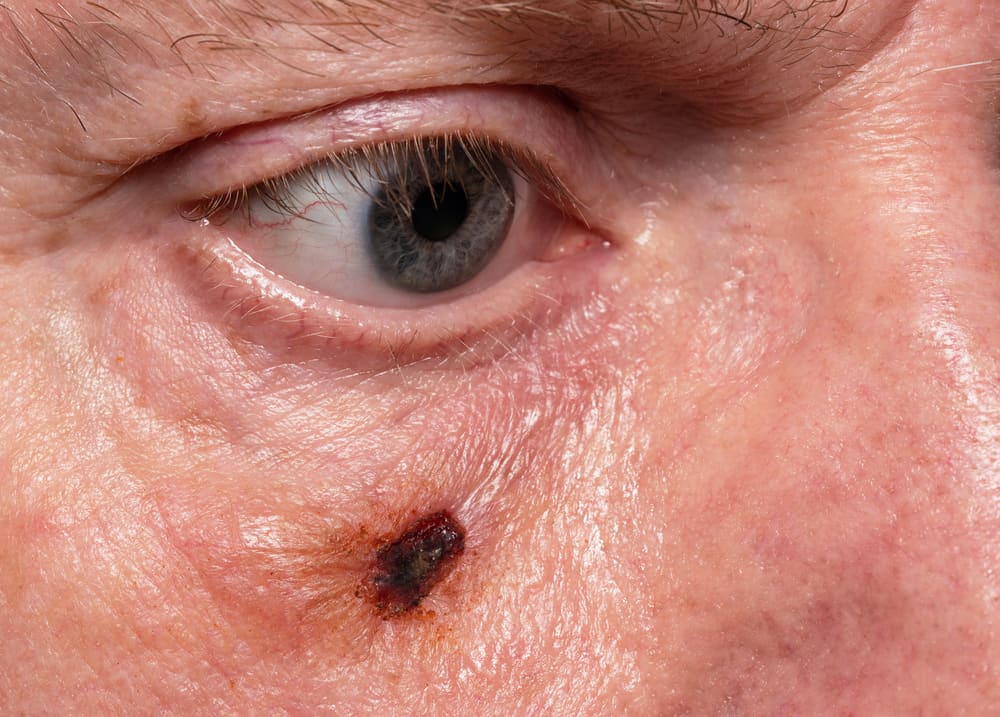
Mohs skin surgery is a procedure for treating the two most common types of skin cancer, basal cell carcinoma and squamous cell carcinoma. It has been used by some surgeons for treating a certain kind of melanoma, the most serious type of skin cancer. Mohs skin surgery also treats rare skin tumors.
Standard skin cancer surgery consists of local excision of the visible tumor as well as a margin of healthy tissue. The Mohs method differs in that thin layers of the skin containing cancer are sliced off progressively and examined. Only when there is no more cancerous tissue is the procedure complete.
Mohs surgery allows for skin cancer removal with as little damage as possible to the surrounding skin. As much normal skin as possible is spared. Not only are most patients cured, but there is usually no need for additional treatment or surgery.
Named after its founder, Dr. Frederic Mohs, who developed the surgical technique in the 1930s, Mohs skin surgery is considered the most effective type of treatment for smaller skin cancers and has the highest cure rate. It was not until the 1960s that this surgery, also known as Mohs micrographic surgery, came into widespread use.
Mohs skin surgery is generally performed by dermatologists specially trained in this field.
Skin Cancer and Mohs Skin Surgery
The procedure is recommended for skin cancers located in cosmetically critical areas, such as the:
- Face
- Ears
- Eyelid
- Neck
- Scalp
- Hands
- Feet
It is also the procedure of choice for skin cancers located in functional parts of the body, such as the genitals, and for larger, fast-growing skin tumors. Patients whose skin cancers have returned after initial removal are also Mohs skin surgery candidates.
Mohs Procedure
Mohs surgery is performed on an outpatient basis. A laboratory adjoins the operating room for tissue examination as layers are removed. The patient receives a local anesthetic and is awake during the procedure.
While most Mohs surgeries last for a few hours, it all depends on the depth of extent of the skin cancer. In some situations, the surgery may last all day.
Using a scalpel, the surgeon removes the visible tumor along with an underlying amount of tissue a bit larger than the tumor. The sample then heads to the laboratory for analysis. During this time, the patient’s wound is bandaged, and they wait for the results. It can take one to two hours to complete the laboratory analysis.
Once in the lab, the sample is cut into sections and placed under a microscope. The sample has already been mapped by the surgeon. If cancer is found, the mapping permits the surgeon to know exactly where to proceed with the surgery. When cancer cells are detected, the surgeon removes more tissue layers and the process is repeated.
When the tissue sample is cancer-free, the procedure is finished except for wound repair.
Wound Repair
How the wound is allowed to heal depends on the depth of the surgery, patient wishes, and the doctor’s recommendation. It is often possible to simply let the wound heal on its own. Such wounds usually heal completely within six weeks. Stitches are another option.
Taking a skin flap from an adjacent area is an alternative for wound closure. Deeper incisions may require skin grafting, or taking a piece of skin from another part of the body to close the wound. These procedures are done on the day of the surgery.
In rare cases, reconstructive surgery is necessary.
The surgeon will arrange follow-up appointments to ensure the wound is healing properly.
Mohs and Early Melanoma
Surgeons might choose Mohs skin surgery to treat an early type of melanoma known as lentigo malignant melanoma (LMM). Unlike other melanomas, this tumor remains closer to the skin surface for a longer period.
The procedure differs somewhat for LMM. A method known as slow Mohs is used. The slow does not refer to the surgical process per se, but for the length of time it takes in the laboratory to determine if cancer cells are present. Slow Mohs patients are usually sent home after their surgery and must return the next day for further surgery or wound closing.
Mohs Surgery Risks
While generally safe, there are risks with Mohs skin surgery as with any surgical procedure. These risks include:
- Bleeding
- Enlarged keloid scar
- Infection
- Pain
- Temporary or permanent numbness in the affected area
Cure Rates
Cure rates using Mohs skin surgery are quite high. For basal cell carcinoma, the cure rate averages between 97 and 99 percent. For squamous cell carcinoma, the rate is somewhat lower at 94 percent. The single-digit percentages of basal and squamous cell carcinomas that are not cured usually involve larger tumors. There are instances in which the pathology slide is misread, resulting in cancerous cells remaining behind.
Cure rates for LMM range from 52 to 77 percent.
Sources
Información general, no consejo médico
Este artículo no puede tener en cuenta tu historial de salud ni tu tratamiento actual. Habla con un profesional sanitario cualificado antes de cambiar nada de tu cuidado.
Lee nuestro aviso médico →
En esta página
Skin Cancer and Mohs Skin Surgery
Mohs Procedure
Wound Repair
Mohs and Early Melanoma
Mohs Surgery Risks
Cure Rates
Sources
Pon en práctica lo que lees
Controla tus medicamentos, consulta un síntoma y habla con personas que viven con la misma enfermedad, todo en Healthread.
Descargar la app
Sigue leyendo
Cancer-Updates
Gynecologic Cancer
Gynecologic cancer is a term used to describe a group of cancers that affect the female reproductive system. There are five types of gynecologic cancers named after the body part where they start.
5 de noviembre de 2024 · 3 min de lectura
Cancer-Updates
Anal Cancer
Anal cancer is caused when the cancer cells in the anus grow uncontrollably, forming masses or tumors. The cancer cells can sometimes spread to other body parts, causing metastatic cancer.
18 de agosto de 2024 · 3 min de lectura
Cancer-Updates
Bile Duct Cancer (Cholangiocarcinoma)
Bile duct cancer, or cholangiocarcinoma, is a cancer that occurs in the bile ducts, the slender tubes that collect bile, a fluid made by the liver for breaking down fats in the digestion process.
17 de abril de 2024 · 2 min de lectura


© 2026 Healthread
English · Español
Healthread no ofrece asesoramiento médico, diagnóstico ni tratamiento. Consulta siempre a un profesional sanitario cualificado sobre tu atención.