

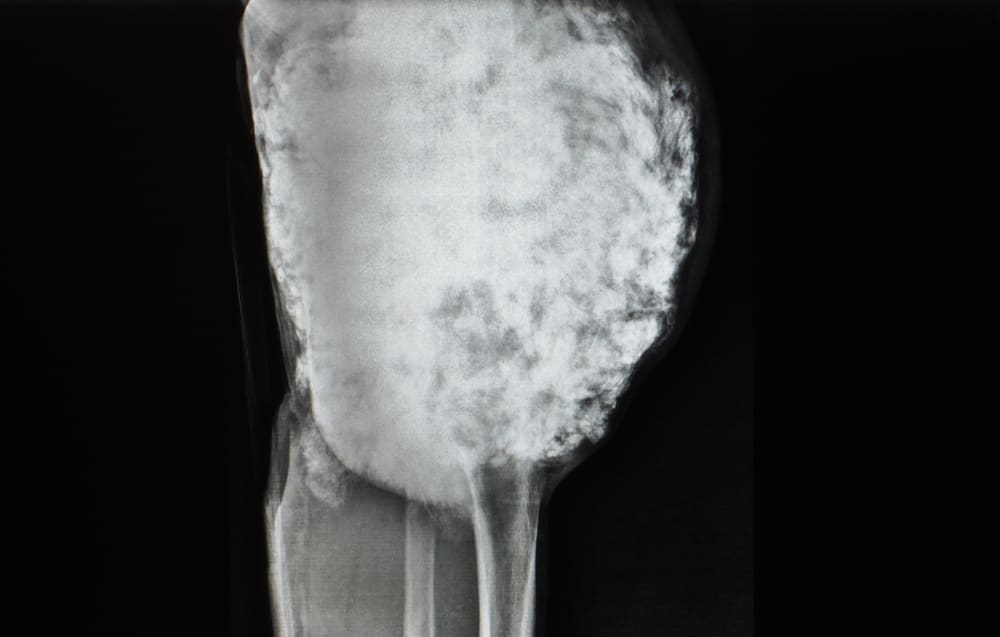
Osteosarcoma is cancer that occurs in the bone. Tumors produce excess amounts of immature bone tissue, called osteoid. This bone is not as strong as the surrounding bone, making it prone to fractures. The most common locations for tumors to form is on the growth plates of long bones, such as the thighbone or shinbone. Tumors can form in other bone locations, and they may spread to other non-bone areas of the body (metastasize).
Osterosarcoma is the most common childhood bone cancer. However, it is extremely rare. According to the American Cancer Society, each year, only 1,000 new cases (all ages) are diagnosed in the US, with approximately half occurring in children and teenagers.
Osteosarcoma Symptoms
Symptoms can initially come and go as the cancer progresses. Common symptoms include:
- Pain
- Swelling or a lump in the area of the tumor
- Altered movement due to pain, (e.g., limp)
- Repeated fractures at the area of the tumor
- For advanced cases, metastasis to other areas could result in additional symptoms.
Osteosarcoma Diagnosis
Diagnosis relies on a combination of physical exams, imaging tests, and laboratory tests.
Physical exams: A doctor will look for spots that are painful when moved or touched, swelling or masses on the body, and restricted movement near joints.
Laboratory tests: Blood tests are useful for looking at elevated levels of an enzyme, called serum alkaline phosphatase, that is important for bone mineralization. In addition, biopsy is needed to confirm the diagnosis by looking at the cells under a microscope to check for signs of cancerous cells.
Imaging tests: X-rays are used to look for abnormalities in bone structure, such as new bone formation (where it is not expected or is too intense), visible masses, or areas of weakened or disappearing bone. Magnetic resonance imaging (MRI) or computerized tomography (CT) scans may be used to provide an even more detailed look into the bone and surrounding structures. MRIs and CT scans can inform about the severity of the tumor and if it has spread. Imaging tests are also useful for grading the severity of the tumor, if found.
Risk Factors for Osteosarcoma
No one knows exactly what causes osteosarcoma to form. Some risk factors have been identified that can increase a person’s risk for developing the disease.
- Male gender
- Young or old age
- History of radiation exposure, including medical treatment
- Family history of retinoblastoma or LiFraumeni syndrome, which can be inherited.
- Certain medical conditions: fibrous dysplasia, Paget’s disease of the bone, or bone infarct (disruption of blood supply that causes bone cells to die)
Types of Osteosarcomas
There are several subtypes of osteosarcomas, and it is important to know which one a person has to predict the disease progression and best treatment option. The way a tumor looks under a microscope and in imaging studies provides doctors with information about the type of osteosarcoma a person has. The most common subtypes are summarized below.
High grade osteosarcomas (most common type): These usually occur near the knee, and are further divided into 3 types, which describes the cells that make up the tumor.
- Chondroblastic (cartilage is the most common cell type)
- Fibroblastic (spindle cells are the most common cell type)
- Osteoblastic (osteoid is the most common cell type)
Common names for high grade osteosarcomas include, telangiectatic osteosarcoma (vascular tumors that produce osteoid), small cell osteosarcoma (cells appear abnormally small under the microscope), high-grade surface osteosarcoma (tumor is on the bone surface), Paget's osteosarcoma (associated with Paget’s disease), postradiation osteosarcoma, extraskeletal osteosarcoma (located in soft tissue, not bone).
Intermediate-Grade Osteosarcomas: These tumors are found on the bone surface. They are most commonly found on the shinbone. The tumors contain both cartilage and osteoid cells.
Low-Grade Osteosarcomas: These tumors are found on the long bones (e.g., thigh and shin bones). They progress more slowly than other types of osteosarcomas.
Treatment and Outlook
According to the American Academy of Orthopedic Surgeons, treatment is selected on an individual bases, taking into account the patient’s heath, tumor type, and tumor grade. The most common treatments, which may be used alone or in combination, are as follows:
- Chemotherapy: Medications can be used to shrink the tumor and prevent further spread. It can be used before and after surgery.
- Surgery: Removal of the cancerous area can save the unaffected parts of the limb. Bone grafts or prosthetics can reduce the impact of removing bone structure, so that the person retains use of the limb. Post-surgery care usually requires extensive rehabilitation and physical therapy.
- Radiation: High doses of x-rays can kill cancer cells, resulting in tumor shrinkage. This is less commonly used than the other options above, but it may be used in certain cases where doctors believe it can be effective.
Many patients are successfully cured of their osteosarcoma. According to the American Cancer Society, approximately 60% of patients with osteosarcoma are surviving at 5-years after diagnosis. Tumors that respond to chemotherapy before surgery, and that have not spread to other parts of the body, are the most likely to achieve remission (no signs of cancer). However, patients in remission will require lifelong monitoring to catch any recurrence early enough that it can be treated.
Sources
Información general, no consejo médico
Este artículo no puede tener en cuenta tu historial de salud ni tu tratamiento actual. Habla con un profesional sanitario cualificado antes de cambiar nada de tu cuidado.
Lee nuestro aviso médico →
En esta página
Osteosarcoma Symptoms
Osteosarcoma Diagnosis
Risk Factors for Osteosarcoma
Types of Osteosarcomas
Sources
Pon en práctica lo que lees
Controla tus medicamentos, consulta un síntoma y habla con personas que viven con la misma enfermedad, todo en Healthread.
Descargar la app
Sigue leyendo

Cancer-Updates
Gynecologic Cancer
Gynecologic cancer is a term used to describe a group of cancers that affect the female reproductive system. There are five types of gynecologic cancers named after the body part where they start.
5 de noviembre de 2024 · 3 min de lectura

Cancer-Updates
Anal Cancer
Anal cancer is caused when the cancer cells in the anus grow uncontrollably, forming masses or tumors. The cancer cells can sometimes spread to other body parts, causing metastatic cancer.
18 de agosto de 2024 · 3 min de lectura

Cancer-Updates
Bile Duct Cancer (Cholangiocarcinoma)
Bile duct cancer, or cholangiocarcinoma, is a cancer that occurs in the bile ducts, the slender tubes that collect bile, a fluid made by the liver for breaking down fats in the digestion process.
17 de abril de 2024 · 2 min de lectura


© 2026 Healthread
English · Español
Healthread no ofrece asesoramiento médico, diagnóstico ni tratamiento. Consulta siempre a un profesional sanitario cualificado sobre tu atención.