

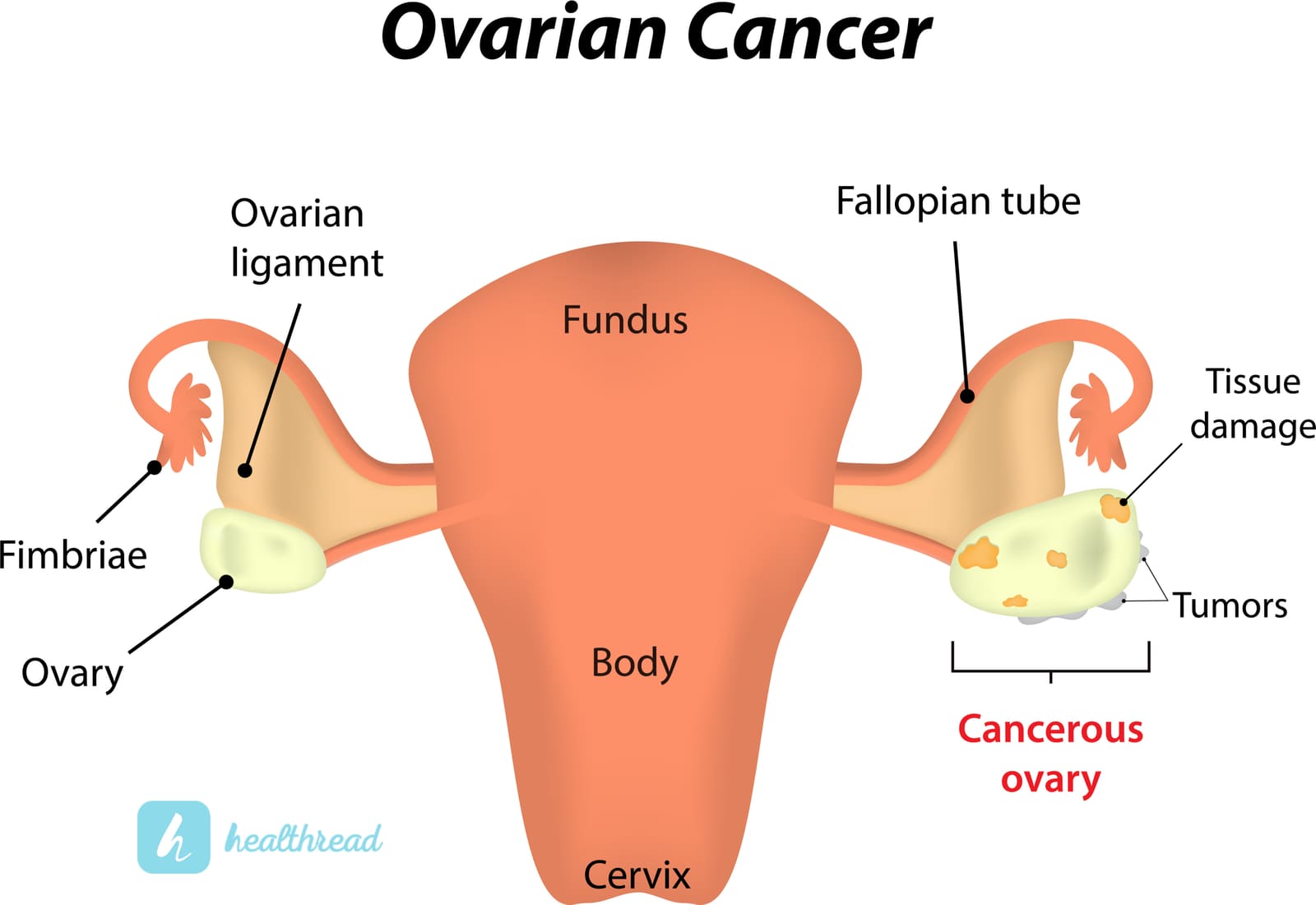
Ovarian cancer is a serious condition that affects tens of thousands of women in the United States each year; it is also the fifth leading cause of cancer deaths among women, according to the American Cancer Society. Years ago, women with ovarian cancer faced grim mortality rates. Fortunately, advances in ovarian cancer research, prevention, early detection, diagnosis, and treatment are helping to save thousands of lives each year.
What’s New in Ovarian Cancer Care?
Research
Scientists are continuing their research into how genes may be responsible for familial ovarian cancer, which is cancer that is inherited. Their research is shedding light on how these genes normally function, and how disrupting the action of these genes could lead to cancer. The American Cancer Society expects the information to lead to the development of new drugs that can prevent or treat familial ovarian cancer.
Prevention
Two specific genes, BRCA1 (BReast CAncer gene 1) and BRCA2 (BReast CAncer gene 2), produce proteins that help repair damaged DNA. Doctors often refer to the BRCA1 and BRCA2 genes as tumor suppressor genes because when changes occur to the two genes, cancer can develop. People who inherit variations in these genes have an increased risk of cancer, most notably breast and ovarian cancer. Modern saliva or blood testing can detect mutations in these genes.
Women who have changes in these genes and a strong family history may be able to prevent ovarian cancer by having their ovaries or fallopian tubes removed. Researchers are investigating any lifestyle, diet, and medicines that may alter the risk of ovarian cancer.
Early detection
Early detection leads to early treatment, which can have a significant effect on a successful outcome. Researchers are looking into new methods to screen female patients for ovarian cancer. Scientists are testing the effectiveness of using proteomics, or patterns of protein in the blood, to find ovarian cancer early.
Imaging
Doctors are increasingly using functional magnetic resonance imaging (fMRI) to create images of ovarian cancers. Researchers are also investigating the use of PET/CT scans for the detection of ovarian cancer.
Diagnosis
Doctors can now use blood tests to determine if a woman’s tumor is low risk (not likely to be cancer) or high risk (very likely to be cancer).
Treatment
Researchers continually check the effectiveness of currently available treatment methods as they develop novel approaches to ovarian cancer treatment.
Chemotherapy
Scientists are testing new chemotherapy drugs to treat ovarian cancer. Researchers recently published a study that shows the drug rucaparib is effective in treating some types of ovarian cancers, for example. They are also looking into ways to make cancer more sensitive to conventional ovarian cancer drugs.
Targeted therapy
Targeted therapy is a newer type of treatment that uses drugs or other substances to identify and attack ovarian cancer cells while sparing normal cells. While each type of targeted therapy works differently, they all attack the programming that makes cancer cells different from normal, healthy cells.
Genetic therapies
Certain drugs, such as cisplatin and carboplatin, may work well for ovarian cancers caused by the BRCA 1 mutation. New research shows that microRNA, very small pieces of RNA can also lower levels of BRCA1 mutations.
While ovarian cancer is often a devastating diagnosis, advances in medical science are improving treatment outcomes. Researchers hope that, someday soon, ovarian cancer will be a thing of the past.
Sources
- 1cancer.org/cancer/ovarian-cancer/about/key-statistics.html
- 2cancer.org/cancer/ovarian-cancer/about/new-research.html
- 3cancer.gov/about-cancer/causes-prevention/genetics/brca-fact-sheet
- 4nature.com/articles/s42003-019-0464-9
- 5nature.com/articles/s41467-021-22582-6
- 6hccpjournal.biomedcentral.com/articles/10.1186/s13053-017-0076-7
Información general, no consejo médico
Este artículo no puede tener en cuenta tu historial de salud ni tu tratamiento actual. Habla con un profesional sanitario cualificado antes de cambiar nada de tu cuidado.
Lee nuestro aviso médico →
En esta página
What’s New in Ovarian Cancer Care?
Research
Prevention
Early detection
Imaging
Diagnosis
Treatment
Chemotherapy
Targeted therapy
Genetic therapies
Sources
Pon en práctica lo que lees
Controla tus medicamentos, consulta un síntoma y habla con personas que viven con la misma enfermedad, todo en Healthread.
Descargar la app
Sigue leyendo

Cancer-Updates
Gynecologic Cancer
Gynecologic cancer is a term used to describe a group of cancers that affect the female reproductive system. There are five types of gynecologic cancers named after the body part where they start.
5 de noviembre de 2024 · 3 min de lectura

Cancer-Updates
Anal Cancer
Anal cancer is caused when the cancer cells in the anus grow uncontrollably, forming masses or tumors. The cancer cells can sometimes spread to other body parts, causing metastatic cancer.
18 de agosto de 2024 · 3 min de lectura

Cancer-Updates
Bile Duct Cancer (Cholangiocarcinoma)
Bile duct cancer, or cholangiocarcinoma, is a cancer that occurs in the bile ducts, the slender tubes that collect bile, a fluid made by the liver for breaking down fats in the digestion process.
17 de abril de 2024 · 2 min de lectura


© 2026 Healthread
English · Español
Healthread no ofrece asesoramiento médico, diagnóstico ni tratamiento. Consulta siempre a un profesional sanitario cualificado sobre tu atención.