

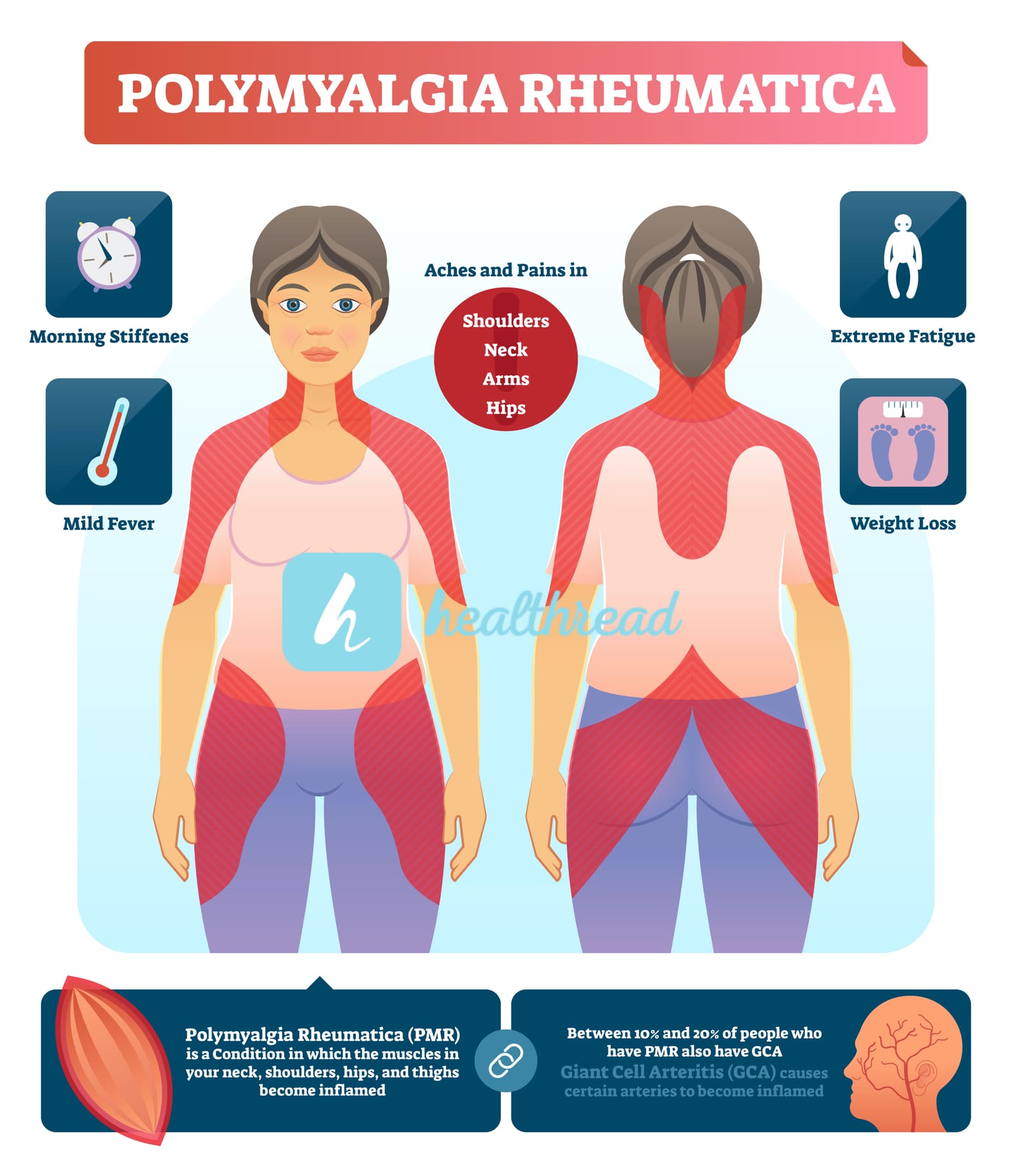
Polymyalgia rheumatica (PMR) is a type of inflammatory condition that leads to widespread flu-like symptoms and stiffness. it's most common in women as well as in Caucasians. It generally develops by the time you reach age 70 and isn't really seen that much in individuals younger than 50 years old. It might last anywhere from one to five years, but it does vary from individual to individual. According to the Arthritis Foundation, around 15% of individualswith PMR develop giant cell arteritis - a potentially dangerous condition.
What Causes Polymyalgia Rheumatica?
The cause of PMR isn't known. It doesn't come from medication side effects. The sudden onset of symptoms does suggest the possibility of an infection, however, none has been found so far. While "myalgia" is derived from the Greek term for "muscle pain", certain testing of the muscles, like a muscle biopsy or a blood test for muscle enzymes are normal.
Research recently suggests PMR inflammation involves the hip joints and shoulder themselves and the sacs (bursae) around these joints. Therefore, pains at the thighs and upper arms begin at the nearby hip joints and shoulder. Physicians called this "referred pain."
You shouldn't confuse PMR with fibromyalgia, a syndrome that's poorly understood, and unlike PMR, doesn't have any evidence of inflammation.
What are the Symptoms of Polymyalgia Rheumatica?
Typically, polymyalgia rheumatica symptoms start acutely (abruptly). However, they might develop insidiously (slowly) during a period of a few weeks or months.
The symptoms and signs of PMR typically occur on both sides of your body and may include:
- Pain or aches in your shoulders
- Stiffness in impacted areas, especially after being inactive for a while or in the morning
- Stiffness or pain in your elbows, wrists or knees
- Limited range of motion in impacted areas
You may also have more-general symptoms which include:
- Fatigue
- Mild fever
- Unintended weight loss
- A general feeling of malaise (not being well)
- Loss of appetite
- Depression
Around 30% of individuals with PMR develop symptoms that are similar to those of rheumatoid-like arthritis, including:
- Degenerative changes in some joints
- Pain (arthralgia)
- Joint swelling
Anemia, nonhemolytic type (low circulating red blood cell levels) might also develop in certain individuals with this condition.
The symptoms linked with PMR often go away for periods of time or go into remission and then they come back (exacerbation). These events might continue for around six months or even up to six years. But, permanent disability or severe impairment is rare, even after months or years. Typically, people with PMR don't experience any muscle strength loss.
How Is Polymyalgia Rheumatica Diagnosed?
PMR might be difficult to diagnose. Since rheumatologists are professionals in disorders of the muscles, joints and bones, they recognize a PMR diagnosis and professionally manage its treatment.
In PMR blood test results for detecting inflammation are often irregularly high. The sed rate test or also referred to as the erythrocyte sedimentation rate is one such test. The C-reactive protein (CRP) is another test. Both might be extremely elevated in PMR, however, in some individuals, these tests might have only slightly high or normal results. PMR can be difficult to diagnose. Your doctor should rule other health issues out, like rheumatoid arthritis.
How Is Polymyalgia Rheumatica Treated?
PMR is treated by medicines, including:
1. Corticosteroids
These are medicines, like prednisone, where you'll begin with a low dose daily that's increased as you need it until your symptoms go away. The doctor might then gradually lower your dose and you'll likely stop taking the medicine after around six months to a couple years. If your symptoms come back, your doctor will likely put you back on the medication. You'll stop taking the medication when your symptoms go away completely.
2. Nonsteroidal Anti-Inflammatory Drugs (NSAIDs)
These include ibuprofen and aspirin. They're taken daily, but using them long-term could lead to stomach issues. For most individuals, NSAIDs by themselves don't make the symptoms disappear.
Individuals typically respond fast, within 24 to 48 hours, however, most require treatment for more than a year. The condition usually runs its course in about a year to five years. But, even with successful treatment, a relapse can still occur, therefore ongoing medical follow-up is important.
Are You Living with Symptoms of Polymyalgia Rheumatica?
If you're having to live with PMR symptoms and feel like you're alone in all of this, subscribe to Healthread to connect with other people going through the same thing. Together you can find ways to cope better with polymyalgia rheumatica, and live a better life.
Sources
- 1arthritis.org/diseases/polymyalgia-rheumatica#:~:text=Polymyalgia%20rheumatica%20(PMR)%20is%20an,in%20people%20younger%20than%2050
- 2rheumatology.org/I-Am-A/Patient-Caregiver/Diseases-Conditions/Polymyalgia-Rheumatica
- 3niams.nih.gov/health-topics/polymyalgia-rheumatica
- 4vasculitisfoundation.org/education/forms/polymyalgia-rheumatica/
- 5emedicine.medscape.com/article/330815-overview
- 6medlineplus.gov/polymyalgiarheumatica.html
- 7mayoclinic.org/diseases-conditions/polymyalgia-rheumatica/symptoms-causes/syc-20376539
- 8rarediseases.org/rare-diseases/polymyalgia-rheumatica/
- 9healthline.com/health/polymyalgia-rheumatica
Información general, no consejo médico
Este artículo no puede tener en cuenta tu historial de salud ni tu tratamiento actual. Habla con un profesional sanitario cualificado antes de cambiar nada de tu cuidado.
Lee nuestro aviso médico →
En esta página
What Causes Polymyalgia Rheumatica?
What are the Symptoms of Polymyalgia Rheumatica?
How Is Polymyalgia Rheumatica Diagnosed?
How Is Polymyalgia Rheumatica Treated?
1. Corticosteroids
2. Nonsteroidal Anti-Inflammatory Drugs (NSAIDs)
Are You Living with Symptoms of Polymyalgia Rheumatica?
Sources
Pon en práctica lo que lees
Controla tus medicamentos, consulta un síntoma y habla con personas que viven con la misma enfermedad, todo en Healthread.
Descargar la app
Sigue leyendo

Beauty and Anti-Aging
Gastric Balloon for Weight Loss
The gastric balloon weight loss procedure is a new FDA-approved minimally invasive bariatric procedure for treating obesity. It is a temporary procedure that involves placing a saline-filled silicone balloon in the…
19 de junio de 2025 · 3 min de lectura
Beauty and Anti-Aging
Vitamin D Deficiency
Also known as the sunshine vitamin, vitamin D is an essential nutrient that is naturally absorbed by the skin through exposure to sunlight. It can also be obtained from dietary sources and supplements.
30 de diciembre de 2024 · 3 min de lectura

Cancer-Updates
Gynecologic Cancer
Gynecologic cancer is a term used to describe a group of cancers that affect the female reproductive system. There are five types of gynecologic cancers named after the body part where they start.
5 de noviembre de 2024 · 3 min de lectura


© 2026 Healthread
English · Español
Healthread no ofrece asesoramiento médico, diagnóstico ni tratamiento. Consulta siempre a un profesional sanitario cualificado sobre tu atención.