

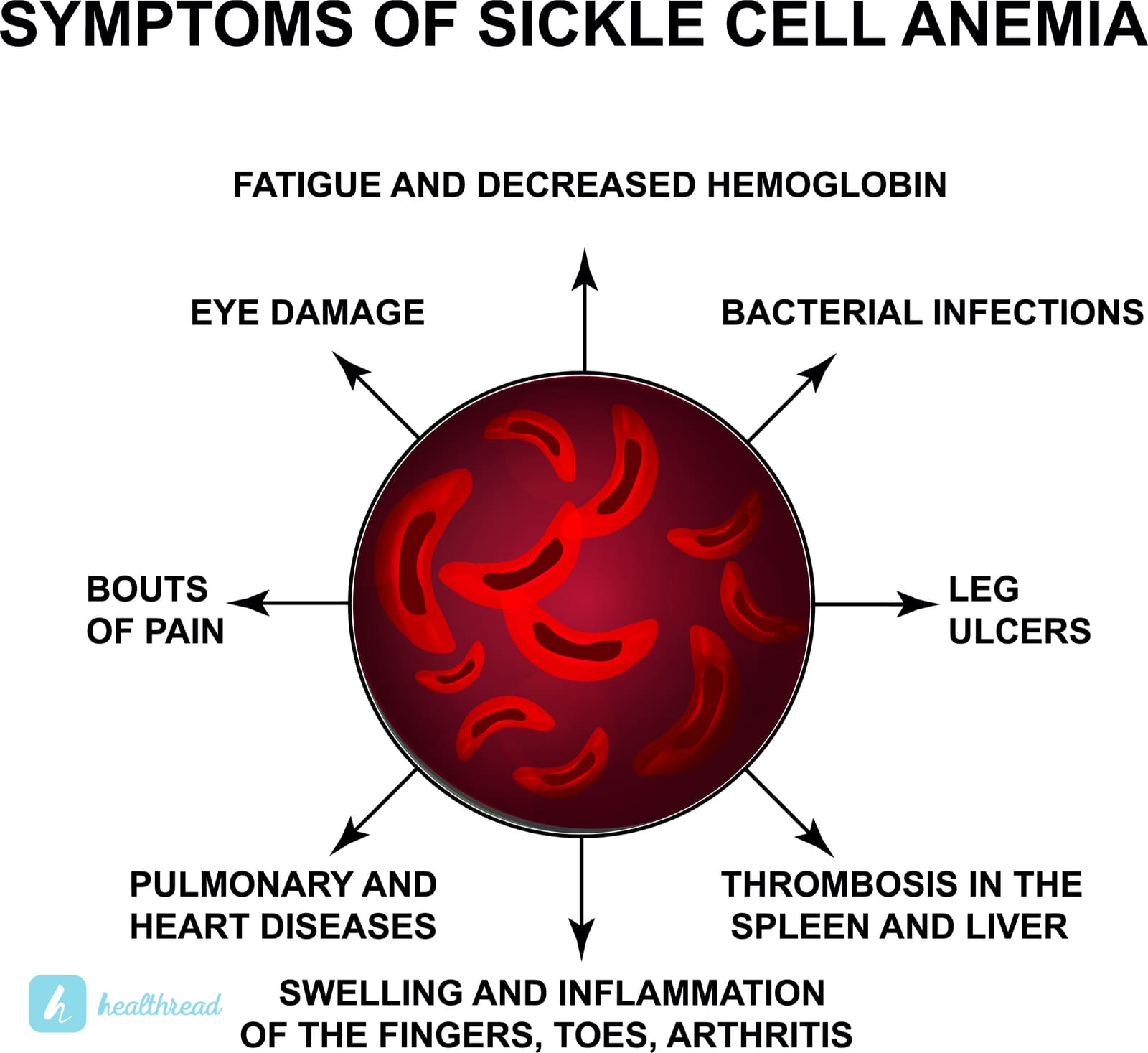
Sickle cell disease (SCD) is genetic. This inherited blood disorder affects hemoglobin and red blood cells. Normal red blood cells are shaped like discs. They move easily via the blood vessels. Those with SCD have sickle or crescent-shaped red blood cells. These red blood cells often have difficulty moving through the blood vessels, blocking blood flow and causing various complications. Because these sickle-shaped cells do not last as long as normal red blood cells, they contribute to the development of anemia.
SCD is also known as HbS disease and hemoglobin S disease.
Risk Factors
Most people with SCD in the United States are African-American. According to the National Institute of Health’s Heart, Lung and Blood Institute, roughly one out of every 13 Black babies is born with sickle cell trait, and one out of every 365 is born with SCD.
However, SCD is not confined only to Black people. Those from Latino, Middle Eastern, Asian Indian, and southern European backgrounds may also have SCD.
Types of SCD
Types of SCD include:
- HbSS –Also known as sickle cell anemia, this form of SCD occurs when the patient inherits the sickle gene from each parent. Sickle cell anemia is the most serious type of SCD.
- HbSC –Those diagnosed with this type of SCD inherit a sickle cell gene from one parent and a gene causing abnormal hemoglobin from the other. This protein allows red blood cells to send oxygen to the body. HbSC is generally a mild type of SCD.
- HbS beta thalassemia –This form of the disease is inherited by those carrying a sickle cell gene from one parent and from the other, a gene for beta-thalassemia. This is another type of anemia. Beta thalassemia comes in 0 and + types, with the former causing more severe SCD than the latter.
SCD Symptoms
SCD symptoms usually start in infancy. Young children experience frequent infections, anemia, and pain. Signs of anemia include:
- Fatigue
- Dizziness
- Shortness of breath
- Lack of energy
- Irregular heartbeat
- Fever
Anemia can result in developmental delays, including delayed sexual maturity.
Other SDC symptoms include jaundice, a yellowing of the skin, or the white of the eyes. The hands and feet may swell.
SDC symptoms in some children are mild, while in others, regular hospital stays are necessary.
SCD Diagnosis
SCD diagnosis is straightforward, requiring only a blood test. It is usually diagnosed at birth as the test is included in routine hospital screenings for newborns.
Blood tests will also reveal whether the parent is a carrier before the baby is born. Prenatal screening is available, with a sample taken of the amniotic fluid.
SCD Treatment
Because SCD is diagnosed immediately in most people, treatment can begin right away. That early treatment consists of pneumococcus bacteria vaccination, folic acid supplementation, and prophylactic penicillin.
Because SCD is a chronic disease, ongoing treatment may include:
- Pain management therapy
- Intravenous fluid
- Antibiotics
- Blood transfusions
Some patients will require surgery. Complications of SCD include:
- Gallstones
- Heart disease
- Joint issues
- Kidney problems
- Leg ulcers –These ulcers usually do not affect those over 10.
- Stroke
Women with SCD are at increased risk of problems during pregnancy. This includes a higher rate of miscarriage, low birth weight, and premature birth. Men may suffer from priapism, a prolonged and painful erection. Always seek medical help for an erection lasting more than four hours. Permanent damage to the penis may result.
The FDA has approved Endari, or L-glutamine oral powder, to reduce SDC symptoms in adults and children over 5. Hydroxyurea, marketed under the brand names Droxia and Siklos, is used to reduce the need for blood transfusions in adults and children and address pain crises.
SCD treatments can also cause side effects. Patients receiving long-term red blood cell infusion may develop transfusional iron overload. The body cannot get rid of this excess iron. This leads to an iron buildup in the organs, primarily the liver, heart, pancreas, and thyroid gland. Other parts of the endocrine system are vulnerable.
There is a cure for SCD in the form of a stem cell or bone marrow transplant. However, the donor must be a close match to the patient, usually a sibling. This is a risky procedure.
SCD Management
Managing SCD means visiting the doctor regularly for checkups. Patients should stay current on all vaccines, including an annual flu shot.
Regular exercise and a healthy diet are part of combating SCD. Do not smoke and keep any alcohol consumption to a minimum. Carry water at all times and stay hydrated.
Pain is part of living with SCD. Patients should start drinking lots of fluids when they feel SCD-related pain coming on, and take over-the-counter non-steroidal anti-inflammatory drugs (NSAIDs) for relief. Acetaminophen is the appropriate OTC pain reliever for people with kidney disease.
If the pain becomes unmanageable at home, head to the emergency room or a sickle cell disease outpatient unit if one is available. There, patients receive IV fluids and stronger pain medications. Hospitalization may prove necessary.
Sources
Información general, no consejo médico
Este artículo no puede tener en cuenta tu historial de salud ni tu tratamiento actual. Habla con un profesional sanitario cualificado antes de cambiar nada de tu cuidado.
Lee nuestro aviso médico →
Pon en práctica lo que lees
Controla tus medicamentos, consulta un síntoma y habla con personas que viven con la misma enfermedad, todo en Healthread.
Descargar la app
Sigue leyendo

Beauty and Anti-Aging
Gastric Balloon for Weight Loss
The gastric balloon weight loss procedure is a new FDA-approved minimally invasive bariatric procedure for treating obesity. It is a temporary procedure that involves placing a saline-filled silicone balloon in the…
19 de junio de 2025 · 3 min de lectura

Beauty and Anti-Aging
Vitamin D Deficiency
Also known as the sunshine vitamin, vitamin D is an essential nutrient that is naturally absorbed by the skin through exposure to sunlight. It can also be obtained from dietary sources and supplements.
30 de diciembre de 2024 · 3 min de lectura

Cancer-Updates
Gynecologic Cancer
Gynecologic cancer is a term used to describe a group of cancers that affect the female reproductive system. There are five types of gynecologic cancers named after the body part where they start.
5 de noviembre de 2024 · 3 min de lectura


© 2026 Healthread
English · Español
Healthread no ofrece asesoramiento médico, diagnóstico ni tratamiento. Consulta siempre a un profesional sanitario cualificado sobre tu atención.