

Stomach Cancer Overview and Types
30 de noviembre de 2021
4 min de lectura
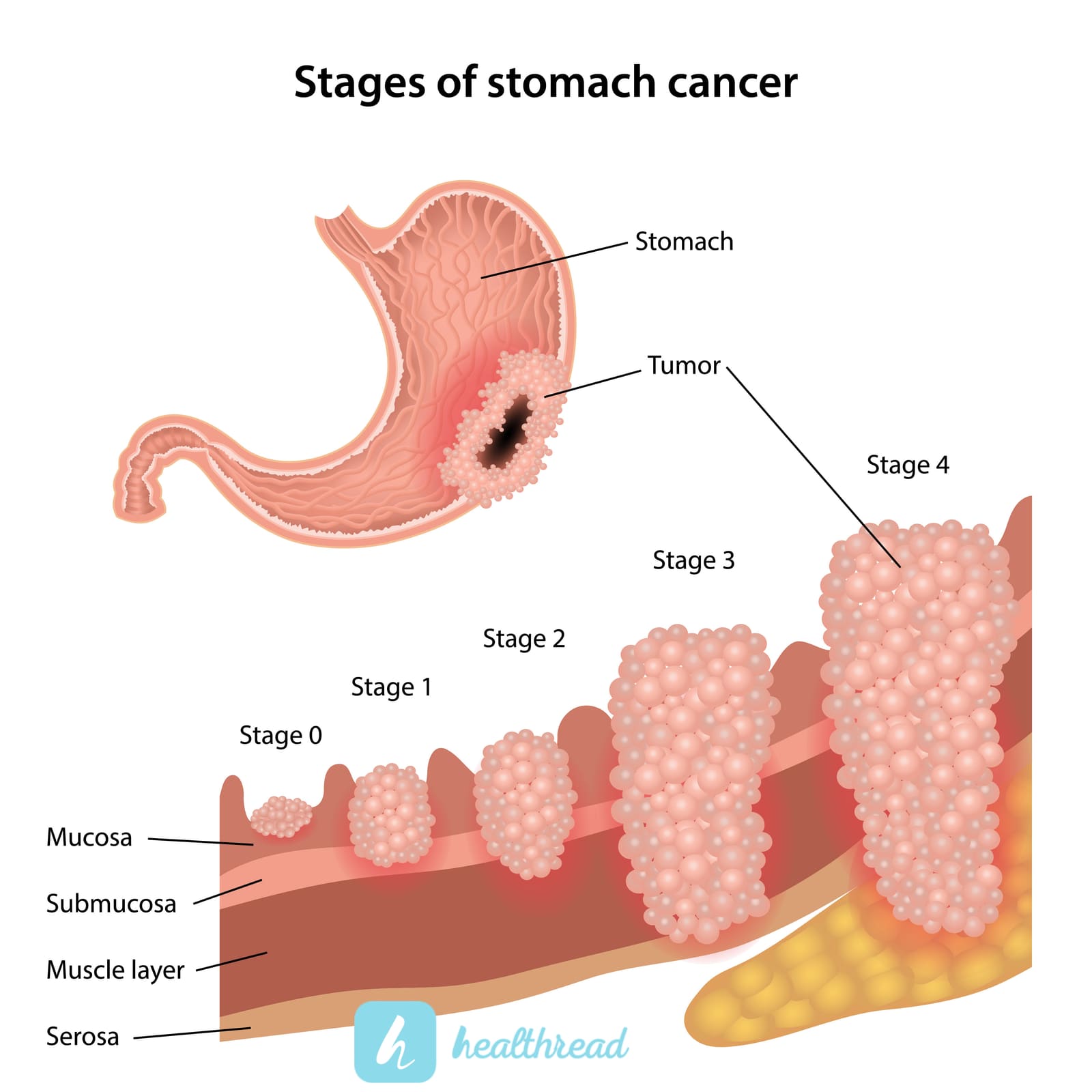
The stomach consists of five parts. Stomach cancer can develop in different areas and the location affects both outcome and treatment decisions.
Stomach Cancer
Up to 95 percent of stomach cancers are adenocarcinomas. These tumors develop in the gland cells of the mucosa. The mucosa is the inner lining of the stomach.
Although various types of adenocarcinomas are found in the stomach, there are two primary types:
- Intestinal adenocarcinomas –these tumors more often respond to targeted therapy.
- Diffuse adenocarcinomas –the tumors are harder to treat and spread, or metastasize, more quickly.
Far less common are gastrointestinal stromal tumors (GISTs). As sarcomas, GIST cancers form in a variety of tissues. GISTS may form anywhere in the digestive tract but are usually found in the stomach or small intestine. GISTs are less likely to metastasize.
Another type of tumor unlikely to spread is the neuroendocrine tumor. These growths begin in the digestive tracts’ endocrine or nerve cells. While rare, some of these tumors do metastasize.
Lymphomas start in the cells known as lymphocytes, part of the immune system. While most develop outside the stomach, there are some that take root in the stomach wall.
Risk Factors
Males are diagnosed with stomach cancer more frequently than females. Age is a factor, as stomach cancer is diagnosed far more often in older individuals. Heredity plays a role. A family history of stomach cancer can predispose someone to the disease. However, there is no family history in the majority of people diagnosed with stomach cancer.
People of African, Asian, Hispanic, or indigenous descent have a higher rate of stomach cancer in the United States.
While people cannot control their heredity, gender, or age, they can avoid certain habits that increase the risk of stomach cancer substantially. These include:
- Smoking
- Obesity
- Excessive alcohol consumption
- Poor diet
Cutting out processed and sugary foods and eating a diet rich in fiber, fruits, and vegetables can reduce the risk of stomach cancer. So can regularly exercising and keeping fit.
Stomach Cancer Causes
Fifty percent of people worldwide have a Helicobacter pylori, or H. pylori infection. While most of these people will not develop stomach cancer, H.pylori is linked to the disease. It is a major cause of gastrointestinal diseases overall. Antibiotic therapy can eradicate H. pylori and lower the stomach cancer risk.
Stomach Cancer Symptoms
As with most cancers, early diagnosis and treatment of stomach cancer should mean a better prognosis. Because the early stages of stomach cancer produce few symptoms, it is usually not discovered until it has progressed. Some initial symptoms mimic other digestive disorders.
Consult your doctor if any of these symptoms are ongoing:
- Abdominal pain or swelling
- Appetite loss
- Blood in the stool
- Fatigue
- Feeling full after eating small meals
- Heartburn
- Indigestion
- Vomiting
- Unexpected weight loss
Stomach Cancer Diagnosis
Initial symptom evaluations are performed by a general practitioner. If stomach cancer is suspected, the patient is referred to a gastroenterologist.
Tests for diagnosing stomach cancer include upper endoscopy and endoscopic ultrasound. In the former, the thin, lighted tube with a minute camera attached known as an endoscope is passed via the throat into the digestive tract. The doctor can see the esophagus, stomach, and the top of the small intestine. The endoscope can remove a small bit of tissue for a biopsy.
Endoscopies have their limits. They cannot biopsy abnormalities located deeper within the walls of the stomach. That is where an endoscopic ultrasound comes in. This involves the guidance of a thin needle into the stomach wall for retrieval of a tissue sample.
Other tests used for diagnosing stomach cancer include:
- CT scans
- MRI
- PET scans
- X-rays
Stomach Cancer Treatment
How stomach cancer is treated depends on various factors. While surgery is generally performed for tumor removal, the patient’s age and health are taken into consideration. After surgery, most patients receive radiation or chemotherapy.
Patients unable to have surgery may still undergo chemo or radiation.
Sometimes, removal of all or part of the stomach is necessary. A total gastrectomy refers to taking out the entire stomach. In this procedure, the esophagus is connected to the small intestine. That enables the person to still have food moving their gastrointestinal tract.
Anyone who has gone through partial stomach removal may no longer have the ability to eat large meals. Consuming smaller meals becomes the new normal. Nutritional supplements are usually necessary to ensure patients receive adequate vitamins and minerals.
Some patients undergoing total or partial stomach removal require the use of a feeding tube in either the small intestine or lower portion of the stomach.
Immunotherapy drugs are used to fight cancer cells by targeting proteins on those cells, known as checkpoints. Cancer cells use these proteins to protect them from an immune system reaction. Immunotherapy medications boost immune cells to ward off cancer cells.
Sources
Información general, no consejo médico
Este artículo no puede tener en cuenta tu historial de salud ni tu tratamiento actual. Habla con un profesional sanitario cualificado antes de cambiar nada de tu cuidado.
Lee nuestro aviso médico →
En esta página
Stomach Cancer
Risk Factors
Stomach Cancer Causes
Stomach Cancer Symptoms
Stomach Cancer Diagnosis
Stomach Cancer Treatment
Sources
Pon en práctica lo que lees
Controla tus medicamentos, consulta un síntoma y habla con personas que viven con la misma enfermedad, todo en Healthread.
Descargar la app
Sigue leyendo

Cancer-Updates
Gynecologic Cancer
Gynecologic cancer is a term used to describe a group of cancers that affect the female reproductive system. There are five types of gynecologic cancers named after the body part where they start.
5 de noviembre de 2024 · 3 min de lectura
Cancer-Updates
Anal Cancer
Anal cancer is caused when the cancer cells in the anus grow uncontrollably, forming masses or tumors. The cancer cells can sometimes spread to other body parts, causing metastatic cancer.
18 de agosto de 2024 · 3 min de lectura

Cancer-Updates
Bile Duct Cancer (Cholangiocarcinoma)
Bile duct cancer, or cholangiocarcinoma, is a cancer that occurs in the bile ducts, the slender tubes that collect bile, a fluid made by the liver for breaking down fats in the digestion process.
17 de abril de 2024 · 2 min de lectura


© 2026 Healthread
English · Español
Healthread no ofrece asesoramiento médico, diagnóstico ni tratamiento. Consulta siempre a un profesional sanitario cualificado sobre tu atención.