

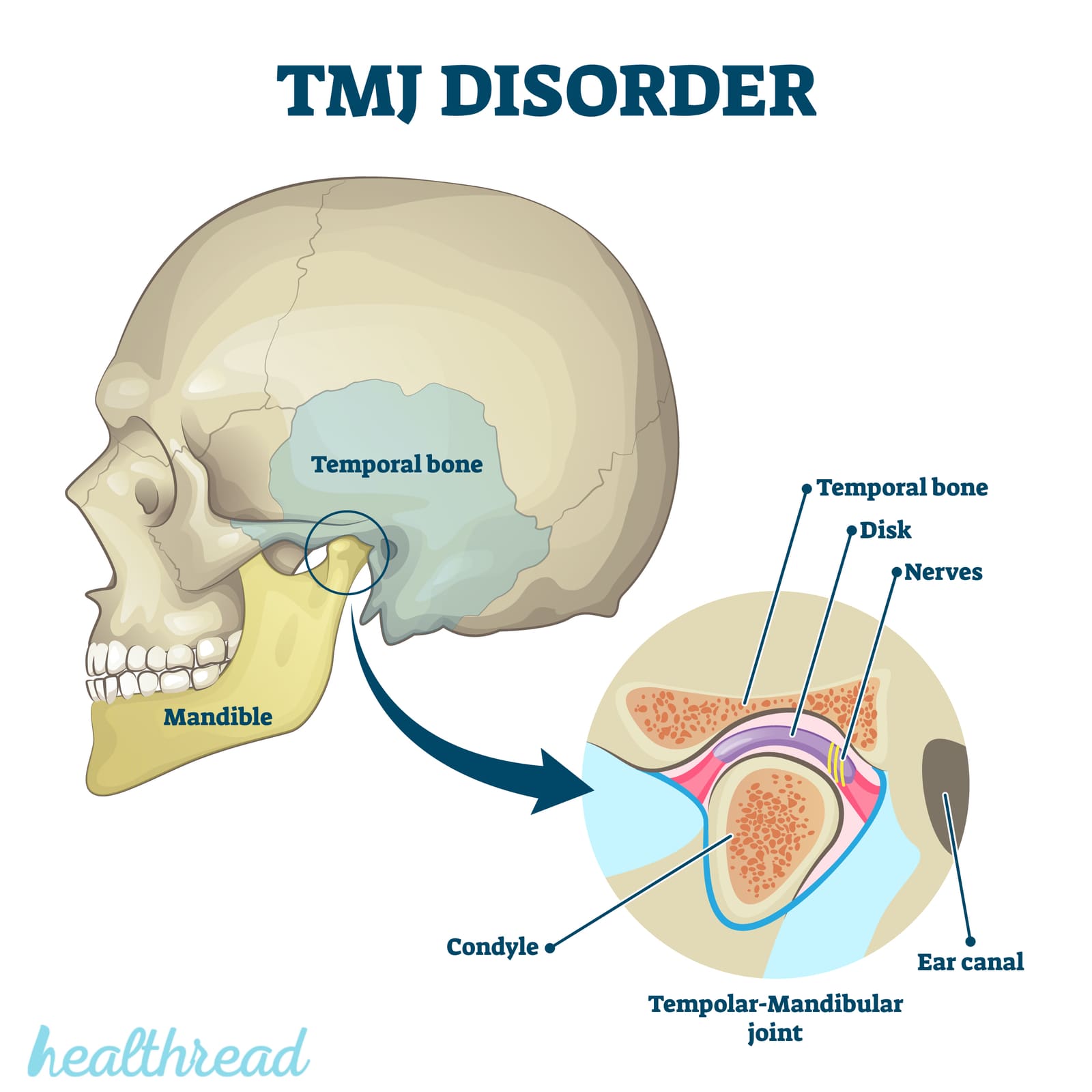
Your two temporomandibular joints (TMJ) connect the lower jaw to the skull. Consisting of the lower jaw, or mandible, and the temporal bone at the base and side of the skill, the TMJ are complicated structures.
The TMJs, along with various muscles, permit the mandible to move from side to side, back and forth, and up and down. Alignment of the mandible and joints permit proper chewing, talking, and similar movements in the area, including swallowing, to occur. If the TMJ is out of alignment, the person will experience issues with these simple movements. The result is temporomandibular joint dysfunction (TMD).
TMD Symptoms
Pain is the primary TMD symptom. That pain may originate from the ear, the jaw, or the face. This soreness is most often felt in the morning or late afternoon. Some patients may not suffer from constant pain but experience it while chewing or attempting to chew.
Headaches frequently accompany TMD. So earaches, and ringing in the ears, or tinnitus, is another TMD symptom.
The TMJ may also lock, causing problems in opening and closing the mouth. Some people may hear a clicking sound in the jaw or feel an odd sensation when chewing or talking.
Some TMD symptoms do not occur in the head, neck, or face. Patients may find their fingers numb or tingling.
If the upper and lower teeth no longer fit together as they formally did, that’s a red alert for potential TMD.
TMD Causes
Any sort of head or neck trauma may eventually result in TMD. Displacement of the jaw’s joint discs is another major cause of TMD. However, the majority of TMD cases are of unknown origin.
TMD Risk Factors
Those who grind their teeth at night are at higher risk of developing TMD. Such behaviors, including clenching and gnashing of the teeth and jaw, are known as bruxism. Previous jaw injuries can raise the odds of TMJ disorders.
Arthritis may exacerbate TMJ pain. There are also connective tissue conditions that may cause TMJ pain.
Patients with fibromyalgia or irritable bowel syndrome (IBS) are more vulnerable to TMD. Women are somewhat more likely than men to develop TMD, and that is also true of fibromyalgia or IBS. It is possible that hormones play a role in TMD.
TMD Diagnosis
Either a dentist or a doctor may diagnose TMD. The practitioner will examine your mouth and jaw and listen for any sounds as you open and close your mouth. Expect to have the range of motion in your jaw examined and specific areas identified as primary sources of discomfort.
If the healthcare provider determines there is an issue, you will have X-rays taken of your mouth and jaw. The doctor or dentist will order a CT scan or MRI for further diagnostics. These tests reveal disc and soft tissue irregularities.
Because TMJ pain mimics some other maladies, your doctor or dentist will want to rule out those other causes. Discomfort similar to that found in TMD happens frequently with sinus and ear infections and nerve-related facial pain.
Easing Symptoms Prior to Diagnosis
If you suspect TMD but have not yet received a formal diagnosis, you might try to ease symptom pain by consuming soft foods and placing ice packs on the painful areas. Avoid doing anything that forces your mouth wide open, such as singing or chewing gum.
TMD Treatment
If your TMD is mild, your doctor or dentist may choose to observe you regularly, as symptoms may vanish on their own. Your healthcare provider may show you some simple jaw exercises to stretch and relax the TMJ.
For persistent and serious TMD pain, providers may recommend taking over-the-counter non-steroidal anti-inflammatory drugs (NSAIDs), such as naproxen or ibuprofen. If the pain does not respond to OTC pain relievers, the doctor may prescribe stronger painkillers on a short-term basis.
If the patient is suffering from locking of the jaw, the doctor may prescribe muscle relaxants to ease the situation. In low doses, tricyclic antidepressants can help control discomfort, along with lessening bruxism.
A bite guard over the teeth might provide temporary pain relief, but such devices are not for long-term use.
Some patients find relief from corticosteroid injections into the jaw. Botox is sometimes used as a TMD treatment, injected into the jaw muscles. Yes, any wrinkles in the injection area are temporarily eradicated.
TMD Surgery
Many patients respond to non-surgical treatments, but for those who do not, surgery is an option. The types of surgery include:
- Arthroscopy - A cannula, or thin small tube, is put into the joint. The surgeon uses an arthroscope and its minute surgical instruments for the procedure.
- Modified condylotomy –When jaw locking happens, the surgeon may choose this operation. The surgery is performed on the mandible but not the joint per se.
- Open-joint surgery –If all else fails, the surgeon may perform open-joint surgery to replace the joint. This is the riskiest of all procedures and is usually done as a last resort.
Sources
Información general, no consejo médico
Este artículo no puede tener en cuenta tu historial de salud ni tu tratamiento actual. Habla con un profesional sanitario cualificado antes de cambiar nada de tu cuidado.
Lee nuestro aviso médico →
En esta página
TMD Symptoms
TMD Causes
TMD Risk Factors
TMD Diagnosis
Easing Symptoms Prior to Diagnosis
TMD Treatment
TMD Surgery
Sources
Pon en práctica lo que lees
Controla tus medicamentos, consulta un síntoma y habla con personas que viven con la misma enfermedad, todo en Healthread.
Descargar la app
Sigue leyendo

Beauty and Anti-Aging
Gastric Balloon for Weight Loss
The gastric balloon weight loss procedure is a new FDA-approved minimally invasive bariatric procedure for treating obesity. It is a temporary procedure that involves placing a saline-filled silicone balloon in the…
19 de junio de 2025 · 3 min de lectura

Beauty and Anti-Aging
Vitamin D Deficiency
Also known as the sunshine vitamin, vitamin D is an essential nutrient that is naturally absorbed by the skin through exposure to sunlight. It can also be obtained from dietary sources and supplements.
30 de diciembre de 2024 · 3 min de lectura

Cancer-Updates
Gynecologic Cancer
Gynecologic cancer is a term used to describe a group of cancers that affect the female reproductive system. There are five types of gynecologic cancers named after the body part where they start.
5 de noviembre de 2024 · 3 min de lectura


© 2026 Healthread
English · Español
Healthread no ofrece asesoramiento médico, diagnóstico ni tratamiento. Consulta siempre a un profesional sanitario cualificado sobre tu atención.