

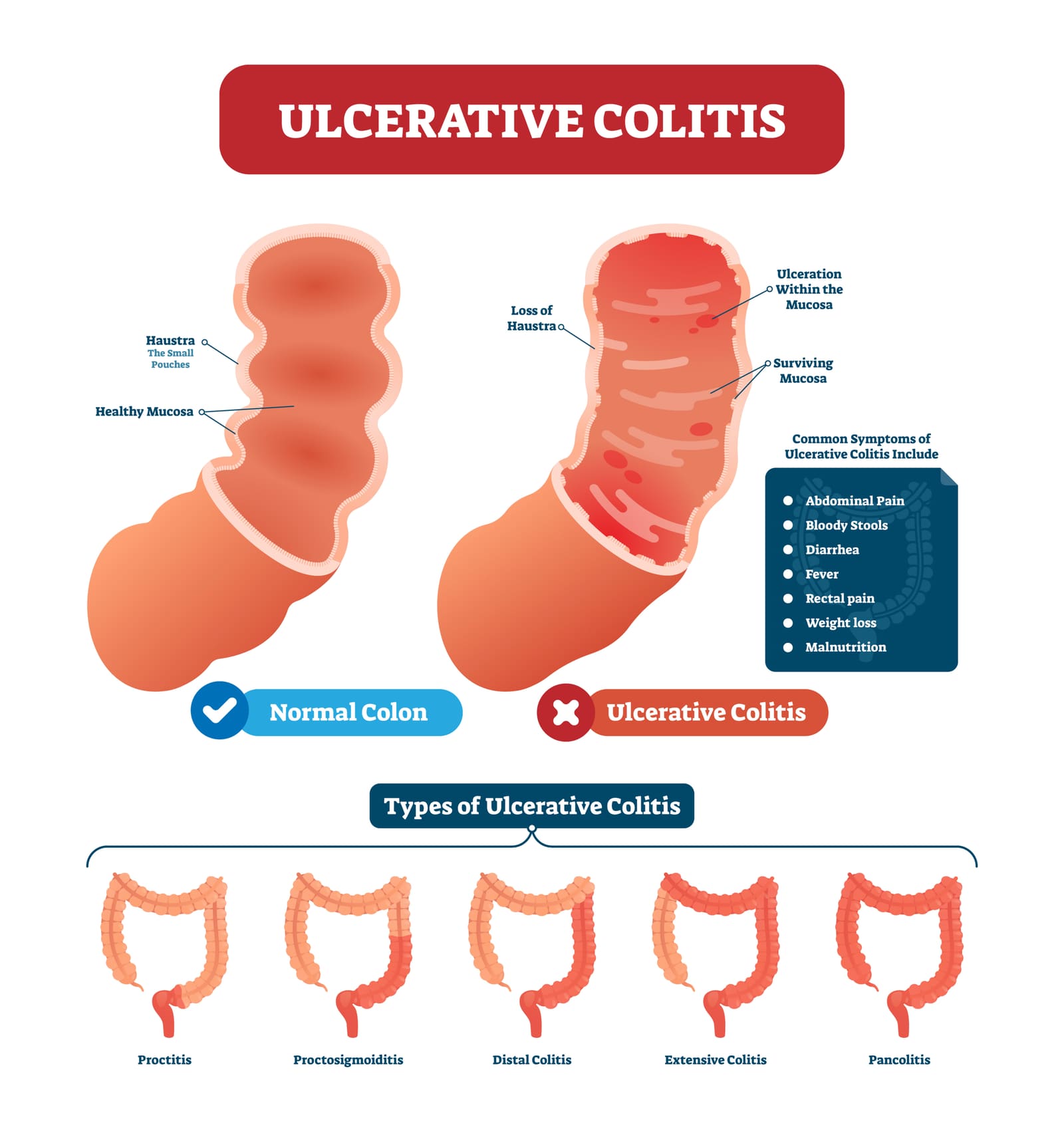
Inflammatory bowel disease, or IBD, refers to chronic gastrointestinal tract inflammation. Crohn’s disease and ulcerative colitis fall under the IBD umbrella. The former affects any part of the gastrointestinal system, from the mouth to the rectum. The latter affects the large intestine and rectum.
Scientists are not yet sure of IBD’s cause. It is possible that IBD results from an immune system disorder, in which the body’s infection-fighting cells overreact to a perceived intruder. While stress may aggravate IBD, it does not seem to cause the condition There is no cure for IBD, but various therapies are available for treatment.
Crohn’s Disease
As noted, Crohn’s disease may affect the entire gastrointestinal tract. The inflammation appears in patches rather than continuously. Tissue alongside the inflamed area may appear normal.
Ulcerative Colitis
Ulcerative colitis is usually characterized by recurring episodes of inflammation and ulcerations of the large intestine. Ulcerative colitis causes sores, or ulcers, to form on the surface lining of the large intestine or rectum. The ulcers usually bleed and are associated with diarrhea. The damage extends diffusely along the rectum and large Intestine, rather than in segmented areas.
IBD Symptoms
Symptoms of Crohn’s disease and ulcerative colitis are similar. Suspect IBD if experiencing any of these symptoms persistently:
- Severe diarrhea
- Blood in the stool
- Abdominal pain
- Lack of appetite
- Fever
- Fatigue
- Unexpected weight loss
IBD often affects women differently than men. It may cause more pain during the menstrual cycle and can lead to fertility issues. Women taking birth control pills or antibiotics appear to have a bigger risk of IBD development. In both genders, taking non-steroidal anti-inflammatory drugs (NSAIDs), such as ibuprofen or naproxen, increases the odds of developing IBD. The majority of patients with ulcerative colitis present with an attack of mild severity but a small percent 1% may present with severe disease and fulminant colitis with enlargement of colon known as toxic megacolon and a risk of bowel perforation. These patients may require urgent surgical intervention.
IBD Risk Factors
IBD is most often diagnosed by the age of 30, although some patients may not develop symptoms until their 50s or 60s. While anyone can develop IBD, it is most common in Caucasians. Those from an Ashkenazi Jewish background are at higher risk.
IBD may have a genetic component, and anyone with a close relative suffering from IBD is at greater risk of IBD development. Keep in mind that most cases of IBD have no familial connection. Cigarette smoking may influence the course of ulcerative colitis. Patients who develop ulcerative colitis following smoking cessation may be more difficult to treat, and symptoms may decrease or even resolve with resumption of cigarette smoking
IBD Diagnosis
Doctors diagnose IBD by performing a physical examination and taking a medical history. Blood tests should reveal whether a patient has inflammation, anemia, or other markers of IBD. The patient must provide a stool sample that is sent for testing.
The patient may undergo several imaging tests for diagnostic purposes. A colonoscopy, the insertion of a long tube with a tiny camera attached into the anus, allows the doctor to view the large intestine on a monitor and search for ulcers and other signs of inflammation. A sigmoidoscopy is similar but confined to views of the large intestine’s lower lining.
MRIs and CT scans allow the doctor to see the condition of the digestive tract.
Capsule endoscopy involves swallowing a pill in which a minute camera is encased. The camera passes through the gastrointestinal tract, taking videos transferred to a recorder worn on the patient’s belt. Once these videos are downloaded into a computer, the doctor can look at them and determine whether IBD is present. The camera exits in the feces.
IBD Treatment
IBD treatment may consist of medication, surgery, dietary changes, and even psychotherapy.
Medications may relieve symptoms and reduce inflammation but are also geared toward lessening flare-ups. These medications include:
. Topical aminosalicylates like mesalamine or topical corticosteroids like budesonide for milder disease of the rectum and lower colon (Sigmoid Colon)
. Oral glucocorticoids like prednisone and budesonide for disease flare
. Oral sulfasalazine or mesalamine preparation for maintenance
. Biologics- for more severe disease –
Anti -TNF therapy (Infliximab,Adalumimab,golimumab)
Anti- integrin therapy (Vedolizumab)
. Immune suppressant medications like Azathioprine and 6-mercaptopurine
About half of those diagnosed with Crohn’s disease and one-third of those with ulcerative colitis will require surgery at some point. Crohn’s disease surgery may include a bowel resection, removing the damaged area of the bowel, or in a severe case, removal of the entire large intestine. When this occurs, the patient will no longer have the ability to excrete waste on their own and will require a colostomy.
Severe ulcerative colitis may also require the removal of the large intestine. The surgeon may either perform a colostomy or attach the end of the small intestine to the anus. This procedure, known as an ileoanal anastomosis, creates an internal pouch. Fecal material is stored in this pouch and the patient can pass it through the anus.
Diet does not appear to cause IBD, but some dietary changes may help relieve symptoms. Avoid processed foods and any food items containing a lot of additives. Staying away from alcohol may also reduce symptoms.
Psychotherapy can help some patients deal with the stress of living with IBD. Alternatives include meditation, mindfulness, and other stress-relieving practices.
IBD Complications
IBD may increase the risk of developing other ailments. These include colon cancer, so regular screenings are necessary. The extent of colitis and duration of disease are the two most important risk factors for Colon cancer with larger extent of bowel involvement/pancolitis having higher risk. Those with IBD may have a higher incidence of arthritis, skin, eye and joint inflammation, and blood clots. In addition patients are at higher risk of Hepatobiliary disease such a Primary sclerosing cholangitis or autoimmune liver disease
Sources
Información general, no consejo médico
Este artículo no puede tener en cuenta tu historial de salud ni tu tratamiento actual. Habla con un profesional sanitario cualificado antes de cambiar nada de tu cuidado.
Lee nuestro aviso médico →
En esta página
Crohn’s Disease
Ulcerative Colitis
IBD Symptoms
IBD Risk Factors
IBD Diagnosis
IBD Treatment
IBD Complications
Sources
Pon en práctica lo que lees
Controla tus medicamentos, consulta un síntoma y habla con personas que viven con la misma enfermedad, todo en Healthread.
Descargar la app
Sigue leyendo
Beauty and Anti-Aging
Gastric Balloon for Weight Loss
The gastric balloon weight loss procedure is a new FDA-approved minimally invasive bariatric procedure for treating obesity. It is a temporary procedure that involves placing a saline-filled silicone balloon in the…
19 de junio de 2025 · 3 min de lectura
Beauty and Anti-Aging
Vitamin D Deficiency
Also known as the sunshine vitamin, vitamin D is an essential nutrient that is naturally absorbed by the skin through exposure to sunlight. It can also be obtained from dietary sources and supplements.
30 de diciembre de 2024 · 3 min de lectura
Beauty and Anti-Aging
Cellulite
Cellulite appears with an orange peel or cottage cheese-like texture with a dimpled or lumpy skin surface. Mild cellulite is visible when you pinch the area with cellulite, like the thighs. Severe cellulite can make the…
13 de agosto de 2024 · 3 min de lectura


© 2026 Healthread
English · Español
Healthread no ofrece asesoramiento médico, diagnóstico ni tratamiento. Consulta siempre a un profesional sanitario cualificado sobre tu atención.