

Understanding Your Fertility Preservation Options Before Starting Cancer Treatment
10 de octubre de 2021
4 min de lectura
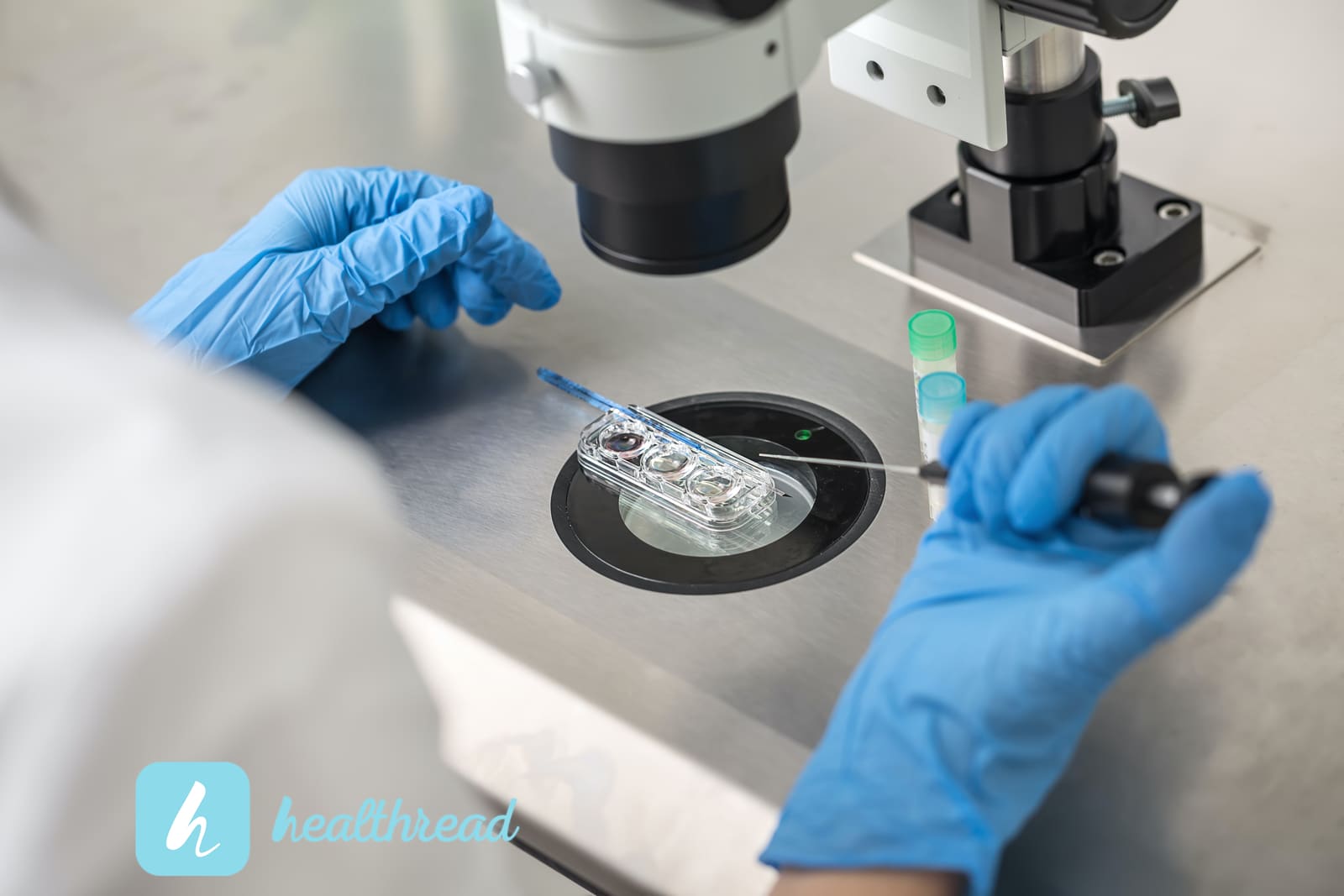
Different cancers and cancer treatments affect men and women in many ways, including affecting fertility. Receiving a cancer diagnosis is scary in itself and hearing that treatment can leave you infertile makes it that much harder. Understanding your fertility preservation options before starting cancer treatments can ease some of that burden.
Types of cancer treatments that can impact fertility
Millions of children and adults nationwide receive a cancer diagnosis each year. Treatment options vary based on patient demographics, the type and stage of cancer, and where in the body the cancer is located. While there are many treatment options available it is important to know the risks associated with these options. The following cancer treatments affect fertility in both men and women:
Chemotherapy
Chemotherapy is among the most commonly administered cancer treatments. It uses one or more anti-cancer drugs to attack the cancer cells in a person's body. One of the many side effects of chemotherapy is infertility. The severity of this possible side effect depends on the patient’s age, the drugs used, and the dosage administered to the patient.
Chemotherapy has the potential to destroy eggs in female patients leaving women at risk of experiencing menopause at an early age and narrows the window available to conceive a child. Damage from chemotherapy comes from alkylating agents and a drug known as cisplatin. Older females are more likely to experience infertility than younger women as they have fewer eggs due to the natural aging process.
Chemotherapy also puts men at risk for fertility issues. While a man’s body constantly produces sperm throughout his lifetime, chemotherapy has been known to damage sperm cell production and alter the testicles' ability to produce testosterone.
Radiation
Radiation is a cancer treatment option that utilizes high-energy rays directed at areas of cancer to hopefully kill the cancer cells. The rays can result in damage to the parts of the body surrounding the area being targeted. Experts have said that depending on the area that is targeted, radiation therapy can be more damaging on fertility than chemotherapy.
Depending on the area, radiation in women can destroy egg cells as well as leave scar tissue within the uterus, fallopian tubes, cervix, and other reproductive organs making it harder to conceive. In men, radiation can slow and/or stop the natural production of sperm.
Surgery
Depending on the type, stage, and location of cancer found in one’s body surgery may be required to remove the affected tissue. The surgical removal of testicles, the uterus, and ovaries may result in a cancer-free diagnosis but it will also leave the patient infertile.
Common fertility preservation options before starting cancer treatment
While cancer treatment options come with quite the risk, some steps can be taken towards fertility preservation before starting cancer treatments. The following are common fertility preservation options that doctors recommend:
Egg freezing
Egg freezing, medically known as oocyte cryopreservation, is a common fertility preservation option among single women. A female patient is given medication to stimulate the ovaries allowing for multiple eggs to be produced versus the natural process of only one being produced during the menstrual cycle. Approximately 8 to 11 days after stimulation, the female patient is placed under sedation medication and a procedure is performed to retrieve the eggs. The retrieved eggs are immediately taken to a laboratory and vitrified and preserved in liquid nitrogen.
Embryo freezing
Embryo freezing involves the same process as egg freezing, however, once the retrieved eggs are taken to the laboratory they are fertilized with the sperm provided by a donor or the patient's husband. The fertilized eggs are given 3 to 5 days to develop and then the healthy embryos are vitrified and preserved in liquid nitrogen at -196 degrees Celsius. This form of fertility preservation is common among women who are already married or know whose sperm they wish to utilize.
Sperm freezing
Freezing sperm is a simple, straightforward process as there are no medications or procedures required. A male patient will leave a sperm sample via masturbation at a cryobank where the sample will be analyzed, washed, and frozen. It is recommended that men freeze more than one sample with the cryobank.
Ovary suppression
Ovary suppression is a medical procedure where medication is injected into a female to temporarily shut down the ovaries before starting chemotherapy.
Less common fertility preservation options before starting cancer treatment
Testicular tissue freezing
Testicular tissue freezing is an experimental procedure where a doctor will surgically remove sperm-producing tissue from a male patient and freeze it before starting cancer treatment. The tissue can be re-implanted after treatment.
Ovarian tissue freezing
Ovarian tissue freezing is an experimental fertility preservation option where an ovary that contains immature eggs is removed and frozen. Once treatment has been completed and the patient has been given the all-clear, the frozen tissue can be re-implanted or the eggs can be retrieved in a laboratory.
Ovarian transposition
Ovarian transposition is a surgical procedure that involves the ovaries being moved higher into a patient’s abdominal cavity to prevent them from being affected by radiation treatment. Doctors have reported a high success rate with ovarian transposition with radiation treatment, however, have reported this procedure has no effect with chemotherapy.
Foundations and Societies
There are MANY foundations and societies for cancer. A few include:
Connect with Other Healthread Users About Fertility Options Before Starting Cancer Treatment
During difficult times, including navigating cancer treatment and fertility options, often it helps to talk to others who may be going through the same thing. Healthread is a platform to enable you to connect with others via a mobile app and website and share experiences.
Sources
- 1cancer.org/treatment/treatments-and-side-effects/physical-side-effects/fertility-and-sexual-side-effects/fertility-and-women-with-cancer/preserving-fertility-in-women.html#:~:text=Experts%20recommend%20freezing%20embryos%20or,egg%20freezing%20are%20the%20same
- 2mayoclinic.org/healthy-lifestyle/getting-pregnant/in-depth/fertility-preservation/art-20047512
- 3mskcc.org/cancer-care/patient-education/fertility-preservation-females-starting-treatment
- 4extendfertility.com/fertility-preservation-before-cancer-treatment/
- 5hopkinsmedicine.org/gynecology_obstetrics/specialty_areas/fertility-center/infertility-services/fertility-preservation-and-restoration-center/cancer-patients.html
- 6my.clevelandclinic.org/health/
Información general, no consejo médico
Este artículo no puede tener en cuenta tu historial de salud ni tu tratamiento actual. Habla con un profesional sanitario cualificado antes de cambiar nada de tu cuidado.
Lee nuestro aviso médico →
En esta página
Types of cancer treatments that can impact fertility
Chemotherapy
Radiation
Surgery
Egg freezing
Embryo freezing
Sperm freezing
Ovary suppression
Testicular tissue freezing
Ovarian tissue freezing
Ovarian transposition
Foundations and Societies
Connect with Other Healthread Users About Fertility Options Before Starting Cancer Treatment
Sources
Pon en práctica lo que lees
Controla tus medicamentos, consulta un síntoma y habla con personas que viven con la misma enfermedad, todo en Healthread.
Descargar la app
Sigue leyendo

Cancer-Updates
Gynecologic Cancer
Gynecologic cancer is a term used to describe a group of cancers that affect the female reproductive system. There are five types of gynecologic cancers named after the body part where they start.
5 de noviembre de 2024 · 3 min de lectura

Cancer-Updates
Anal Cancer
Anal cancer is caused when the cancer cells in the anus grow uncontrollably, forming masses or tumors. The cancer cells can sometimes spread to other body parts, causing metastatic cancer.
18 de agosto de 2024 · 3 min de lectura

Cancer-Updates
Bile Duct Cancer (Cholangiocarcinoma)
Bile duct cancer, or cholangiocarcinoma, is a cancer that occurs in the bile ducts, the slender tubes that collect bile, a fluid made by the liver for breaking down fats in the digestion process.
17 de abril de 2024 · 2 min de lectura


© 2026 Healthread
English · Español
Healthread no ofrece asesoramiento médico, diagnóstico ni tratamiento. Consulta siempre a un profesional sanitario cualificado sobre tu atención.