

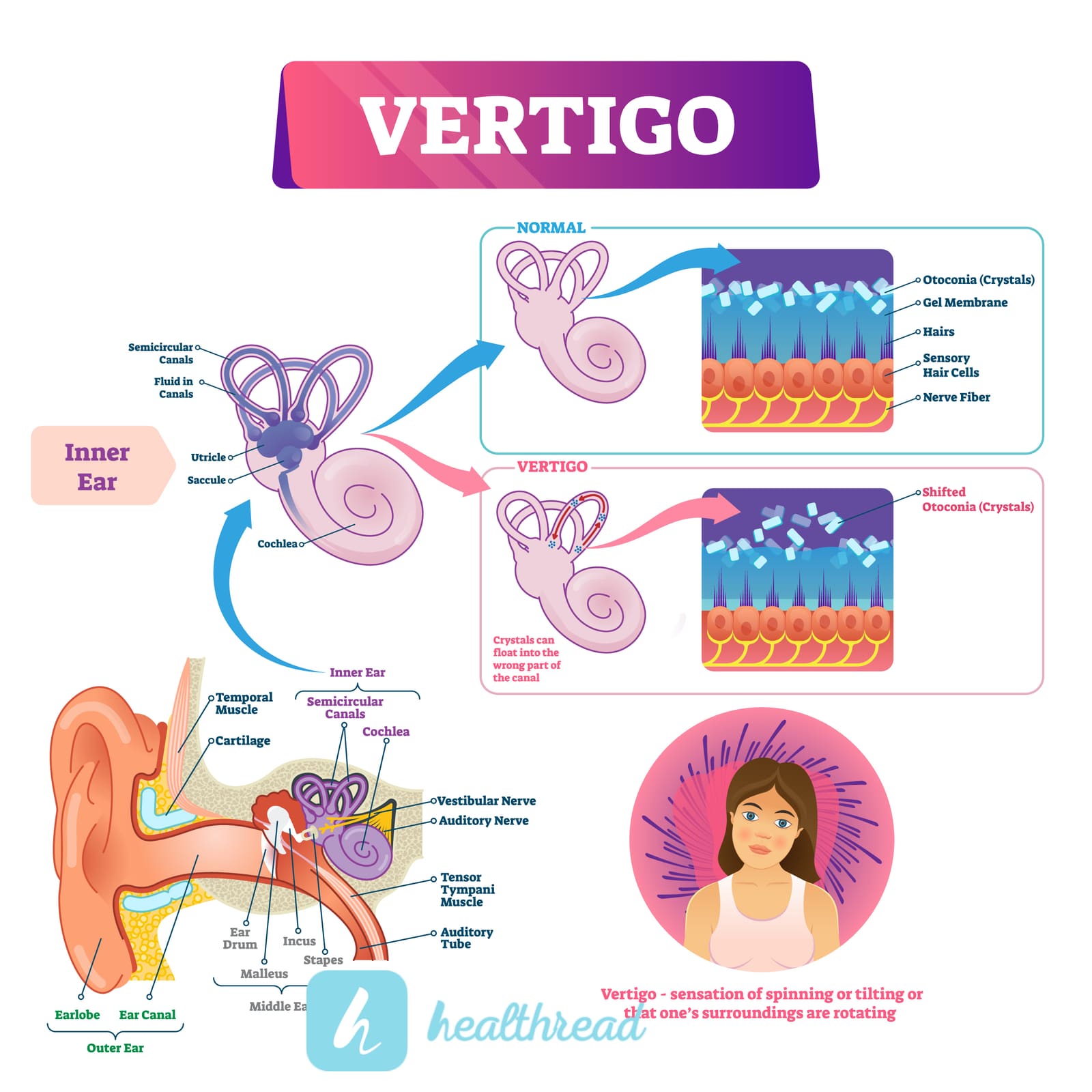
Vertigo and dizziness are two symptoms or conditions that can be related, but they are not the same. Vertigo is the sensation that either you, or the room around you, are spinning. Vertigo is a disorder that affects balance and equilibrium.
According to the Vestibular Disease Association (VeDA), vertigo can result from problems with the balance organs in the inner ear, or a dysfunction of the central nervous system that influences balance and spatial orientation. VeDA reports that the most common causes of vestibular problems are aging, head injuries, and viral infections.
Benign Paroxysmal Positional Vertigo (BPPV)
According to VeDA, the most common form of vertigo is Benign Paroxysmal Positional Vertigo (BPPV). The condition's name indicates how it affects you:
- Benign: not life-threatening
- Paroxysmal: sudden, brief spells
- Positional: triggered by head positions or movements
- Vertigo: false sense of rotation (spinning body or room)
BPPV occurs because of mechanical problems in the inner ear. Inside our ears, we have small calcium carbonate crystals that migrate into one or more of the semicircular canals inside our ear that we use to sense head motion. The crystals create a problem in normal movement sensation, resulting in the symptoms that occur suddenly and last for a short time before subsiding.
Meniere’s Disease
19th century French doctor Prosper Ménière discovered that vertigo and other symptoms like tinnitus (ringing in the ears) came from problems in the inner ear and not the brain, as had been previously believed. Ménière’s Disease results from the collection of fluid called endolymph in the inner ear, leading to swelling. The disease most often occurs between age 4 and 60. The National Institutes of Health (NIH) report that about 615,000 people in the US have the disease and experience symptoms.
All of the causes of Ménière’s disease are not yet known, but it can be triggered by emotional distress, other illnesses, changes in air pressure, and eating certain foods. Vertigo from Ménière’s disease can be sudden and severe. In later stages of the disease, hearing loss can occur along with other serious symptoms. Ménière’s disease attacks can last between 20 minutes and 24 hours.
Ménière’s disease treatment can involve self-help measures like a low-salt diet, along with medications like Dramamine, Valium, and Ativan. Between 20% and 40% of people with the disease don't respond to less-invasive treatments. Surgical treatments and injections of intratympanic gentramicin, a medication that destroys pressure-causing tissue in the inner ear, can be used to improve the condition.
Other conditions that can cause vertigo
Some additional conditions can cause vertigo, including:
- Vestibular migraine
- Labyrinthitis or vestibular neuritis
- Age-related dizziness and imbalance
- Head injuries, including traumatic brain injury (TBI) and concussions
- Autoimmune inner ear disease
- Perilymph fistula
- Bilateral vestibular hypofunction
- Cholesteatoma
- Secondary endolymphatic hydrops
- Superior Semicircular Canal Dehiscence (SSCD)
- Neurotoxic vestibulopathy
- Ototoxicity
- Enlarged Vestibular Aqueduct (EVA)
Rebalancing your life
Some instances of vertigo are temporary, and result from flying, diving, or other actions that affect the fluid in your inner ear. If you have vertigo that results from a vestibular disorder, the Vestibular Disease Association recommends some ways that you can cope with everyday life when you literally feel "out of balance."
- Traveling: change the way you travel and the activities you plan to reduce symptoms as much as possible.
- Motion sickness: avoid situations that can product motion sickness or use medication like Dramamine
- Sensible shoes: wearing footwear that helps you maintain your balance is good common sense.
- Home safety: adapt your home by arranging furniture and including rails to help with balance problems and reduce falls.
- Stress management: use meditation, massage therapy, and self-help relaxation techniques to reduce stress and symptoms
Other ways you can help yourself if you suffer from vestibular disorders include getting enough rest, so you have the energy to cope with your condition. Managing or limited screen time can also help to reduce problems associated with mobile phones or computer monitors. The VeDA reports that people with vestibular disorders seem to have the least trouble viewing wide-screen LCD televisions and monitors.
Sources
Información general, no consejo médico
Este artículo no puede tener en cuenta tu historial de salud ni tu tratamiento actual. Habla con un profesional sanitario cualificado antes de cambiar nada de tu cuidado.
Lee nuestro aviso médico →
En esta página
Benign Paroxysmal Positional Vertigo (BPPV)
Meniere’s Disease
Other conditions that can cause vertigo
Rebalancing your life
Sources
Pon en práctica lo que lees
Controla tus medicamentos, consulta un síntoma y habla con personas que viven con la misma enfermedad, todo en Healthread.
Descargar la app
Sigue leyendo

Beauty and Anti-Aging
Gastric Balloon for Weight Loss
The gastric balloon weight loss procedure is a new FDA-approved minimally invasive bariatric procedure for treating obesity. It is a temporary procedure that involves placing a saline-filled silicone balloon in the…
19 de junio de 2025 · 3 min de lectura

Beauty and Anti-Aging
Vitamin D Deficiency
Also known as the sunshine vitamin, vitamin D is an essential nutrient that is naturally absorbed by the skin through exposure to sunlight. It can also be obtained from dietary sources and supplements.
30 de diciembre de 2024 · 3 min de lectura

Beauty and Anti-Aging
Cellulite
Cellulite appears with an orange peel or cottage cheese-like texture with a dimpled or lumpy skin surface. Mild cellulite is visible when you pinch the area with cellulite, like the thighs. Severe cellulite can make the…
13 de agosto de 2024 · 3 min de lectura


© 2026 Healthread
English · Español
Healthread no ofrece asesoramiento médico, diagnóstico ni tratamiento. Consulta siempre a un profesional sanitario cualificado sobre tu atención.