

What Does the Appearance and Color of My Poop Mean?
16 de febrero de 2021
5 min de lectura
While you might not pay a lot of attention to your poop, checking it regularly could help you detect different shapes, colors, and textures not typical to you. If you notice any persistent changes, it's best to have them examined.
What Is Normal Poop?
Normal poop (stool) is typically:
- Medium/dark brown: This is due to the stool containing a bilirubin pigment, which forms when your red blood cells are breaking down.
- Strong-smelling: Bacteria in stool emit gases that contain poop's unpleasant odor.
- Passes pain-free: Normal poop should require minimal strain and be painless.
- Soft to firm: Stool that's passed in a single piece or several smaller pieces is generally a sign of healthy stool.
- Passed once or twice a day: Most individuals poop once daily, although some might poop more than once. You should be passing stool at least three times a week.
- Characteristics are consistent: Healthy stool varies between individuals, but you should monitor any changes in your poop like firmness, smell, color, and frequency since it could indicate a problem.
What Does the Shape of My Poop Mean?
- Loglike shape: This is a normal shaped poop. It's shaped like this because it forms in your intestines.
- Pencil-thin stool: Stools that are thin and long are usually due to excessive straining, but if your stools are consistently thin, it could be a sign of a medical issue.
- Pellet-like poop: Small pellets of poop plopping into the toilet water is a sign of constipation.
- S-shaped stool: Normal and easy to pass.
What Does the Color of My Poop Mean?
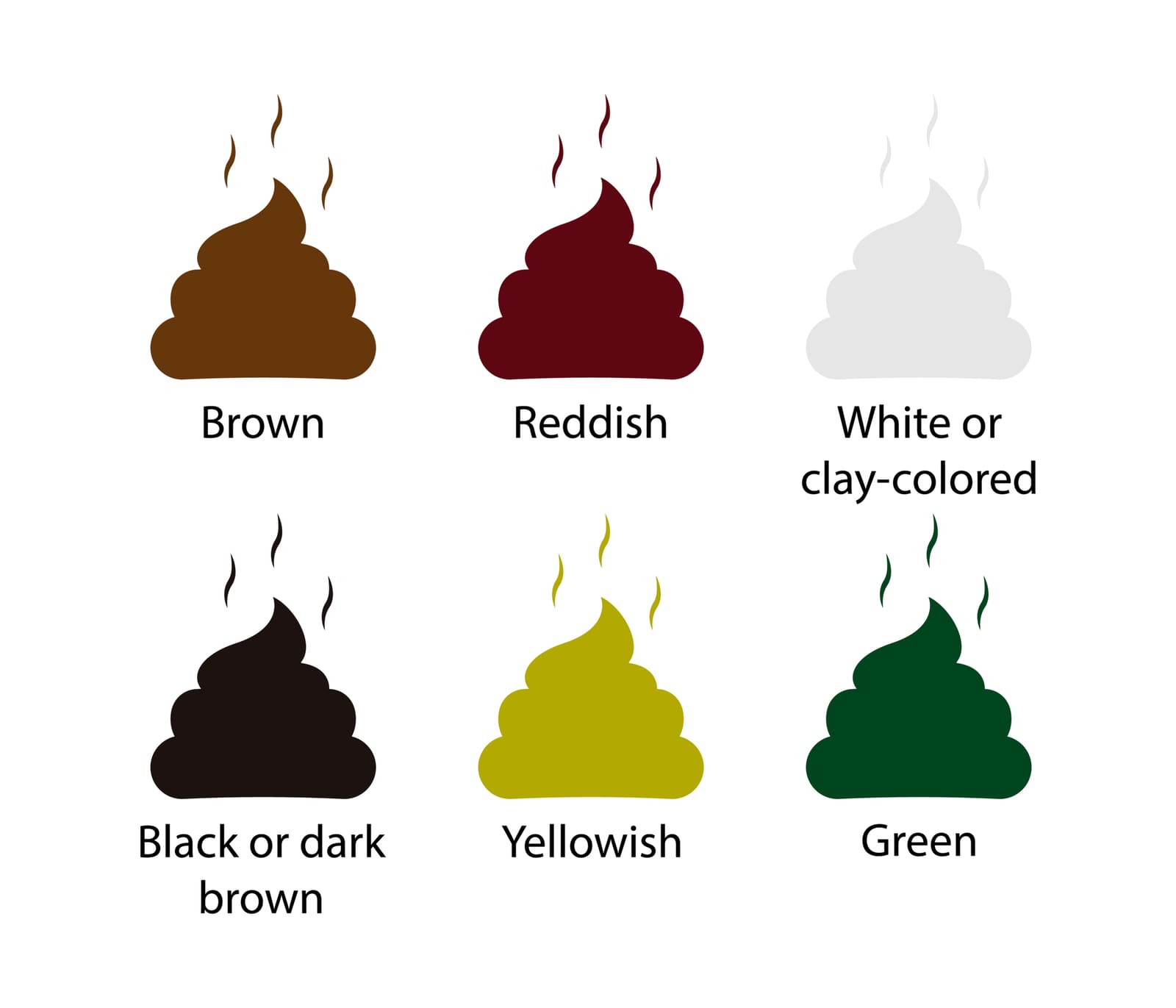
While brown stool is considered the regular and normal color for stool, there are acceptable greenish-brown hues. But, poop can be other colors as well, like:
1. Black
Substances like black licorice, iron supplements, and bismuth medicines can cause black stool. Black stools, particularly those that look like coffee grounds, could indicate gastrointestinal bleeding. Some reasons for gastrointestinal bleeding could be an injury or tear, or a sign of gastric and esophageal.
2. White
Certain anti-diarrhea medicines cause white stool. If your stool is white, pale, or gray, you could have a problem with your gallbladder or liver since pale stool suggests a lack of bile.
3. Green
Kale, spinach, or other green foods could cause green stool. But, green-colored poop might also be a sign there's not enough bilirubin or too much bile in your poop.
4. Red
Eating red berries or beets could turn your poop red. Red-colored poop could be due to gastrointestinal bleeding, typically when the issue is in the lower GI. If you have small amounts of blood in your poop, it could indicate hemorrhoids.
5. Orange
Eating orange-colored foods rich in beta-carotene (i.e. carrots, winter squash, sweet potatoes) could turn your stool orange. But, certain medicines, like the antibiotic rifampin and some antacids, or blocked bile ducts could cause orange poop.
6. Yellow
If your poop is yellow or it looks "greasy", it could mean it contains too much fat.This could be due to absorption problems or trouble producing bile or enzymes.
What Does the Texture of My Poop Mean?
There are different textures to poop and they each mean something different. The different textures are:
- Separate hard lumps: Extremely constipated
- Sausage-like and lumpy: Slightly constipated
- A sausage shape with surface cracks: Normal
- Soft and smooth like a snake: Normal
- Soft blobs with clear-cut edges: Lacking fiber
- Mushy consistency with ragged edges: Inflammation
- Liquid with no solid pieces: Diarrhea and inflammation
What Does Stinky Poop Mean?
Poop usually has an unpleasant odor. Foul-smelling stools have more of an unusually putrid, strong smell. Often, foul-smelling poop occurs because of certain foods you eat and the bacteria that exist in your colon. But, foul-smelling poop could also indicate a severe health issue. See your doctor right away if you develop symptoms such as:
- Black stool
- Blood in your stool
- Abdominal pain
- Pale stool
- Chills
- Fever
- Unintentional weight loss
Bloating, diarrhea, or flatulence might occur with foul-smelling poop. This type of poop is often runny or soft.
Diet changes are a common reason behind foul-smelling poop. Some changes might include:
- Malabsorption
- Medications and supplements
- Infection
- Other conditions (cystic fibrosis, chronic pancreatitis, short bowel syndrome)
What Does Sinking Poop Mean?
While normal poop frequency and shape will vary widely between individuals, if your stool sinks quickly, you might not be getting enough fiber or fluids in your diet. This poop is frequently dark because it sits in your intestines longer.
What Does Floating Poop Mean?
In some cases, having poop that floats if usually nothing to concern yourself with. Typically, floating poop occurs when you have increased gas that is mixed into your stool which causes it to float. Various things can cause floating poop such as:
- Beans
- Carbonated drinks
- Sugary foods
- Conditions (i.e. irritable bowel syndrome)
If your poop is floating consistently, it could be a sign you're not properly absorbing fat. This is referred to as steatorrhea, and it often sticks to the side of the toilet bowl, has an odor, and is hard to flush away.
What Is the Bristol Stool Chart?
The Bristol Stool Chart was made in the Bristol Royal Infirmary in England by doctors. It's based on almost 2,000 people's bowel movements and characterizes the various types of poop. There are typically seven types of poop in this chart indicating healthy poop, constipation, diarrhea, and urgency.
Foundations and Societies for Digestive Health
You can look into different foundations and societies, such as:
- Crohn's & Colitis Foundation: This is a volunteer-fueled, non-profit organization committed to finding cures for ulcerative colitis and Crohn's disease.
- Digestive Health Foundation: DHF has raised more than $14 million since 2015 and has funded 54 research studies that are altering the digestive health future.
- Gastro Health Foundation: The goal of this foundation is to improve the quality of life in children and adults impacted by digestive diseases.
Tips for Healthy Bowels
To help keep your bowels healthy:
- Drink plenty of water daily (about 8 glasses per day)
- Take in enough fiber (try for 25 to 30 grams per day from food, which is suggested for most people)
- Exercise (which can encourage healthy bowel function and keep things moving)
- Try probiotics (which can help relieve constipation and diarrhea)
Looking for Tips on Managing Digestive Health?
Subscribe to Healthread and become connected with others like you who are dealing with digestive health issues and are looking for tips and ways of improving their digestive health.
A technology platform, Healthread offers both a web app and smartphone apps to connect you with individuals experiencing the same health issues and interests. You can read articles, create posts, and follow others to share experiences and insights through direct messages or thematic chat groups.
Sources
- 1mayoclinic.org/stool-color/expert-answers/faq-20058080
- 2ucsfhealth.org/education/increasing-fiber-intake#:~:text=Total%20dietary%20fiber%20intake%20should,about%2015%20grams%20a%20day
- 3medicalnewstoday.com/articles/320938
- 4bladderandbowel.org/wp-content/uploads/2017/05/BBC002_Bristol-Stool-Chart-Jan-2016.pdf
- 5verywellhealth.com/healthy-and-unhealthy-stool-89211
- 6webmd.com/digestive-disorders/what-do-different-poop-colors-mean#1
- 7webmd.com/digestive-disorders/ss/slideshow-poop-type-color
- 8medicinenet.com/stool_color_changes/article.htm
- 9healthline.com/health/digestive-health/types-of-poop
- 10everydayhealth.com/columns/kelly-building-a-crohns-disease-community/the-colors-of-your-poop-and-what-it-means/
- 11emedicinehealth.com/stool_color_changes/article_em.htm
- 12health.com/condition/digestive-health/poop-color
- 13health.com/condition/digestive-health/bristol-stool-chart
- 14verywellhealth.com/stool-appearance-changes-1944755
Información general, no consejo médico
Este artículo no puede tener en cuenta tu historial de salud ni tu tratamiento actual. Habla con un profesional sanitario cualificado antes de cambiar nada de tu cuidado.
Lee nuestro aviso médico →
En esta página
What Is Normal Poop?
What Does the Shape of My Poop Mean?
What Does the Color of My Poop Mean?
1. Black
2. White
3. Green
4. Red
5. Orange
6. Yellow
What Does the Texture of My Poop Mean?
What Does Stinky Poop Mean?
What Does Sinking Poop Mean?
What Does Floating Poop Mean?
What Is the Bristol Stool Chart?
Foundations and Societies for Digestive Health
Tips for Healthy Bowels
Looking for Tips on Managing Digestive Health?
Sources
Pon en práctica lo que lees
Controla tus medicamentos, consulta un síntoma y habla con personas que viven con la misma enfermedad, todo en Healthread.
Descargar la app
Sigue leyendo

Beauty and Anti-Aging
Gastric Balloon for Weight Loss
The gastric balloon weight loss procedure is a new FDA-approved minimally invasive bariatric procedure for treating obesity. It is a temporary procedure that involves placing a saline-filled silicone balloon in the…
19 de junio de 2025 · 3 min de lectura
Beauty and Anti-Aging
Vitamin D Deficiency
Also known as the sunshine vitamin, vitamin D is an essential nutrient that is naturally absorbed by the skin through exposure to sunlight. It can also be obtained from dietary sources and supplements.
30 de diciembre de 2024 · 3 min de lectura
Beauty and Anti-Aging
Cellulite
Cellulite appears with an orange peel or cottage cheese-like texture with a dimpled or lumpy skin surface. Mild cellulite is visible when you pinch the area with cellulite, like the thighs. Severe cellulite can make the…
13 de agosto de 2024 · 3 min de lectura


© 2026 Healthread
English · Español
Healthread no ofrece asesoramiento médico, diagnóstico ni tratamiento. Consulta siempre a un profesional sanitario cualificado sobre tu atención.