

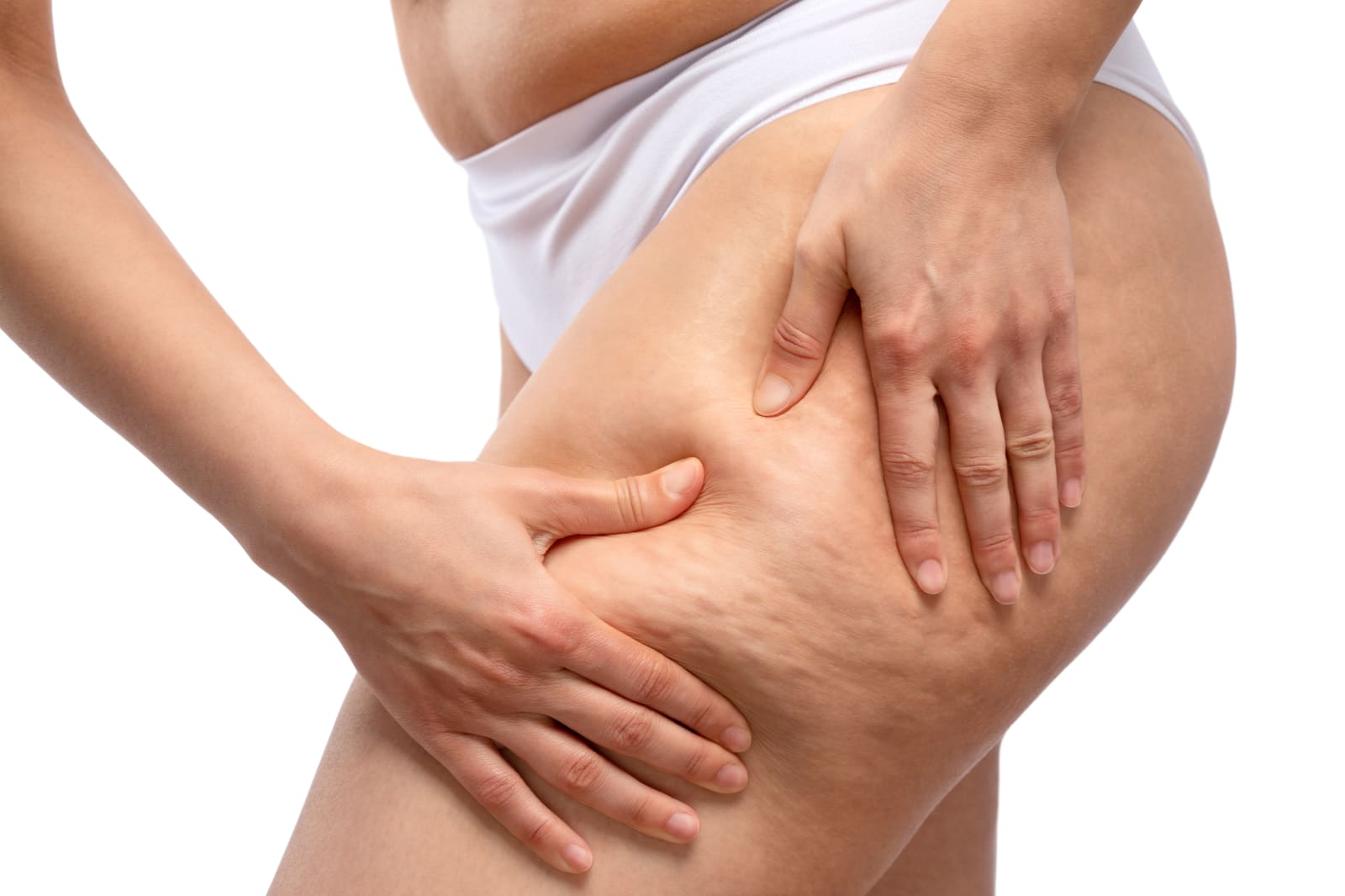
Cellulite, also known as orange-peeled skin because of its texture, is a common, harmless condition that causes lumpy and dimpled skin in the thighs, abdomen, hips, and buttocks.
The skin condition is caused by the accumulation of fat that pushes against the connective tissue beneath the skin, causing the skin to appear dimpled, fleshy, and puckered.
Cellulite can be aesthetically unappealing and associated with profound negative psychosocial effects.
Grades of Cellulite
Cellulite can be ranked using three grades in the cellulite severity scale.
- Grade I (mild): The skin has an orange-peel appearance with one to four superficial depressions, with a slightly draped and sagging look.
- Grade II ( moderate): The skin has a cottage cheese-like appearance with five to nine medium-depth depressions with a moderately-draped look.
- Grade III (severe): The skin has a mattress-like appearance with ten or more deep depressions with a severely draped look.
Cellulite Symptoms
Cellulite appears with an orange peel or cottage cheese-like texture with a dimpled or lumpy skin surface. Mild cellulite is visible when you pinch the area with cellulite, like the thighs. Severe cellulite can make the skin look bumpy and rumpled with areas of peaks and valleys.
Cellulite is usually seen in the thighs or buttocks, although it is also common in the breasts, upper arms, and lower abdomen.
Cellulite Causes
Although the exact cause of cellulite formation is unknown, it can occur because of the irregular tightening of the fibrous tissue that connects the skin to the underlying muscles.
This tightening can pull down the skin, pushing the normal fat layer under the skin upward, giving the skin a puckered appearance.
Cellulite is more common in women than in men. One reason can be that, while in men, the fibrous band connecting the skin to the muscle layer crisscross together, in women, they run at the same distance parallel to each other.
The parallel bands show cellulite more prominently than the crisscross bands.
Another reason is that a higher level of the hormone estrogen in women can cause them to develop more cellulite during adolescence or pregnancy.
Other factors that can influence the development of cellulite are:
- Genetics: Cellulite often runs in families.
- Weight: Although common in people with obesity, lean people may also notice the appearance of cellulite.
- Age: With age, the skin loses elasticity, making cellulite more visible;
- Diet: A healthy diet rich in carbohydrates, fats, and salts can increase the risk of having cellulite.
- Lifestyle factors: Smokers and obese people may have a higher risk of getting cellulite.
Cellulite Management and Treatment
A combination of diet, exercise, and treatments can help reduce the appearance of cellulite. The American Academy of Dermatology has approved several treatments that break down the bands of connective tissues under the skin, reducing cellulite appearance.
- Laser treatment: It involves inserting small laser probes under the skin that break down the connective tissue, promoting collagen production and reducing cellulite.
- Acoustic wave therapy: It uses a handheld device that emits sound waves.
- Subcision: A needle is used under the skin to break down the fibrous tissues.
- Vacuum-assisted precise tissue release: It uses a device with small blades to cut the connective tissue, reducing cellulitis.
- Carboxytherapy: Carbon dioxide is inserted under the skin, reducing cellulite. Side effects include bruising and discomfort.
- Endermologie: A vacuum-like device lifts the skin, providing deep massage.
- Ionithermy cellulite reduction treatment: The affected area is covered by mud and clay, covered in plastic before applying electrical current.
- Radiotherapy: It reduces cellulite by heating it, offering short-term benefits.
- Laser-assisted liposuction: Liposuction can reduce deep fat, not necessarily cellulite;
- Ultrasonic liposculpting: It targets and destroys fat.
- Mesotherapy: A needle injects medicine into the cellulite.
- Spa treatments: They can temporarily reduce cellulite.
- Creams and lotions: Creams with .03% retinol and caffeine can temporarily reduce cellulite.
- Compression garments: They can temporarily reduce the appearance of cellulite.
- Exercises: Aerobics and strength training can replace fat with muscles, reducing cellulite.
Source links
General information, not medical advice
This article can't account for your health history or current treatment. Talk to a qualified clinician before you change anything about your care.
Read our medical disclaimer →
On this page
Grades of Cellulite
Cellulite Symptoms
Cellulite Causes
Cellulite Management and Treatment
Source links
Put what you read to work
Track your medicines, check a symptom and talk with people managing the same condition, all in Healthread.
Get the app
Keep reading

Beauty and Anti-Aging
Gastric Balloon for Weight Loss
The gastric balloon weight loss procedure is a new FDA-approved minimally invasive bariatric procedure for treating obesity. It is a temporary procedure that involves placing a saline-filled silicone balloon in the…
June 19, 2025 · 3 min read
Beauty and Anti-Aging
Vitamin D Deficiency
Also known as the sunshine vitamin, vitamin D is an essential nutrient that is naturally absorbed by the skin through exposure to sunlight. It can also be obtained from dietary sources and supplements.
December 30, 2024 · 3 min read
Beauty and Anti-Aging
Peptic Ulcer Disease
The gastrointestinal tract has a protective mucus lining that protects the stomach from substances like corrosive digestive acids. Peptic ulcer occurs when the layers of the mucus lining are eroded.
August 11, 2024 · 3 min read


© 2026 Healthread
English · Español
Healthread does not provide medical advice, diagnosis or treatment. Always speak to a qualified clinician about your care.