

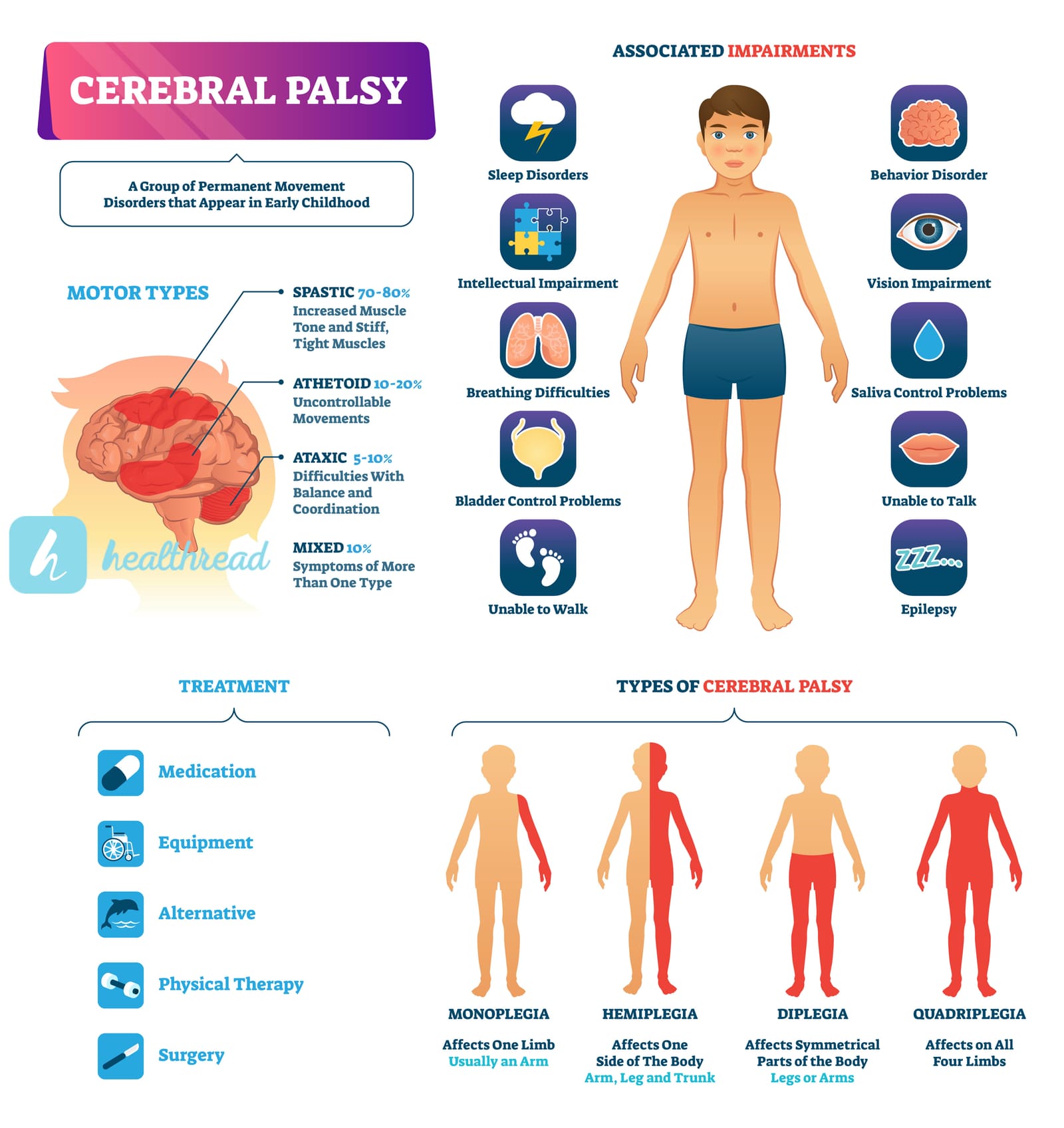
Did you know cerebral palsy (CP) is one of the most common childhood disorders in the world? Here in the United States, about 3 out of every 1,000 live births are affected by it. Right now, over a quarter million American children and adults are estimated to be diagnosed with CP.
Hearing this diagnosis from your child's doctor can be scary, but doctors and researchers have learned a lot about cerebral palsy over the decades and have developed a range of treatments and therapies to help people with CP live full lives.
Keep reading to learn some general information about cerebral palsy and discover a few helpful resources.
What is Cerebral Palsy?
To understand what cerebral palsy is, it helps to understand what its two words mean:
- Cerebral: of the brain, specifically the cerebrum, which is involved in motor function
- Palsy: paralysis or weakness of the muscles
In other words, "cerebral palsy" refers to a broad group of conditions that affect the way a person moves. Balance and posture are also generally impacted by cerebral palsy, which is diagnosed in childhood but will persist throughout a person's lifetime. Cerebral palsy can look very different from person to person, and the severity of the condition can range from mild to severe.
Cerebral Palsy: Causes, Types, and Risk Factors
Cerebral palsy can happen when something affects the normal development of a fetus's or infant's brain, or when something damages the developing brain. This abnormal development or damage can occur when a baby is still in the womb, during birth, or after birth—even within the first year's of a child's life.
Four types of cerebral palsy exist:
- Spastic cerebral palsy: by the far the most common and affecting about 80 percent of people with cerebral palsy, spastic CP is hallmarked by increased muscle tension, which causes a person's muscles to be stiff and movement to be awkward; it can affect primarily the legs (spastic diplegia/diparesis), one side of the body (spastic hemiplegia/hemiparesis), or all four limbs (spastic quadriplegia/quadriparesis)
- Dyskinetic cerebral palsy: this type of CP makes it difficult for a person to control the movement of their limbs, and the quality of their movement (as well as their muscle tone) can change throughout the day, from slow and writhing to rapid and jerky
- Ataxic cerebral palsy: people with ataxic CP tend to have a harder time with things like keeping their balance and coordination
- Mixed cerebral palsy: individuals with this diagnosis have more than one type of CP, such as spastic-dyskinetic CP
The cause of cerebral palsy isn't always clear. Most cases of CP (up to 90%) are considered "congenital," meaning that the brain damage or altered brain development happens before or during birth. Some cases of CP can happen due to brain damage that occurs sometime after 28 days following birth. Called acquired CP, this typically happens as a result of some sort of traumatic head injury or infection, like meningitis.
Additional causes or risk factors for cerebral palsy include infections in the mother during pregnancy, premature birth, breech position at birth, and low birth weight.
Cerebral Palsy Signs and Symptoms
Since so many types and degrees of cerebral palsy exist, cerebral palsy signs and symptoms can vary a lot. Symptoms that parents and doctors may notice when a child is in infancy or in the first few years of life include:
- Delay in normal developmental milestones
- Abnormal tone (either stiff or "floppy" muscles) and reflexes
- Poor balance and coordination
- Tremors
- Unusual movements, such as writhing or jerking motions
- Abnormal walking, like walking on tip toes, crouching, walking with a wide base of support, walking with a limp, or walking with the legs crossing (some people with CP are not able to walk and use a wheelchair instead)
- Problems with drooling, sucking, swallowing, eating, or talking, as well as delayed speech development
- Difficulty with fine motor skills, such as buttoning clothes or picking up utensils
Children with cerebral palsy may also have other signs, symptoms, and issues due to neurological problems such as seizures, learning disability or intellectual delay, abnormal sensations or pain sensation, impaired hearing or vision, urinary incontinence, and mental health problems.
Living With Cerebral Palsy
There isn't a cure for cerebral palsy, but a variety of treatments and therapies can be provided to help a person manage their signs and symptoms and improve their independence and quality of life. Depending on the individual's needs, treatment may include medication (e.g., to relax stiff muscles), surgery, and physical therapy, occupational therapy, speech therapy.
For example, individualized treatment may help prevent common complications of CP, which according to Mayo Clinic include contractures (loss of range of motion in a joint due to muscle tissue stiffness), premature aging, bone weakness (osteopenia), degenerative joint damage (osteoarthritis), mental health conditions, malnutrition and conditions affecting the heart and lungs.
Providers who are commonly involved in the lifetime care of people with cerebral palsy include neurologists, pediatricians, surgeons, physical, occupational, and speech therapists, orthotists, mental health counselors, and eye, ears, and throat specialists.
Are you a parent of a child living with cerebral palsy? It can be so helpful to connect with resources and support groups in your local area. You may also be interested in connecting with others online. Be sure to download the Healthread app today to reach out to other families like you, or check out these cerebral palsy support groups online:
Sources
General information, not medical advice
This article can't account for your health history or current treatment. Talk to a qualified clinician before you change anything about your care.
Read our medical disclaimer →
On this page
What is Cerebral Palsy?
Cerebral Palsy: Causes, Types, and Risk Factors
Cerebral Palsy Signs and Symptoms
Living With Cerebral Palsy
Sources
Put what you read to work
Track your medicines, check a symptom and talk with people managing the same condition, all in Healthread.
Get the app
Keep reading

Beauty and Anti-Aging
Gastric Balloon for Weight Loss
The gastric balloon weight loss procedure is a new FDA-approved minimally invasive bariatric procedure for treating obesity. It is a temporary procedure that involves placing a saline-filled silicone balloon in the…
June 19, 2025 · 3 min read

Beauty and Anti-Aging
Vitamin D Deficiency
Also known as the sunshine vitamin, vitamin D is an essential nutrient that is naturally absorbed by the skin through exposure to sunlight. It can also be obtained from dietary sources and supplements.
December 30, 2024 · 3 min read

Cancer-Updates
Gynecologic Cancer
Gynecologic cancer is a term used to describe a group of cancers that affect the female reproductive system. There are five types of gynecologic cancers named after the body part where they start.
November 5, 2024 · 3 min read


© 2026 Healthread
English · Español
Healthread does not provide medical advice, diagnosis or treatment. Always speak to a qualified clinician about your care.