

Around 1.3% (3 million) of individuals in the U.S. in 2015 reported receiving an IBD (inflammatory bowel disease) diagnosis (either ulcerative colitis or Crohn's disease), reports the CDC. This was a huge rise from 1999 (2 million or 0.9% adults).
Research continues showing an increase in the number of individuals who live with IBD, according to the Crohn’s and Colitis Foundation of America. And, this reflects a need for more studies to find the cure.
Individuals of any age can develop Crohn's disease and there's a higher chance of it developing in individuals:
- Who smoke cigarettes
- Who are between 20 years old and 29
- Who have a family member with IBD (typically a parent or sibling)
What Is Crohn’s Disease?
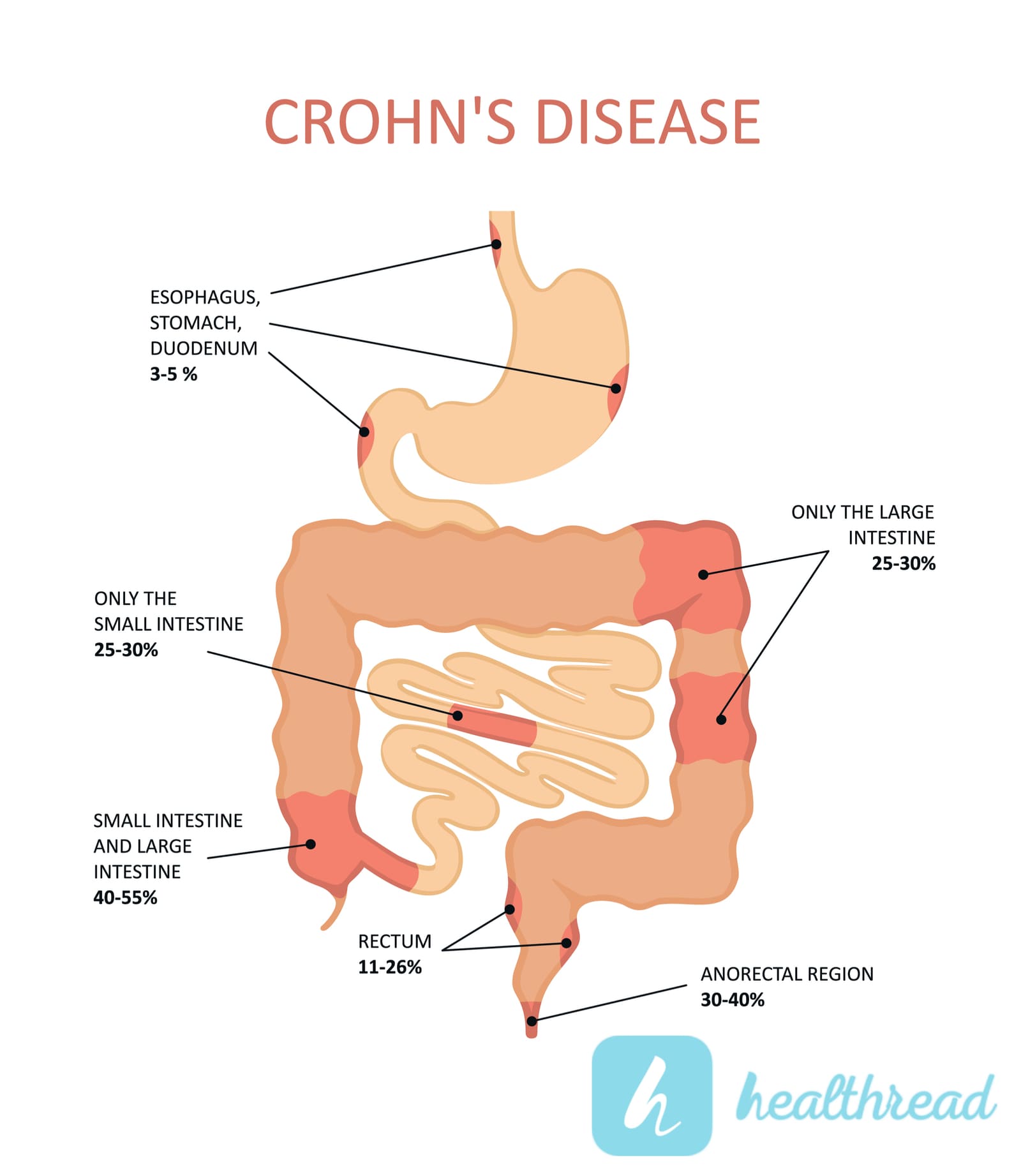
Crohn's disease is a chronic disorder leading to irritation and inflammation in the digestive tract. Often, it affects the start of your large intestine and your small intestine. But it could affect any area of your digestive tract, from your anus to your mouth.
Two common forms of IBD are microscopic colitis and ulcerative colitis. It often starts gradually and over time becomes worse. You might experience times of remission that could last for weeks, sometimes years.
What are the Treatments for Crohn's Disease?
There's no one treatment that works for all people with Crohn's disease. The treatment goals are to:
- Reduce intestinal inflammation
- Keep you in remission
- Prevent symptom flare-ups
Common treatments include the below.
1. Medications
Many individuals with this disease require medication. Which medications your physician prescribes you depends on the symptoms you're experiencing. While no medication cures Crohn's disease, many can decrease your symptoms.
Aminosalicylates
These medications contain 5-aminosalicylic acid (5-ASA). They help control inflammation. Physicians use these to treat individuals who just received a Crohn's disease diagnosis and who are experiencing mild symptoms. Aminosalicylates include:
- Mesalamine
- Balsalazide
- Sulfasalazine
- Olsalazine
Immunomodulators
These medications decrease immune system activity which results in less digestive tract inflammation. These can take a few weeks to three months to begin working. Immunomodulators include:
- Cyclosporine
- 6-mercaptopurine
- Methotrexate
- Cyclosporine
Corticosteroids
These, which are also referred to as steroids, help decrease immune system activity and reduce inflammation. Physicians prescribe these for individuals who are experiencing moderate to severe symptoms. Corticosteroids include:
- Hydrocortisone
- Budesonide
- Prednisone
- Methylprednisolone
2. Diet & Nutrition
Although Crohn's disease might not be due to bad reactions to certain foods, you should still pay attention to your diet as it could help decrease your symptoms, promote healing, and replace lost nutrients.
For individuals who receive a Crohn's disease diagnosis, it's important to maintain good nutrition since Crohn's frequently decreases your appetite while it increases the energy requirements of your body.
Also, common symptoms of Crohns such as diarrhea can decrease your body's ability of absorbing:
- Fat
- Protein
- Water
- Carbohydrates
- Minerals
- Vitamins
Many individuals experiencing flare-ups of Crohn's disease find bland, soft foods cause less discomfort than high-fiber or spicy foods. Although your diet could stay flexible and should consist of various foods from all food groups, the physician will probably suggest restricting your dairy intake if you're found to be lactose-intolerant.
3. Surgery
Even with the right medicine and diet, about two-thirds to three-quarters of individuals with this disease will need surgery sometime in their lives. While surgery doesn't cure the disease, it could conserve parts of your GI tract, and get you back to the best quality of life possible.
You might require surgery when medicines can no longer help to control your symptoms or if you begin developing fissure, fistula or intestinal obstruction. Surgery frequently involves resection, which is where the surgeon removes the diseased part of your bowel.
They'll then perform anastomosis, which is where they join the two healthy ends of your healthy bowel. Although these procedures might cause your symptoms to go away for many years, the disease can come back later down the road.
- Various types of surgery might be performed depend on the severity of your illness, the reason for it and the location of your disease
- Around 70% of individuals with this disease eventually need surgery
- Around 30% of individuals who have surgery for this disease experience symptom recurrence within a few years and up to 60% do within 10 years
If you're overwhelmed or confused about all the therapies and medicines available, you're not alone. Crohn's disease is a complex disease and it's essential you go over the benefits and risks of all options of treatment with your physician.
Looking for Tips on Managing Crohn's Disease?
Subscribe to Healthread to connect with others like you who are determined to find ways of improving their Crohn's disease symptoms. Brainstorm ideas on ways to improve your quality of life and get back to normal living.
Sources
- 1crohnscolitisfoundation.org/sites/default/files/2019-02/Updated%20IBD%20Factbook.pdf
- 2cdc.gov/ibd/data-statistics.htm#:~:text=In%202015%2C%20an%20estimated%201.3,%25%20or%202%20million%20adults).&text=Some%20people%20were%20more%20likely,Aged%2045%20years%20or%20older
- 3niddk.nih.gov/health-information/digestive-diseases/crohns-disease
- 4niddk.nih.gov/health-information/digestive-diseases/crohns-disease/treatment
- 5crohnscolitisfoundation.org/what-is-crohns-disease
- 6crohnscolitisfoundation.org/What-is-crohns-disease/treatment
- 7crohnscolitisfoundation.org/5-major-advances-inflammatory-bowel-disease-ibd-treatment
- 8medlineplus.gov/crohnsdisease.html
- 9healthline.com/health/crohns-disease/cure
- 10medicalnewstoday.com/articles/323072
- 11healthline.com/health/crohns-disease
- 12my.clevelandclinic.org/health/diseases/9357-crohns-disease/management-and-treatment
General information, not medical advice
This article can't account for your health history or current treatment. Talk to a qualified clinician before you change anything about your care.
Read our medical disclaimer →
On this page
What Is Crohn’s Disease?
What are the Treatments for Crohn's Disease?
1. Medications
Aminosalicylates
Immunomodulators
Corticosteroids
2. Diet & Nutrition
3. Surgery
Looking for Tips on Managing Crohn's Disease?
Sources
Put what you read to work
Track your medicines, check a symptom and talk with people managing the same condition, all in Healthread.
Get the app
Keep reading
Beauty and Anti-Aging
Gastric Balloon for Weight Loss
The gastric balloon weight loss procedure is a new FDA-approved minimally invasive bariatric procedure for treating obesity. It is a temporary procedure that involves placing a saline-filled silicone balloon in the…
June 19, 2025 · 3 min read
Beauty and Anti-Aging
Vitamin D Deficiency
Also known as the sunshine vitamin, vitamin D is an essential nutrient that is naturally absorbed by the skin through exposure to sunlight. It can also be obtained from dietary sources and supplements.
December 30, 2024 · 3 min read
Cancer-Updates
Gynecologic Cancer
Gynecologic cancer is a term used to describe a group of cancers that affect the female reproductive system. There are five types of gynecologic cancers named after the body part where they start.
November 5, 2024 · 3 min read


© 2026 Healthread
English · Español
Healthread does not provide medical advice, diagnosis or treatment. Always speak to a qualified clinician about your care.